


MERV 8 Carbon air filters
Odor eliminator replacement filters for furnaces, AC units, and ventilation systems.
Protects against:
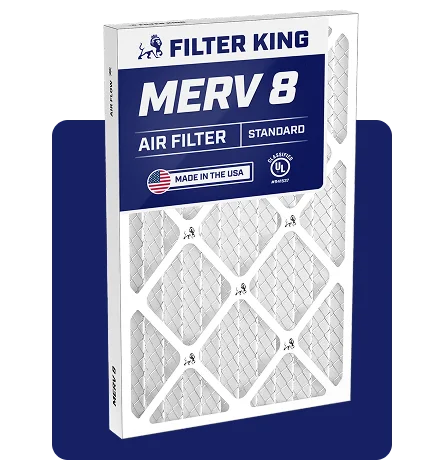
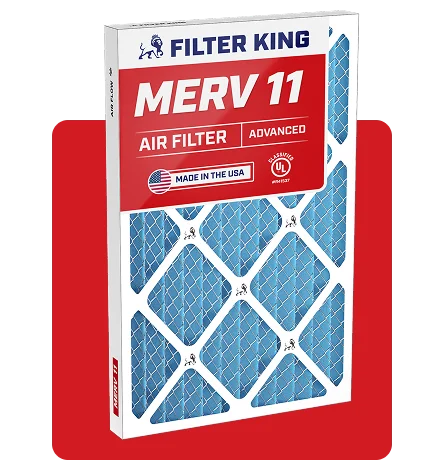
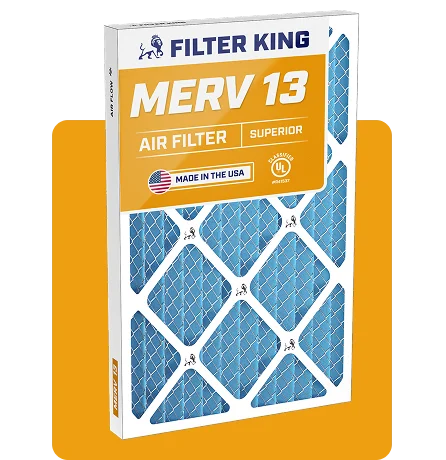
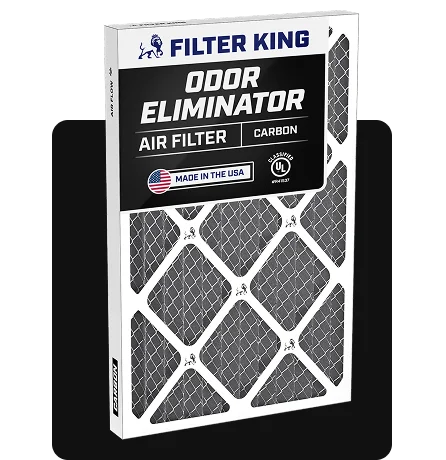
Odor eliminator replacement filters for furnaces, AC units, and ventilation systems.
Protects against:

Processed quickly, ships fast, free for all orders

Premium quality pleated filters in a rigid frame

Find your perfect fit with our complete size range

Compatible with all the major HVAC unit brands
The MERV 8 rating media capture 90% of common particles measuring 3-10 microns or larger, while the carbon layer targets traps and neutralizes odors. MERV 8 Carbon filters are specifically designed to aid with eliminating unwanted smoke, pet, and cooking odors in the home. Particles captured with MERV 8 Carbon include:
If odors aren't an issue, you can also go for regular MERV 8 air filters. If you are seeking to capture and trap even more particles and ultrafine materials, you may consider MERV 11 or MERV 13 filters.
MERV 8 filters are ideal for standard protection and odor removal in the home. If you're seeking odor elimination and want to do so with your HVAC filter, MERV 8 Carbon may be the ideal choice. They can effectively manage particles such as dust, lint, pollen, and some mold spores while also reducing smoke odors, cooking smells, and odors from pets with ease. With an added odor carbon layer (activated carbon layer), unwanted smells can easily be eliminated without upgrading to a higher filtration level.

The diagonal straps die-cut into the frame bond to each pleat tip, keeping them evenly spaced so the filter won't bow.
Traps up to 90% of everyday particles like dust mites, pollen, pet dander, and mold spores, while still letting air flow through freely.
Rated to capture up to 95% of common particles, MERV 11 media catches dust mites, pollen, pet dander, and mold spores, as well as fine dust and smoke.
Stops up to 98% of particles passing through, including dust mites, pollen, pet dander, and mold spores, as well as fine dust, smoke, and bacteria.
Traps up to 90% of everyday particles like dust mites, pollen, pet dander, and mold spores, while still letting air flow through freely.
An expanded wire grid bonds to the media, stopping the pleats from shifting or pulling away under airflow.
An expanded wire grid bonds to the media, stopping the pleats from shifting or pulling away under airflow.
An expanded wire grid bonds to the media, stopping the pleats from shifting or pulling away under airflow.
A layer of activated carbon absorbs odor molecules from cooking, pets, and chemical fumes – catching what the filter media alone can't.
The same heavy-duty, moisture-resistant beverage board on the exit side holds its shape and keeps a tight seal in your vent or wall slot.
An expanded wire grid bonds to the media, stopping the pleats from shifting or pulling away under airflow.


4.6 stars, 5243 reviews

4.5 stars, 4314 reviews
"I am a new customer and so happy I found Filter King. Their customer service is truly outstanding."
 Verified Buyer
"Easy to find sizes"
Verified Buyer
"These fit perfectly, it’s so nice to get a custom size."
Verified Buyer
"Great prices, good quality."
Verified Buyer
"When I accidently ordered the wrong size... I called & customer service fixed my error with correct size. Shipping was prompt!!! Very pleased with Filter King!! 😊"
Verified Buyer
"These are high quality filters and the price was fair."
Verified Buyer
"Excellent product"
Verified Buyer
"Looks good, fit well"
Verified Buyer
"Quick shipping I originally ordered the wrong size returning and exchange was very easy."
Verified Buyer
"Easy ordering, fast shipping, customer service that’s reachable. Highly recommend."
Verified Buyer
Filter King provides MERV 8 Carbon filters for odor-sensitive environments in hundreds of standard sizes, with custom dimensions manufactured to meet your specific needs.
Each filter satisfies ASHRAE specifications and holds UL Classification #R41537, delivering both particle filtration and odor elimination in your ventilation system.
If your MERV 8 Carbon filters don't match your requirements, our 30-day money-back guarantee with hassle-free returns for all stocked sizes allows you to order with full confidence.
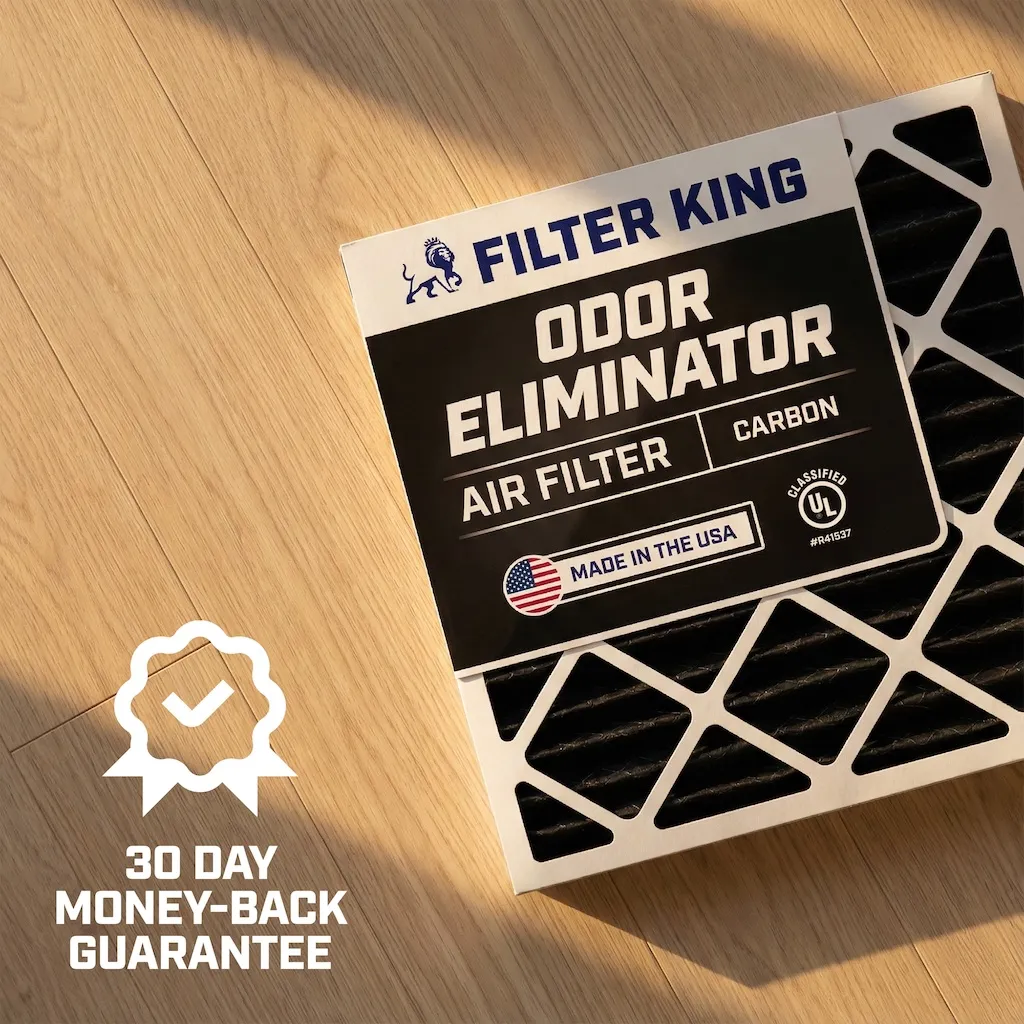
Check the label on your current filter or use a tape measure to get the exact length, width, and depth before selecting your size.
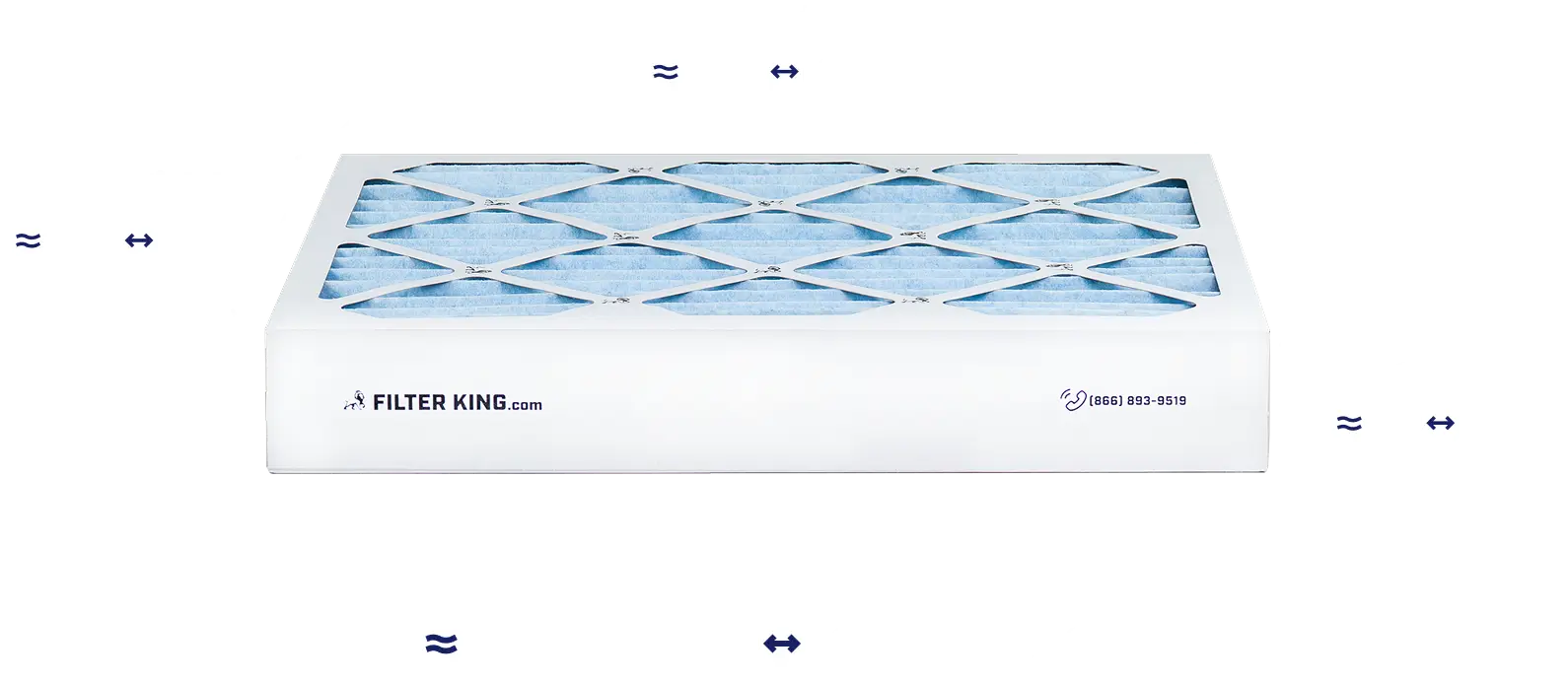
 Nominal size
Nominal size is what you normally see printed on the label. This is usually a rounded size which is often not the true size of your filter.
 Actual size
Actual size is the true size of the air filter, usually written in smaller font below the nominal size.
Measure your current air filter or the length, width, and depth of the opening slot to get the actual size. Round it up to the nearest whole inch to get the nominal size.
Never run out of a clean filter – and cancel anytime if your plans change
 Pay full price on every order
Need to remember to reorder every time you run out
Forget to reorder, and a dirty filter can drive up your energy bills.
Pay full price on every order
Need to remember to reorder every time you run out
Forget to reorder, and a dirty filter can drive up your energy bills.
 Get 5% off every order, automatically
New filters arrive right when you need them
Pause, skip, or cancel anytime – no commitment needed.
Get 5% off every order, automatically
New filters arrive right when you need them
Pause, skip, or cancel anytime – no commitment needed.
With MERV 8 Carbon air filters, odor molecules are captured through adsorption, not filtration. This means the carbon gradually fills up with use. As a result, odor elimination filters typically require more frequent replacements than standard MERV 8 filters. With proper sizing and ongoing maintenance, MERV 8 Carbon offers reliable protection and a noticeable improvement in indoor freshness—especially in odor-prone homes.
Let's break down how MERV 8 Carbon air filters work, whether your system is compatible, what issues to watch for, and how you can go about optimizing performance in your home.
MERV 8 Carbon filters offer two layers of protection—particle capture plus odor absorption. The pleated MERV 8 media function exactly as MERV 8 filters. It captures common household particles, such as basic airborne debris, pet dander, dust, and pollen. Because the pleated design increases surface area, it also allows for good airflow while avoiding the restrictive feel of higher-MERV solutions. For most HVAC systems in residential homes, MERV 8 filters work well. Under normal conditions, the particle-filtration portion of the filter will last between 2–3 months before clogging begins to occur.
The second layer of the MERV 8 Carbon filter contains activated carbon, which is treated to form millions of microscopic pores. These pores create an internal surface area that allows the carbon to absorb odor molecules chemically, rather than filtering them out manually. This is what makes the filter an effective odor-absorbing filter.
The carbon layer captures:
MERV 8 Carbon filters do not capture viruses and some additional gases that may be present in the home.
With carbon saturation, particles clog filters by accumulating and blocking airflow. Odors fill carbon pores chemically. When it comes to saturation timelines, you'll notice shorter replacement intervals are needed in odor-heavy households or homes where smoking is present. Once the pleated material becomes too saturated, carbon can no longer absorb additional odors (even if the filter appears clean).
To work properly, the carbon must sit directly in the airflow path. Airflow arrows should be facing toward the blower motor. Any bypass around the filter reduces odor absorption dramatically. MERV 8 Carbon filters excel in kitchens, smoking households and pet areas, but lose performance if your HVAC system has airflow inconsistencies.
Comparisons of MERV 8 Carbon vs. MERV 8 and MERV 13:
Why not MERV 13 or MERV 11? While higher MERV captures finer particles, without the carbon layer they will not be as efficient at controlling and containing odors.
MERV 8 Carbon's dual function—particles plus odors—makes it valuable for specific households. But the carbon layer affects how your system handles the filter. The airflow impact is similar to standard MERV 8 (not restrictive), but the bulk of the carbon adds consideration. Let's verify your system is compatible with MERV 8 Carbon's unique characteristics.
MERV 8 and MERV 8 Carbon are similar in not being restrictive with traditional HVAC systems. Most systems can handle MERV 8 Carbon air filters without issue. However, there will be a slight additional resistance from the carbon layer, but it's not problematic.
Any system that handles standard MERV 8 filters can handle MERV 8 Carbon. No special requirements are necessary beyond typical MERV 8 guidelines. Also, MERV 8 Carbon works well with both older and newer systems.
Placement of MERV 8 Carbon becomes relevant when seeking a solution for:
Systems where MERV 8 Carbon works well:
When placement of your MERV 8 Carbon air filter matters most:
Installation considerations to keep in mind:
Why sizing is critical with MERV 8 Carbon filters:
MERV 8 Carbon is available in standard sizes. Custom size filters are also available for MERV 8 with FilterKing. Undersized or oversized filters don't work as effectively. It's essential to verify sizing before ordering your next filter.
When MERV 8 Carbon isn't sufficient:
If your home has extreme odor sources, such as multiple pets in confined spaces, a commercial-grade kitchen, or heavy smoking.
You should also keep humidity in mind when selecting air filters for the home. Carbon effectiveness is reduced in very high humidity environments (water competes for pores in the filter). The ideal humidity in the home should be under 60% for optimal carbon performance. In very humid homes, replacement frequency may shorten.
MERV 8 Carbon's simplicity is its strength—it works like standard MERV 8 in your system. But the dual function (particles plus odors) may sometimes lead to unexpected issues when odor problems persist or carbon clogs unexpectedly. Understanding these issues helps you maintain the odor-elimination benefit you paid for and catch problems early.
Issue 1: Odor smell is back despite new MERV 8 Carbon filter
The most common cause of this issue is that the carbon is already saturated (it may smell clean, but the carbon layer is "full"). The saturation timeline depends on odor source intensity. For example:
Solution: Replace your filter more frequently than standard MERV 8 filters. You can determine your replacement interval by determining how long your existing filter has lasted before the odors returned.
Issue 2: Still detecting odor in certain rooms despite MERV 8 Carbon
This may be a placement issue (a central filter may not reach all areas throughout the home). Your kitchen odors are still lingering if your whole-home filter is currently insufficient. If you have a pet room with a closed door, filtered air may be limited to that room.
Solutions include:
Issue 3: Filter clogging too fast (appears dark/dirty much sooner than expected)
This can be due to a high particle load (which also come with standard MERV 8 filters, not carbon-related). This issue can also be due to carbon particles shedding from the use of a poor-quality filter. If the odor removal is working well, you may be dealing with fast particle accumulation. If particles are filling your filter before carbon saturates, the particle load is simply higher than average.
Solution: Identify particle source and address, or accept frequent replacement intervals.
Issue 4: No improvement in odors, but particle filtration seems normal
This indicates carbon is not working (not that it's saturated, but ineffective). The possible causes of this issue include:
Solution: Verify the sizing of your filter to ensure the MERV 8 Carbon filter you're using is adequate. Trying a different brand or accepting the need for additional carbon purifiers may be necessary.
Issue 5: HVAC system struggling (noise, reduced airflow) after switching for MERV 8 Carbon
The carbon layer of your filter shouldn't create this in most systems. If this is happening, it may be due to the wrong sized filter, carbon-shedding particles (clogging your system), or coincidental system problems elsewhere.
Solution: Verify the filter fit, check for carbon particle escapes, and consider MERV 8 filters as a baseline.
Issue 6: Cost-effectiveness question
MERV 8 Carbon does cost more upfront compared to standard MERV 8 filters and will require more frequent replacements. Homeowners may wonder if the investment is justified. The answer will depend on your household's odor situation and your intended goal with your new filter. If you have consistent cooking smells, pet odors, and even mild smoke odors in the home, upgrading to MERV 8 Carbon is highly recommended. Compare monthly costs of MERV 8 filters versus a better solution for a particular or specific odor source before settling on your decision.
Visual inspection for MERV 8 Carbon:
Carbon layers will change the overall appearance of your filter. It's not always easy to conduct a visual assessment of Carbon 8 filters, as a smell test is a real indicator of how well the filter is working. The particle layer should look similar to standard MERV 8 (white/light gray=clean, dark gray/black = full).
Unlike allergy-driven solutions, odor-driven strategies focus on when odor sources intensify. Comparing seasonal differences can help you determine if MERV 8 Carbon is right for your home.
Spring (outdoor odor entry)
When windows are left open, outdoor smells enter (pollen, moisture, and a combination of fresh air). Carbon helps trap outdoor odors that are brought indoors. Replacement frequency during the spring is normal to slightly increased, depending on your location and environmental factors. Moisture from spring storms can also impact carbon performance (humidity).
Summer (cooking season peak + pet time)
Grilling and outdoor cooking will result in more smoke and odor entry into the home. Pets spending more time indoors can increase odors. Using your kitchen more frequently can result in more air cycling through the filter. When humidity is high, this can slightly reduce carbon efficiency, as water fills the pores of the carbon media filter. Replacement frequency is likely to increase due to more odor sources in the heat. Pre-summer replacement planning can ensure fresh carbon for the entire season.
Fall (cooking season continues, outdoor odor changes)
During the fall, back-to-school activities can increase overall activeness in the home, resulting in more odors. As the heating season begins, air recirculates indoors, where odors are most concentrated. Outdoor odors change, such as less pollen and different vegetation. Pet shedding is also likely to increase, causing more odors in the home. Your replacement schedule will likely stabilize during this time period, based on summer weather patterns.
Winter (indoor air concentration + heating)
When your heating system is running continuously, air is recirculated heavily. Pets spending more time indoors due to colder weather can cause odor buildup. Cooking more frequently for holidays and comfort food can increase odors in the kitchen. Closed windows means concentrated indoor odors. Carbon is critical in winter, as there is nowhere for odors to escape. Your replacement cycle will likely increase during the winter.
Regional/Individual variations:
You'll also need to consider your individual needs and household activities when determining the best timeline for replacements. Heavy cooking households have a constant high demand usage of carbon filters. Pet households (especially when pets spend more time indoors), can increase replacement cycles. Smoking households require consistent replacements year-round. Non-cooking households may not require frequent replacements.
Odor source tracking:
Keep a log of odors when they occur in the home. Consider when odors have returned, which season is most noticeable, and what has caused odors to spike in the home. Using patterns can help predict seasonal replacement needs. Buying in bulk for peak seasons can help save on costs while allowing you to maintain a stock of filters throughout the year.
Strategic optimization:
One of the best ways to prepare for your MERV 8 Carbon filter is to conduct pre-season prep. Replacing filters before peak odor seasons, adjusting subscriptions to handle seasonal spikes, and implementing localized solutions in peak seasons are always recommended. You must also accept that MERV 8 Carbon investments fluctuate by season and by indoor air quality needs and demands.
Humidity factor:
Consider that spring and summer both have higher levels of humidity. This can reduce carbon efficiency and require more frequent replacements. In humid climates, carbon saturation might occur faster. In dry climates, carbon will last longer. Humidity control, such as using dehumidifiers in your home, can extend carbon life slightly.
MERV 8 Carbon captures particles at the MERV 8 level + odors/gases (using its activated carbon layer). MERV 8 does not capture allergens at high efficiency (such as MERV 11+ filters), viruses, fine particles below 3 microns, and most VOCs. For odor-focused households, it's critical to understand what carbon does (and doesn't do). For best results, you might want to consider using MERV 8 Carbon filters in combination with other indoor air quality management strategies.
Complementary strategies:
Ventilation strategy:
Fresh air exchange is needed, as sealed homes concentrate odors. Opening windows in pleasant weather helps dilute odor concentrations. MERV 8 Carbon handles fresh outdoor air reasonably well and is not extremely restrictive.
Localized solutions include standalone carbon air purifiers in the kitchen (if cooking odors are the main source), pet room purifiers, and activated carbon in confined spaces, such as bathrooms and pet areas.
Environmental factors you must remember include humidity management (excess humidity affects carbon efficiency), temperature (warmer air carries more odor, cooler air helps), and air circulation, as fans help distribute filtered air and accelerate odor removal.
When MERV 8 Carbon alone isn't sufficient:
Solutions include combining MERV 8 Carbon with a localized purifier or very frequent replacements.
When MERV 8 is better than higher MERV:
Beyond odor, odor removal improves the perception of cleanliness in the home while also eliminating secondhand smoke smells (if health benefits are what you're seeking). Cooking smell management is also much more possible with MERV 8 Carbon filters. Keep in mind that MERV 8 Carbon doesn't remove all health-damaging particles.
A professional assessment adds value when you have persistent odors despite using MERV 8 Carbon filters. This may indicate a placement issue or a ventilation problem. Air quality testing is highly recommended if you're concerned about gases beyond odors. HVAC design assessments can help optimize carbon effectiveness via placement.
Maintenance disciplines that support MERV 8 Carbon:
MERV 8 Carbon effectively removes common household odors (odor elimination). Choosing MERV 8 Carbon reflects specific household needs. If you're in need of pet odor elimination, a cooking smell air filter, or an odor control air filter, MERV 8 Carbon is the right choice.
Most MERV 8 Carbon filters provide effective odor control for 4–8 weeks, depending on the odor load in your home. Multiple pets, smoking, high humidity, and heavy cooking can shorten the replacement cycle for MERV 8 Carbon filters.
Whole-home solutions work well if odors are spread throughout the house. However, if odors are concentrated in one area, a localized carbon air purifier may perform better.
MERV 13 filters do not remove odors, so pairing them with MERV 8 Carbon will not improve smoke odor removal. MERV 13 is beneficial for smaller particles, but odors must be handled by carbon filters.
Yes. Higher humidity reduces carbon's overall effectiveness as moisture competes with odor molecules for the carbon pores. Keeping indoor humidity below 60% can extend the lifespan of your filter.
No, not at the same time. Running two filters in one slot restricts airflow and can strain your HVAC system.
Several factors, such as a room not receiving as much airflow from the system or doors being closed can all impact how well your MERV 8 Carbon filter works. The odor source may be too strong for whole-home filtration alone. Additionally, if the carbon layer is already saturated, this may impact its overall ability.

 MERV 8 filters