




Totals
${{ totalOrderSum() }}
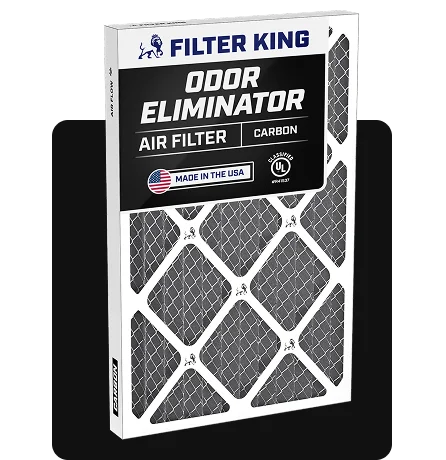

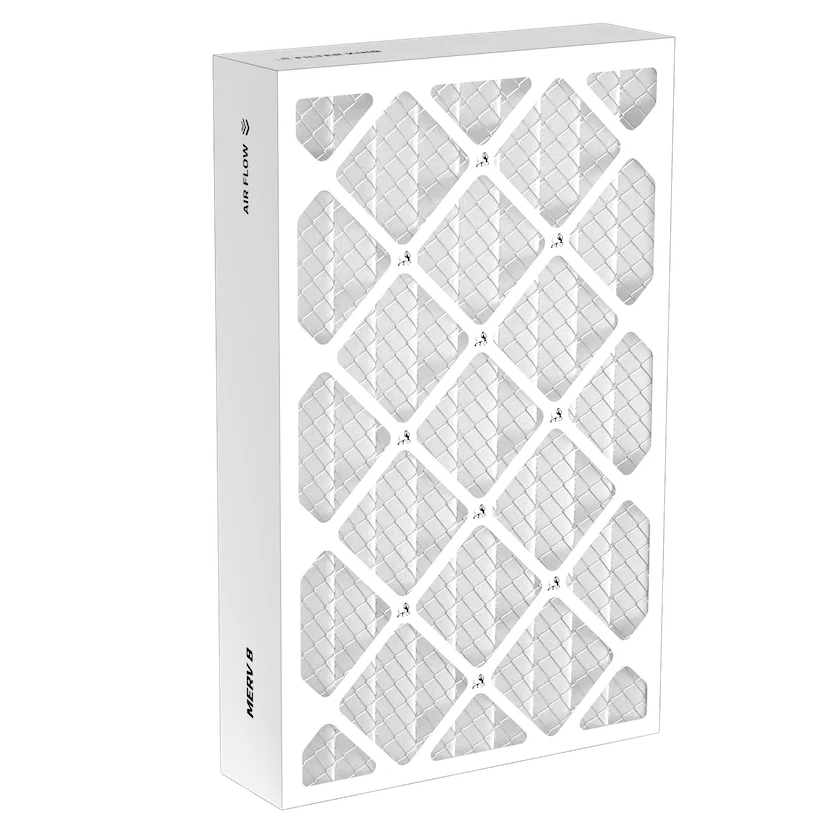
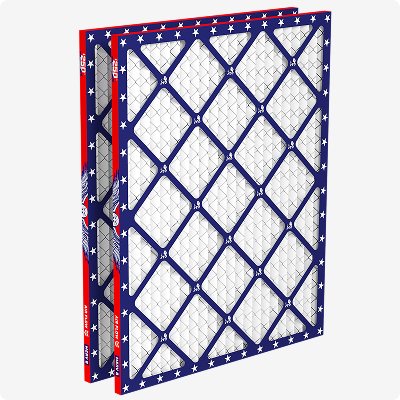
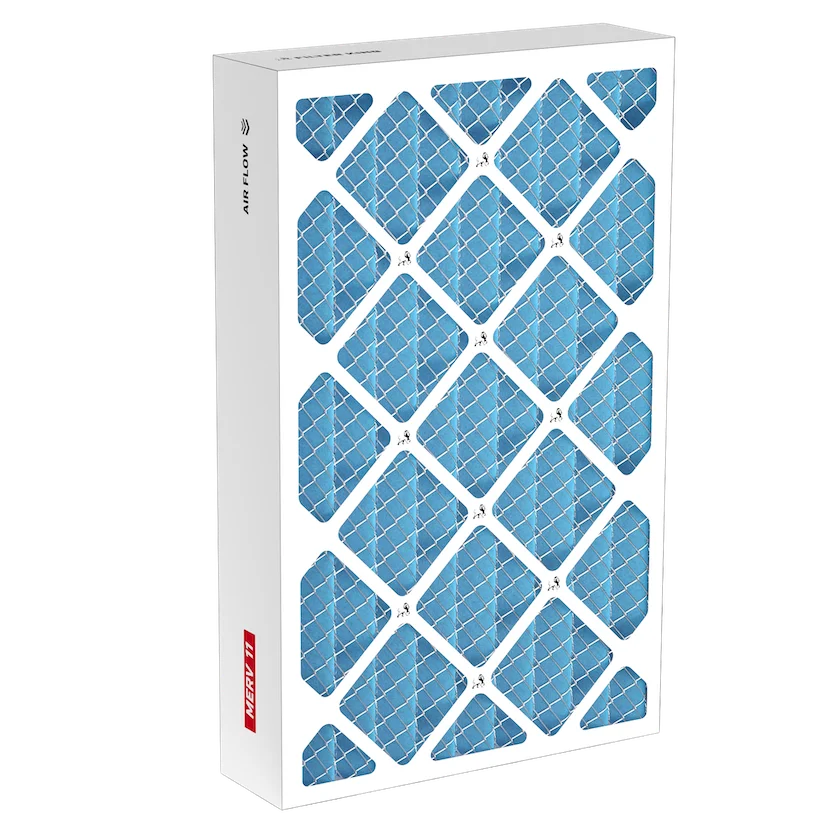
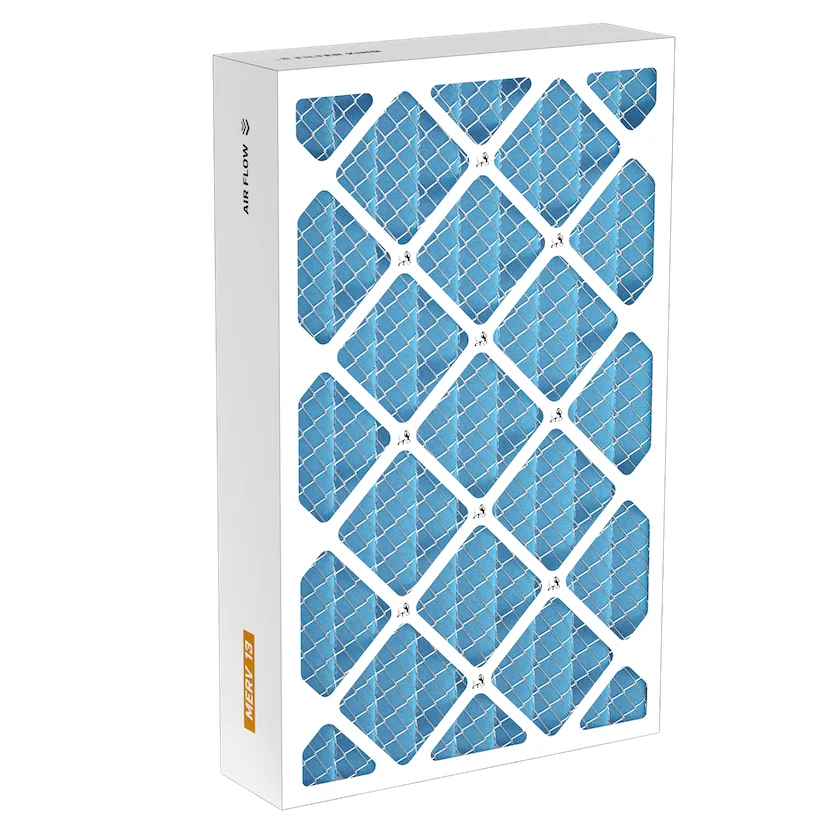
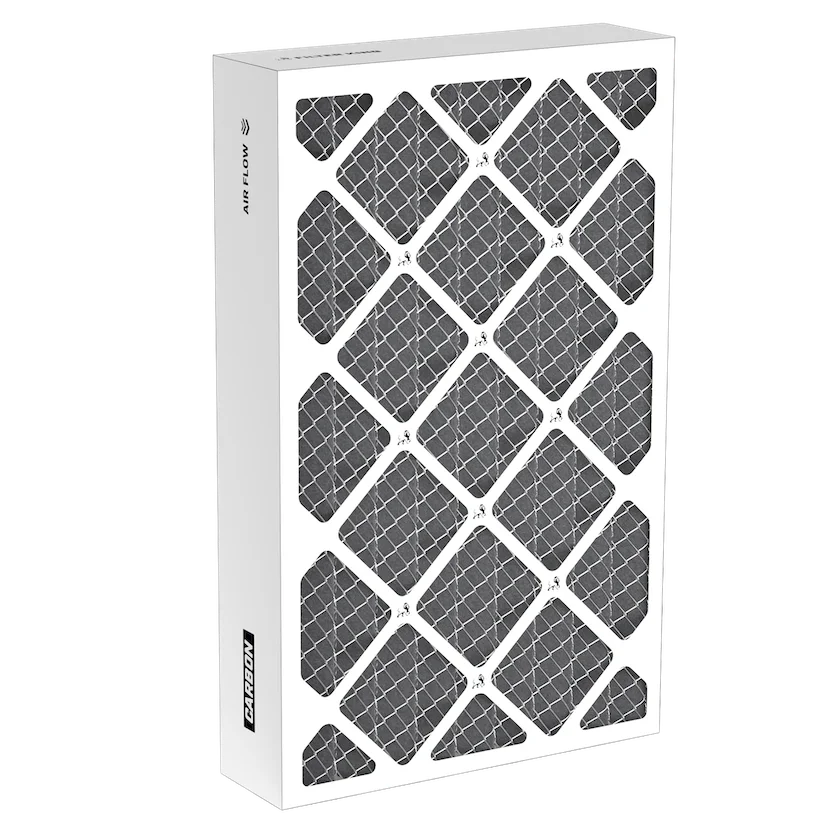




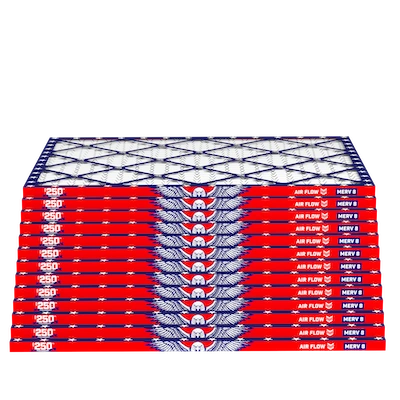
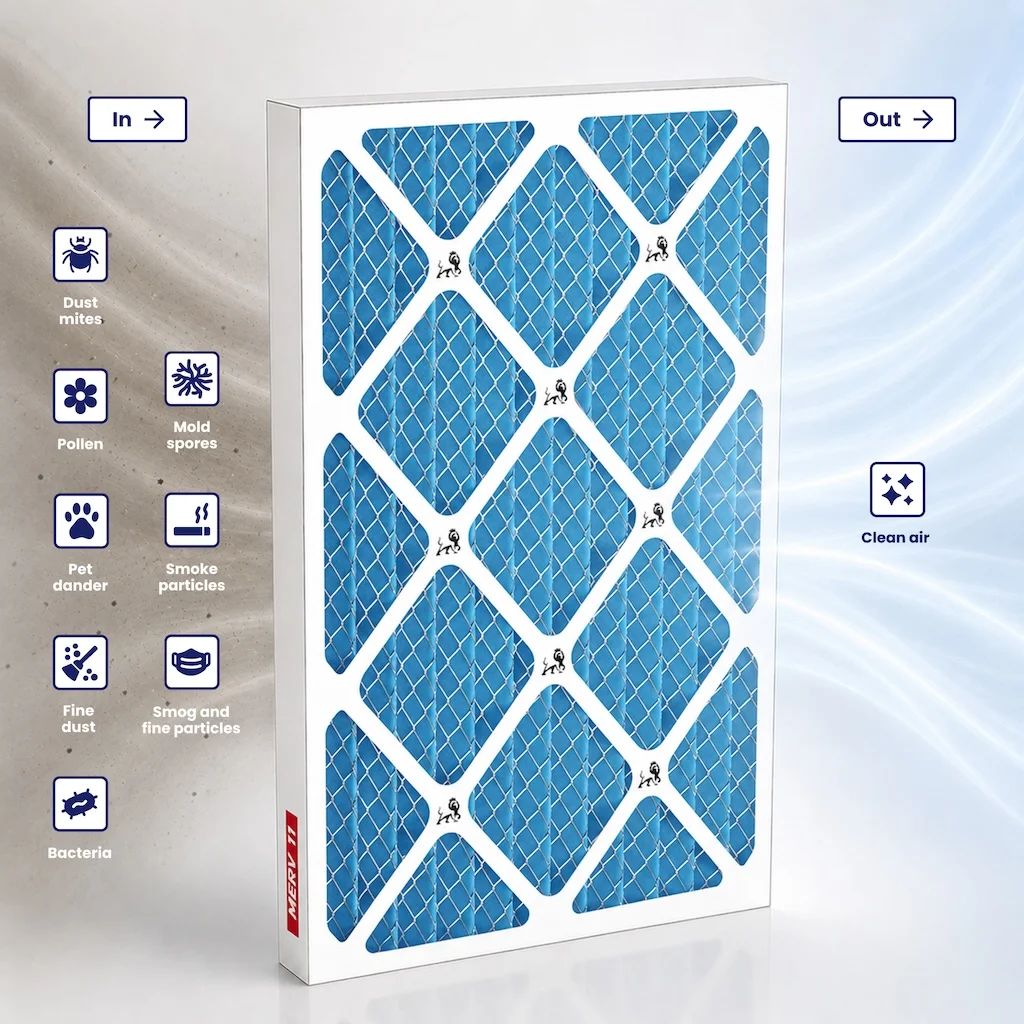
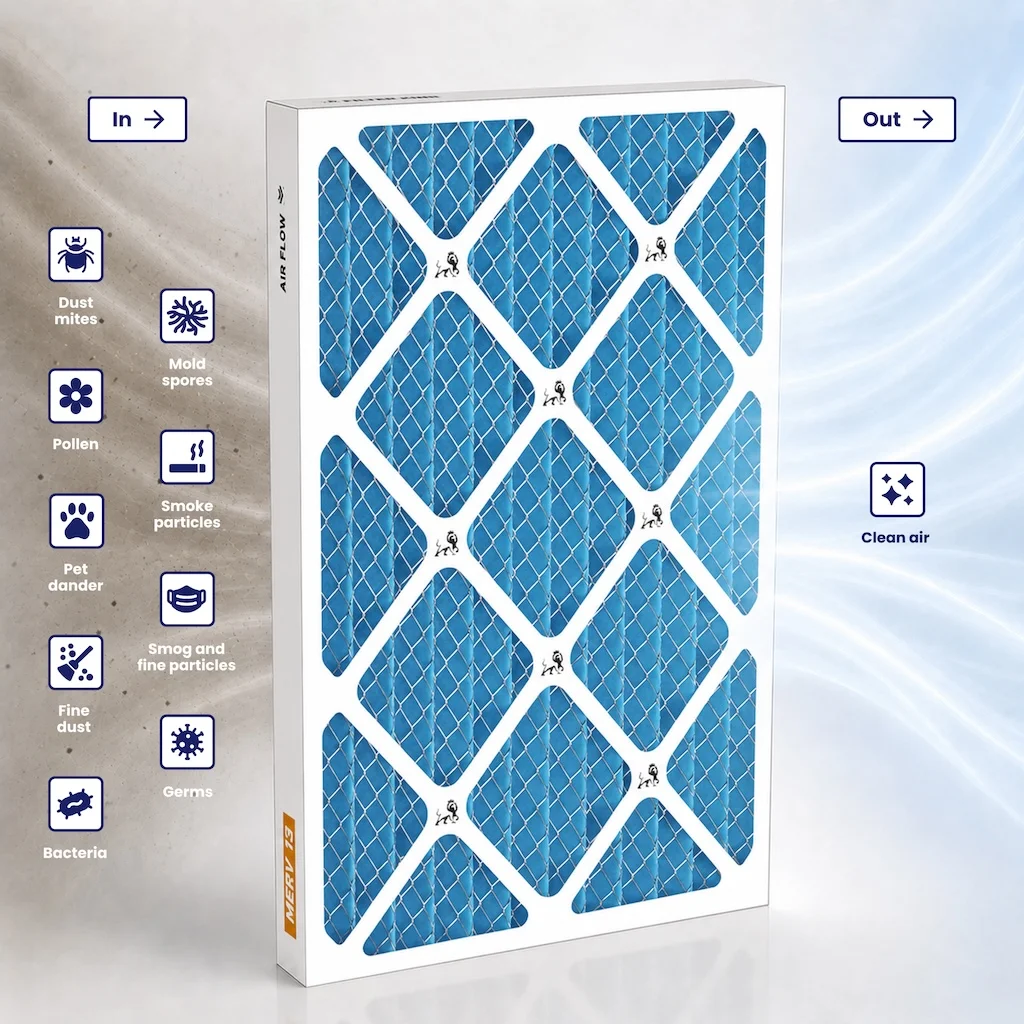
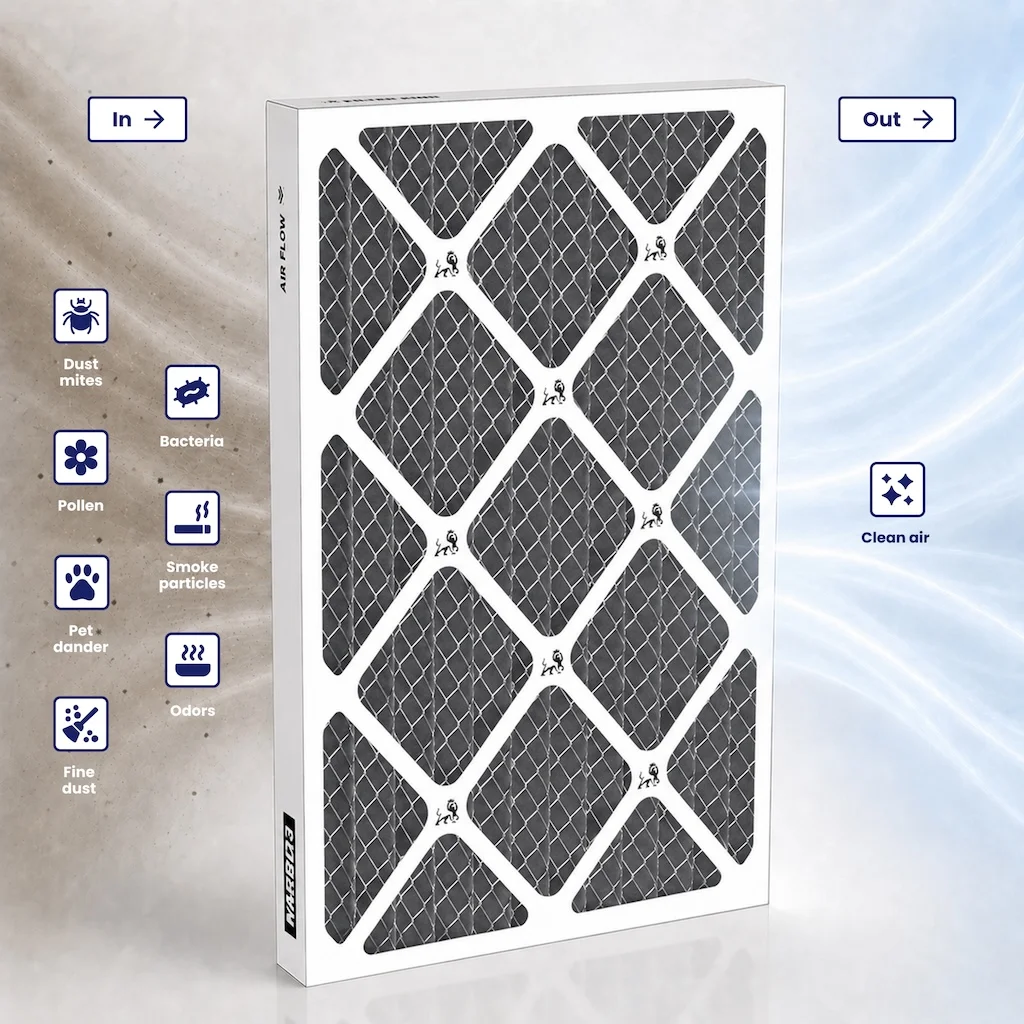



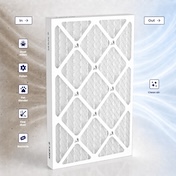
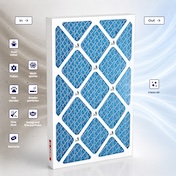
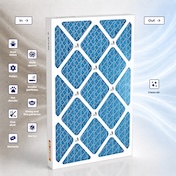
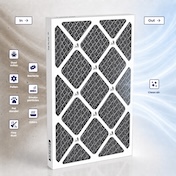
The 16x20x4 air filter is designed for residential furnace and HVAC systems, helping improve indoor air quality while protecting your equipment.
Actual size: 15.5 x 19.5 x 3.75 inches
 {{ filter_count }}


Processed quickly, ships fast, free for all orders

Return your items within 30 days and get a full refund

Find your perfect fit with our complete size range
Thicker filters last longer, but a 4-inch filter still needs fresh media over time. Here's a simple guide based on your household.


Thicker media traps more, but allergy sufferers still benefit from a fresh 4-inch filter roughly every 4 months.

A 4-inch filter has more room for pet hair and dander, so plan on a change about every 6 months in most homes.

For homes with young kids, a 4-inch filter typically lasts 6 to 9 months before it needs replacing.

Your filter catches dust every day, but it can only hold so much. Once it's full, dirty air keeps circulating and your system has to work harder – leading to problems that spread through your whole home.

A clogged filter makes your system work much harder to push air through. That extra effort shows up on your energy bill.

When air can't flow through, your AC can freeze up in summer and your furnace can overheat in winter.

A dirty filter weakens your system's airflow, so some rooms end up too hot, too cold, or just plain stuffy.
How well does the current selection protect your home?
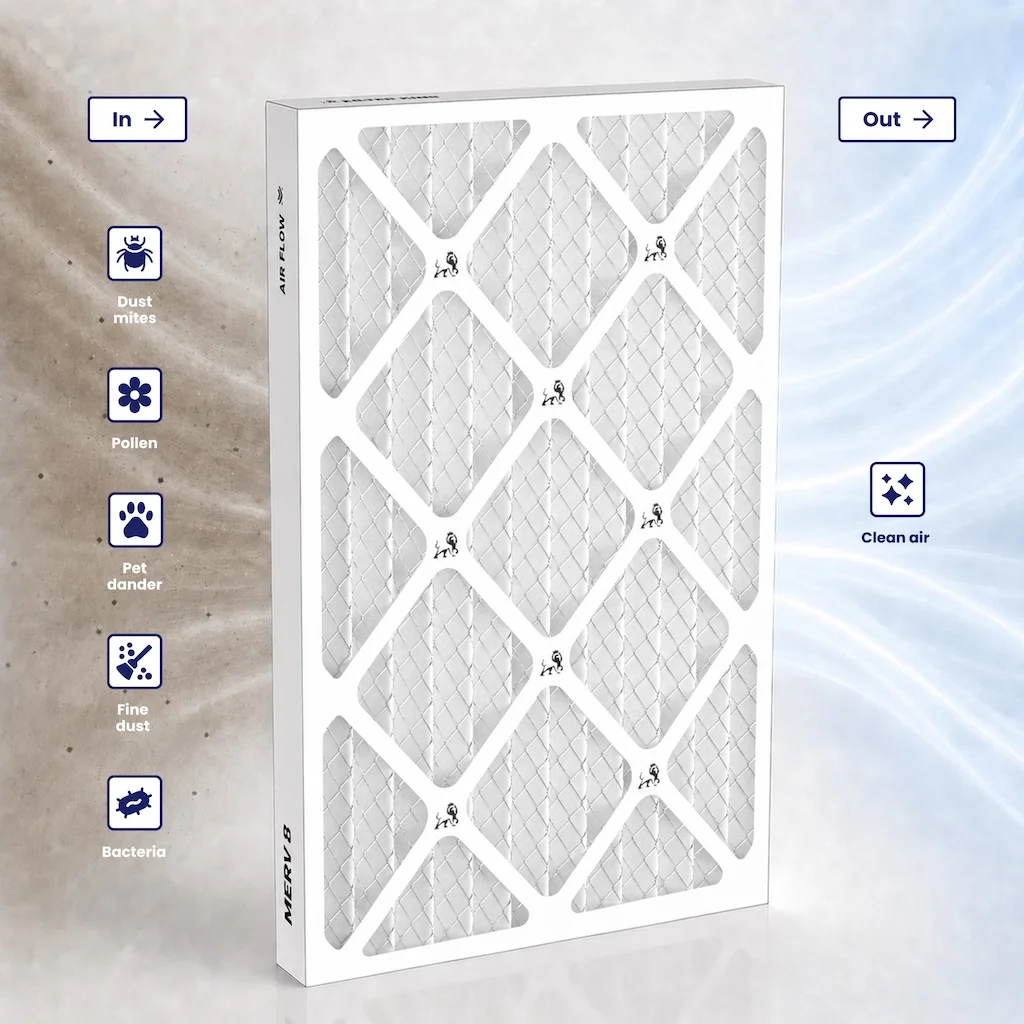
Captures dust mites, pollen, pet dander, lint, and mold spores – up to 90% of common household particles. Does not stop fine dust, smoke, or smog particles under 3 microns.


Captures everything MERV 8 does, plus fine dust, smoke particles, and smog – up to 95% of common particles, including particles as small as 0.1 microns. Does not capture bacteria, virus carriers, or odors.


Captures everything MERV 11 does, plus bacteria and virus carriers – up to 98% of common particles. Does not remove odors, VOCs, or cooking smells.


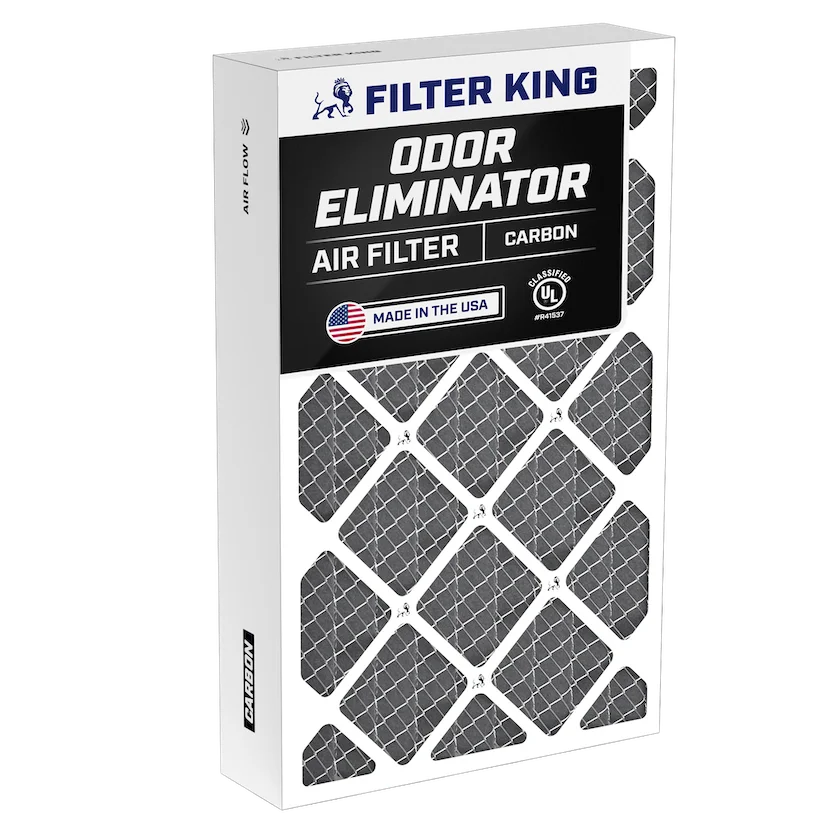
Captures the same particles as MERV 8 – dust mites, pollen, pet dander, lint, and mold spores – plus smoke particles, odors, gases, and VOCs at the molecular level. Does not capture fine dust, smog, bacteria, or virus carriers.


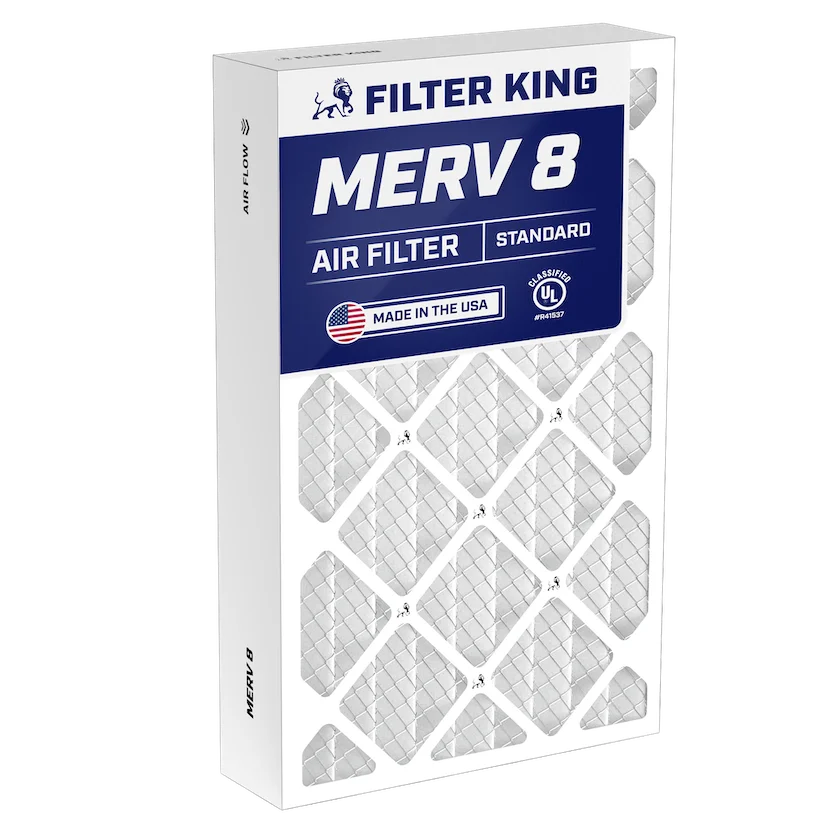
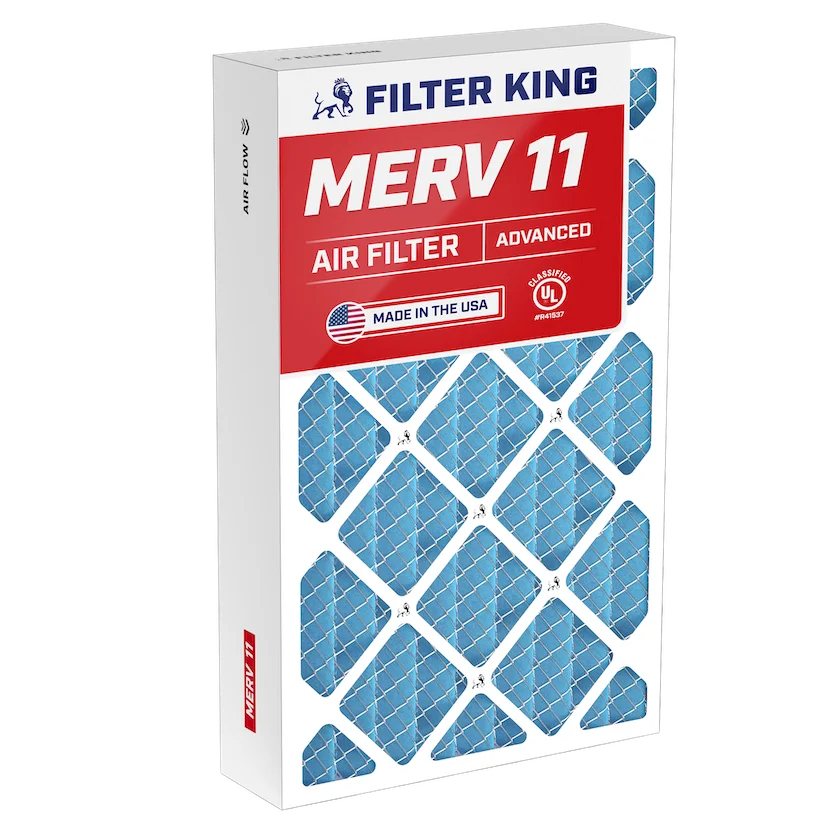
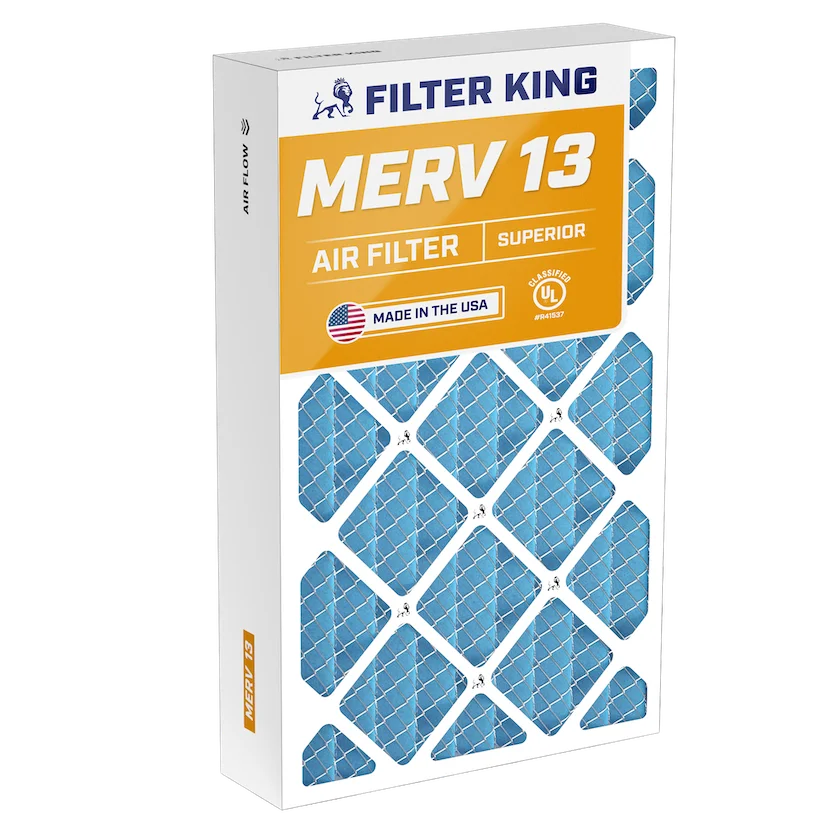


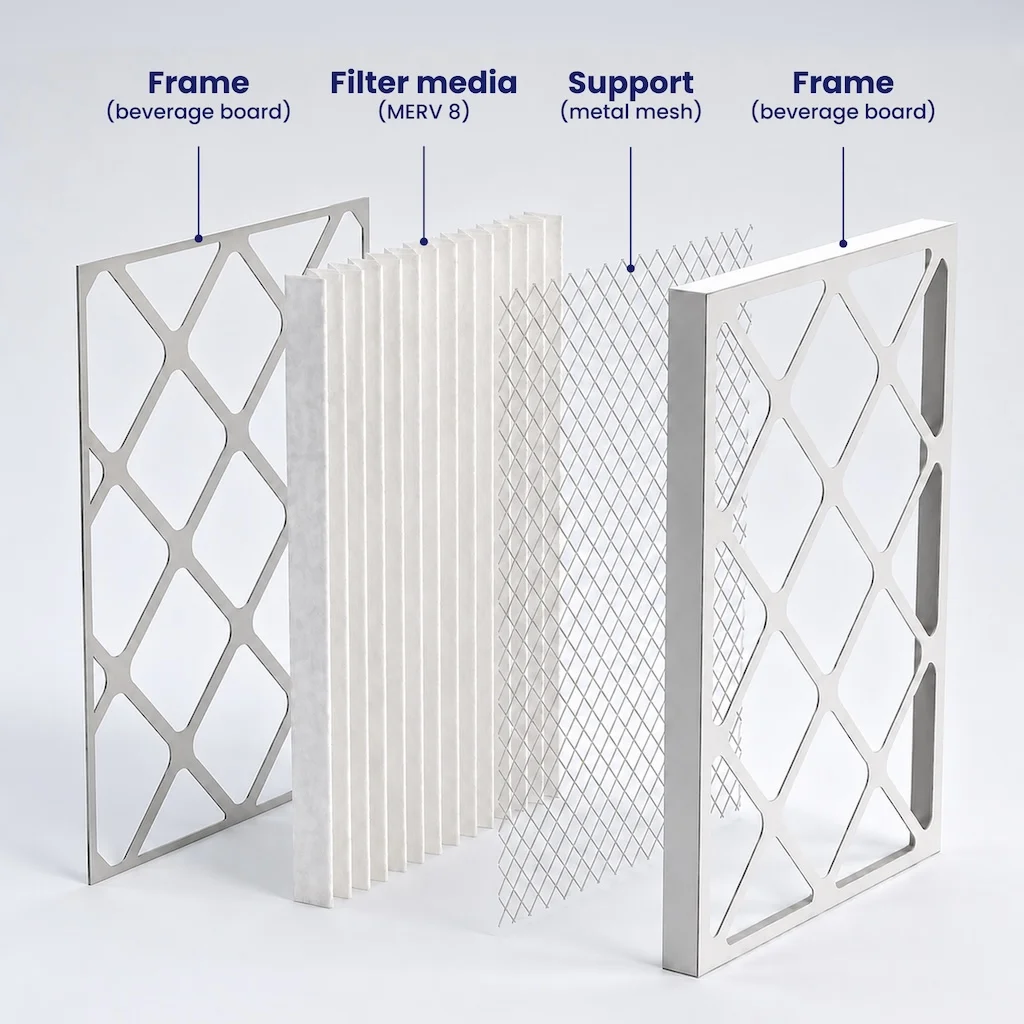
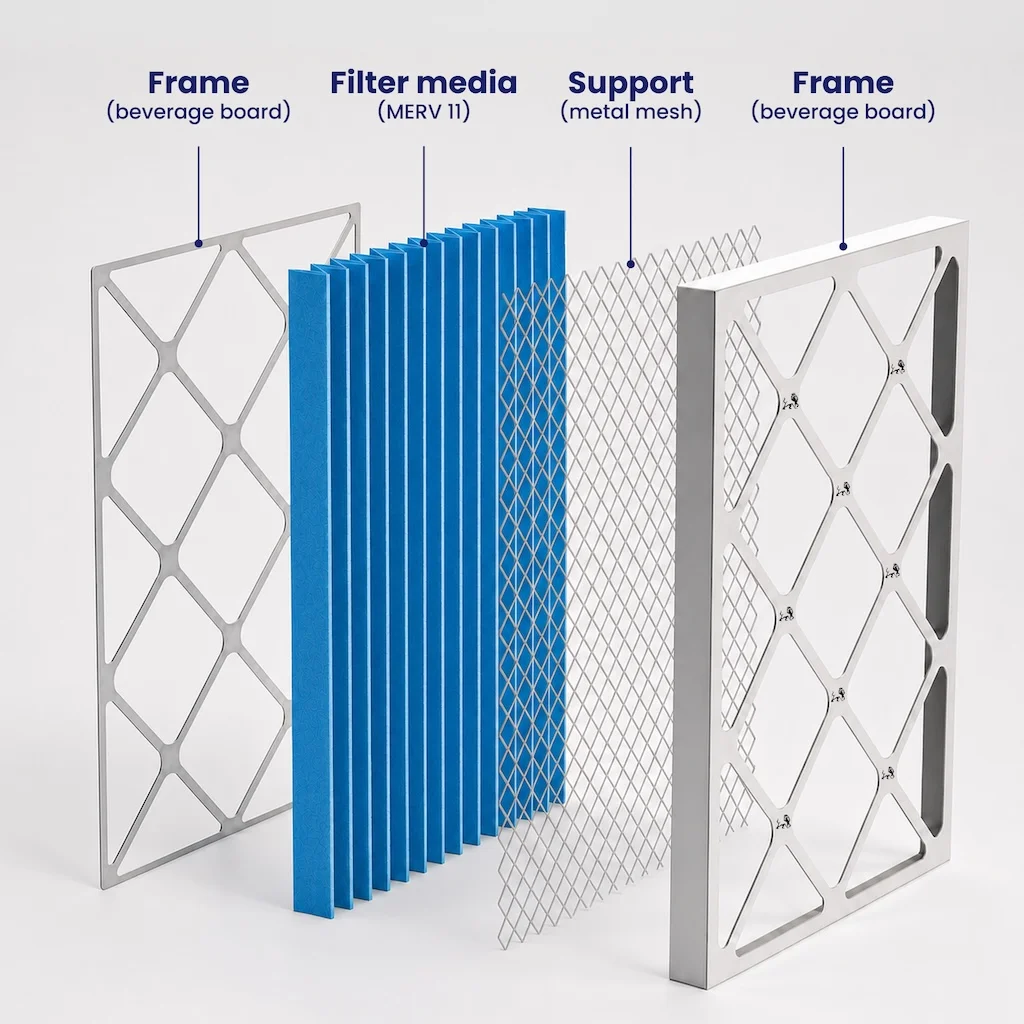
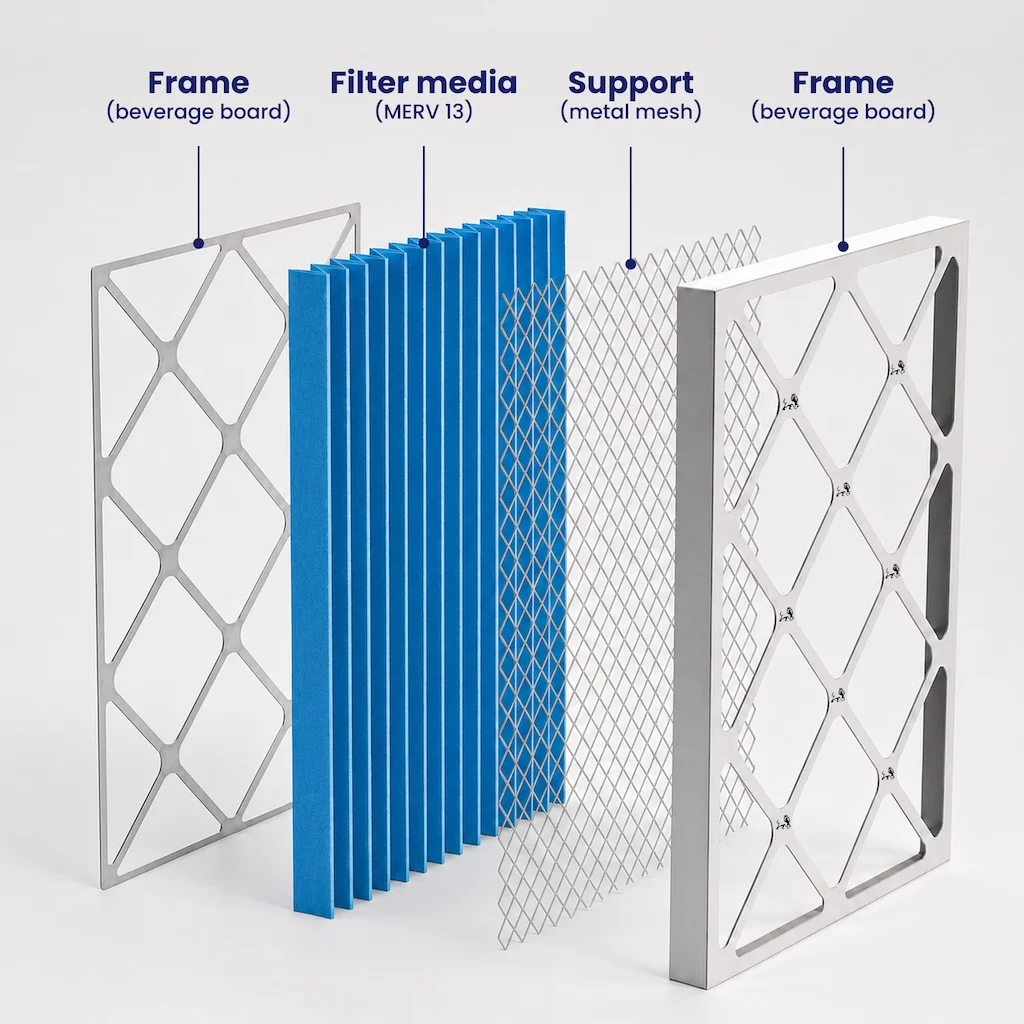
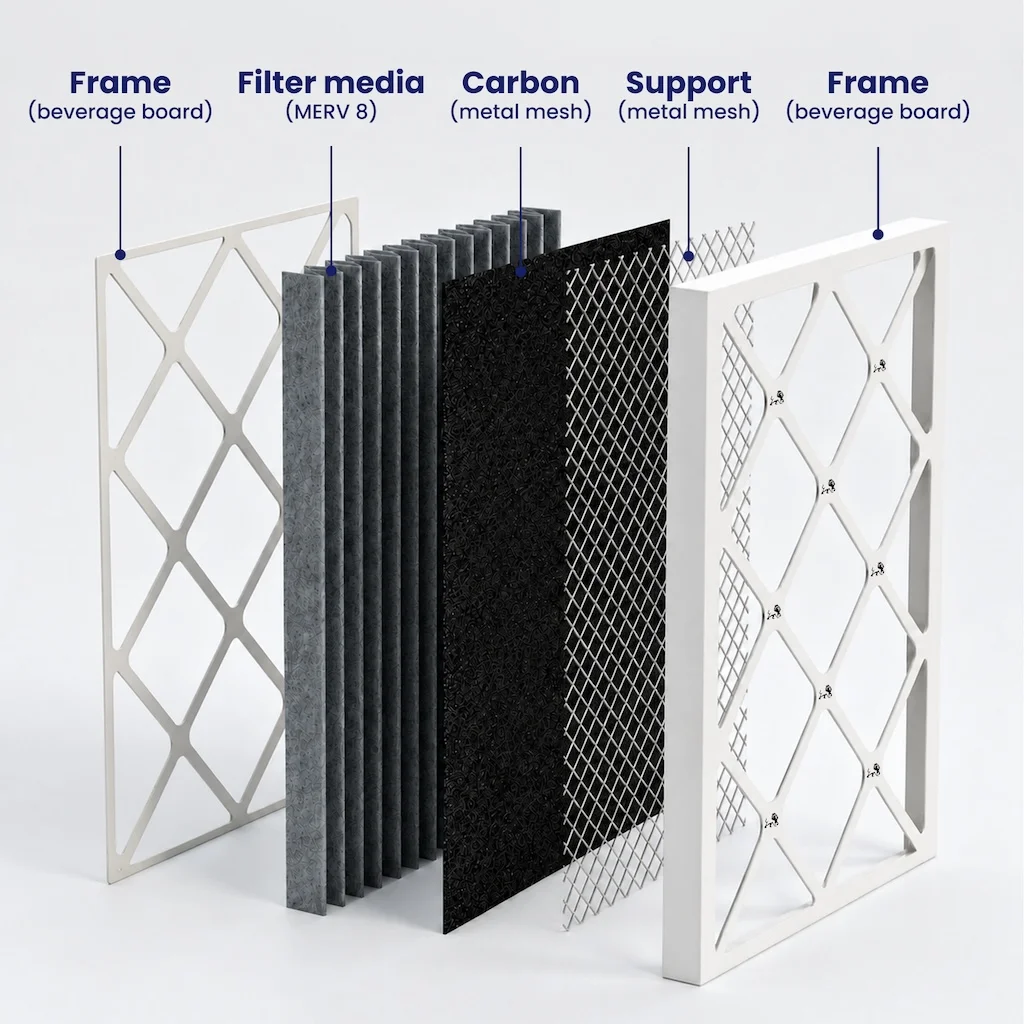
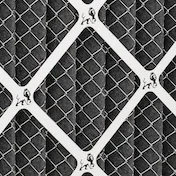
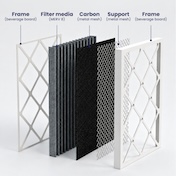
The diagonal straps die-cut into the frame bond to each pleat tip, keeping them evenly spaced so the filter won't bow.
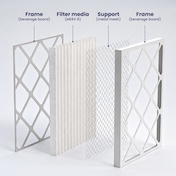
Traps up to 90% of everyday particles like dust mites, pollen, pet dander, and mold spores, while still letting air flow through freely.
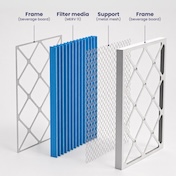
Rated to capture up to 95% of common particles, MERV 11 media catches dust mites, pollen, pet dander, and mold spores, as well as fine dust and smoke.
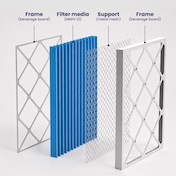
Stops up to 98% of particles passing through, including dust mites, pollen, pet dander, and mold spores, as well as fine dust, smoke, and bacteria.
Traps up to 90% of everyday particles like dust mites, pollen, pet dander, and mold spores, while still letting air flow through freely.
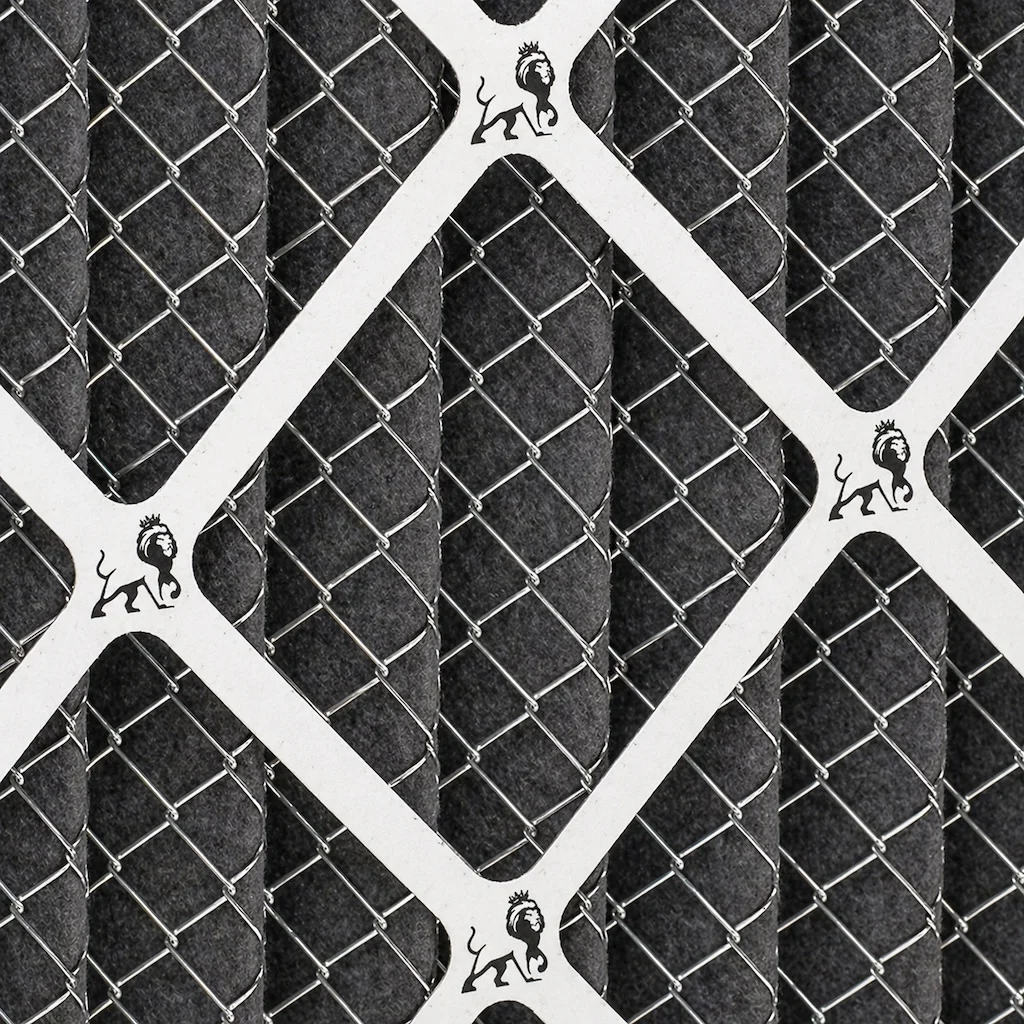
An expanded wire grid bonds to the media, stopping the pleats from shifting or pulling away under airflow.
An expanded wire grid bonds to the media, stopping the pleats from shifting or pulling away under airflow.
An expanded wire grid bonds to the media, stopping the pleats from shifting or pulling away under airflow.
A layer of activated carbon absorbs odor molecules from cooking, pets, and chemical fumes – catching what the filter media alone can't.
The same heavy-duty, moisture-resistant beverage board on the exit side holds its shape and keeps a tight seal in your vent or wall slot.
An expanded wire grid bonds to the media, stopping the pleats from shifting or pulling away under airflow.
Check the label on your current filter or use a tape measure to determine the length, width, and thickness. Just make sure you know the difference between nominal and actual size.
Nominal Size: 16x20x4
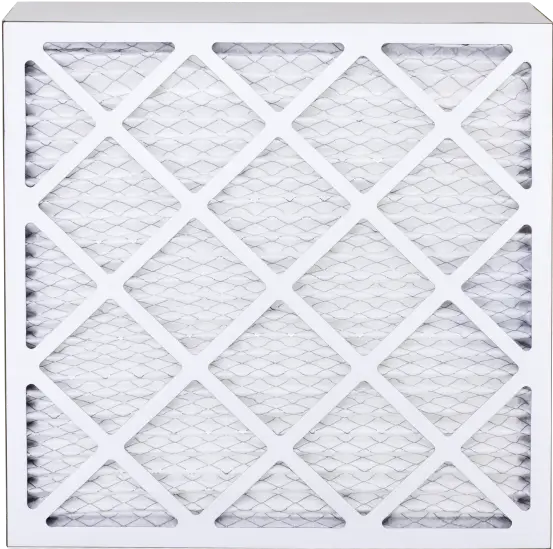
Actual Size: 15.5x19.5x3.75
Nominal size is what you normally see printed on the label. This is usually a rounded size which is often not the true size of your filter.
Actual size is the true size of the air filter, usually written in smaller font below the nominal size.
Measure your current air filter or the length, width, and depth of the opening slot to get the actual size. Round it up to the nearest whole inch to get the nominal size.
Installing 16x20x4 furnace filter or HVAC air filter is easy. Just make sure to align the arrow printed on the side with the airflow direction!
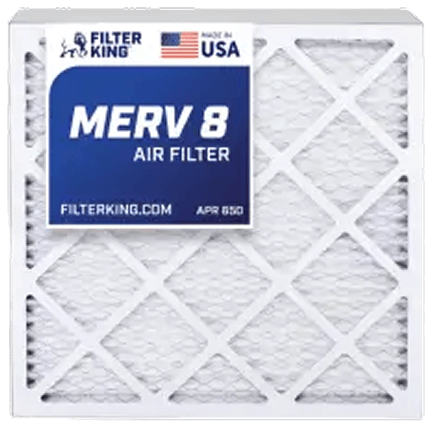
Remove the air filter from the package
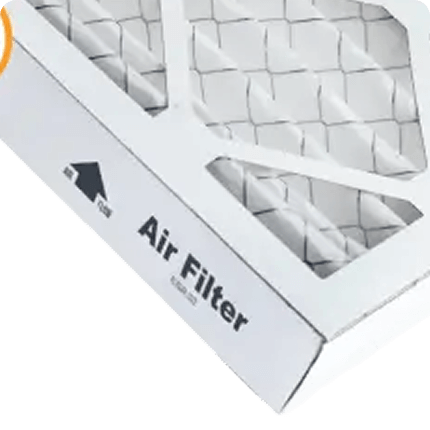
Locate the arrow and point it in the direction of the fan
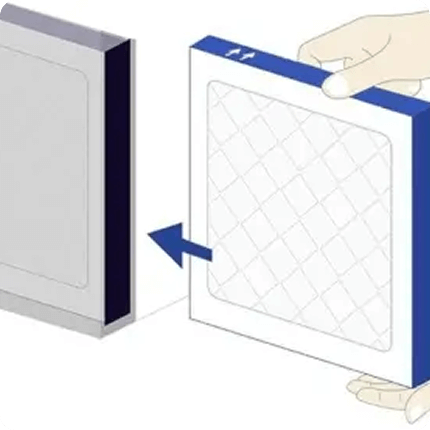
Slide the filter in to the slot of the central unit

For return grills, insert the filter into the grill, pointing the arrow inwards
Never run out of a clean filter – and cancel anytime if your plans change
 Pay full price on every order
Need to remember to reorder every time you run out
Forget to reorder, and a dirty filter can drive up your energy bills.
Pay full price on every order
Need to remember to reorder every time you run out
Forget to reorder, and a dirty filter can drive up your energy bills.
 Get 5% off every order, automatically
New filters arrive right when you need them
Pause, skip, or cancel anytime – no commitment needed.
Get 5% off every order, automatically
New filters arrive right when you need them
Pause, skip, or cancel anytime – no commitment needed.
A 16x20x4 air filter is a compact, 4-inch-deep filter that is commonly used in whole-house HVAC systems. These systems commonly rely on a media cabinet, rather than a disposable filter slot. The 4-inch depth dramatically impacts how air is cleaned—providing more surface area, steadier ongoing airflow, and longer service life. When researching air filters, it's important to consider your existing setup to improve indoor air quality.
This guide will walk you through everything you need to select the best 16x20x4 air filter for your home. You will understand performance advantages of 4-inch air filters, compatibility, and replacement timing so you can make a cost-effective purchase decision you're confident in. At FilterKing, our air filters are made with premium materials and come in an assortment of MERV ratings and filter sizes to suit your specific needs, so you're informed before finalizing your selection.
Finding good quality air filters is essential as a homeowner. If you're in the market for a 16x20x4 air filter, it's important to find a provider that's right for you and optimal for your existing system. Many well-known residential HVAC systems are compatible with 16x20x4 air filters. While specific model requirements vary by year and configuration, common brands that offer 16x20x4 air filter solutions include Bryant, Carrier, Lennox, Trane, American Standard, and Goodman.
A 16x20x4 air filter can work with the following systems:
Before choosing a 16x20x4 air filter for superior air quality, take these practical steps:
It's important to note that standards from the American Society of Heating, Refrigerating and Air-Conditioning Engineers (ASHRAE), emphasize the role of effective air filtration to reduce airborne particles in residential homes and environments with the use of filters with higher MERV ratings when airflow is properly maintained.
Quality air filters can make all the difference in your home, especially when it comes to air flow and overall indoor air quality. 16x20x4 air filters aren't just better because of thickness—they offer far more filter media (surface area) to fit in the same footprint. More surface area is the core reason 4-inch filters can last longer, hold more dust, and provide steadier airflow (compared to 1-inch air filters). Whether you're trapping dust mites, airborne particles, or smog particles, it's important to find an air filter that's suitable for your particular needs. In most instances, a 4-inch filter not only offers better dust-holding capacity, but a longer lifespan.
Because the media area is larger, 4-inch air filters generally offer more dust-holding capacity, ideal for those who not only want to improve the air quality in their homes, but capture smaller particles, such as dust mites, mold spores, pet dander, and other airborne particles. Homeowners often experience longer replacement intervals with 4-inch media compared to 1-inch air filters.
Airflow resistance is often described as pressure drop (static pressure). Higher pressure drop means the HVAC system has to work harder to pull the air through the filter. EPA's indoor airPLUS filtration bulletin notes that sizing ducts and the filter box to allow thicker or wider filters can generally create less static pressure while helping to improve airflow.
Filtration performance isn't just about how tight the media is, it's about the balance between:
When 16x20x4 air filters are installed properly, the advantages show up as:
Understanding MERV rating selection (minimum efficiency reporting) is essential when you want to capture particles and unfiltered air in your home. Choosing the right air filters is one of the most important performance decisions you'll make. MERV is a standardized scale developed by ASHRAE to indicate how effectively a filter captures airborne particles of different sizes.
Higher MERV ratings capture smaller microscopic particles, but they can also increase airflow resistance if the filter design is not robust enough. This is where a 4-inch depth of air filters makes a meaningful difference. The added depth of a 4-inch filter provides more surface area, allowing higher-efficiency filtration without the airflow issues commonly associated with thin, high MERV filters. Below is a practical breakdown of common MERV options available in 16x20x4 air filters and how to select one for your home.
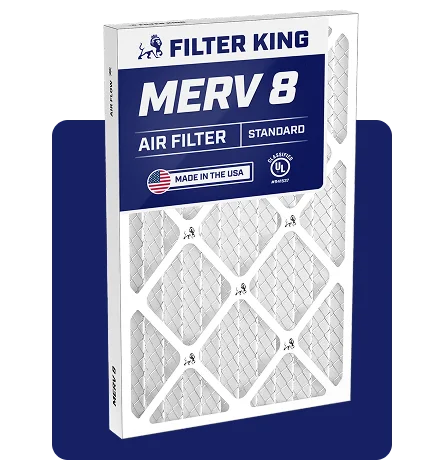
MERV 8 filters are widely recommended as a baseline for residential homes and an existing HVAC filter. According to the U.S. Environmental Protection Agency, filters in this range are effective at capturing common household particles such as:
With a 4-inch integration, MERV 8 provides excellent quality airflow and long service life. The deeper pleat structure increases dust-holding capacity, so the filter maintains performance longer than a 1-inch MERV 8.
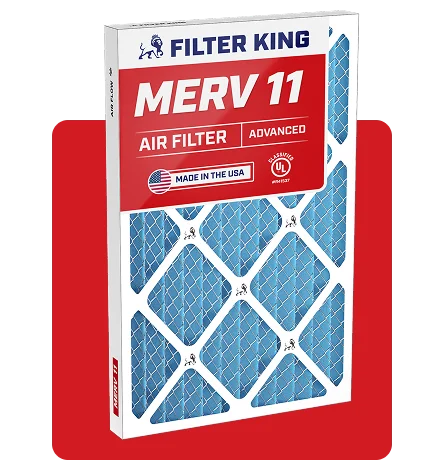
MERV 11 filters are best for homes with pets, dander, seasonal allergies, and maximum filtration when it comes to higher dust levels. MERV 11 filters capture smaller particles compared to MERV 8, including:
ASHRAE performance data shows that MERV 11 filters are more effective at capturing particles in the 1-3 micron range (where many allergens live), compared to MERV 8. Stepping up to a MERV 11 air filter can noticeably increase resistance as the filter loads. With 16x20x4 air filters, the added surface area helps maintain airflow while delivering better particle capture, making it a practical upgrade rather than a risky one.
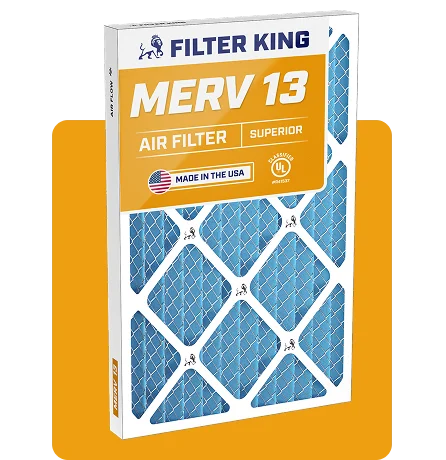
If you have dust mites, allergens, or health concerns in your home, choosing the MERV 13 rating for your filter may be ideal. MERV 13 filters are best for allergens, asthma concerns, and health-conscious environments. MERV 13 filters are capable of capturing small airborne particles, including:
Both ASHRAE and EPA guidance identify MERV 13 as a high-efficiency filter suitable for improving indoor air quality when systems are designed properly for it.
It's important to note that MERV 13 can be problematic in 1-inch filters, where limited surface area can lead to a pressure drop (and airflow restriction). However, in a 4-inch 16x20x4 air filter, the deeper media allows MERV 13 filtration with far more stable airflow, assuming the system has been designed for a media cabinet.
MERV 8 Carbon filters combine standard filtration with activated carbon, which helps absorb odors and certain VOCs, or volatile organic compounds. MERV 8 Carbon is best for homes with pets and dander, cooking odor, and mild chemical smells. These filters are designed for households dealing with:
The thicker depth of the filter allows more room for pleated media and a carbon layer without compromising airflow. This is not always possible with a 1-inch filter design.
These homes typically have:
These cabinets are usually installed:
In homes where space is limited (such as townhomes or properties with compact utility closets), 16x20x4 air filters offer a space-efficient solution. This makes this size popular in newer or remodeled homes where builders want improved air quality but must work within tight spatial constraints.
Homeowners using 16x20x4 air filters typically value:
Standard homes and typical households without pets, smoking, and allergy concerns may find MERV 8 filters ideal. These filters capture common airborne particles, pollen, mold spores, and dust while maintaining excellent airflow.
Homes with pets may find MERV 11 filters better, as MERV 11 captures airborne dander, hair fragments, and tracked-in dust. MERV 11 filters are designed to capture a much higher percentage of particles within the 1-3 micron range compared to MERV 8.
Those with allergies and asthma-sensitive households may consider MERV 13 filters for pollen, mold spores, and indoor allergens that fall within the sub-micron to few microns range. Both ASHRAE and the EPA recognize MERV 13 as a high-efficiency filter, capable of capturing finer airborne particles, including those associated with respiratory irritation.
Homes dealing with odors, pets, and cooking smells may consider MERV 8 carbon filters. MERV 8 carbon filters are manufactured to capture odor-causing compounds and light volatile organic compounds, also known as VOCs.
With standard 16x20x4 air filters, they are designed to last 6–9 months—significantly longer than 1-inch filters. That said, replacement timing is not always a one-size-fits-all solution.
Typical 6-9 month lifespan assumes:
At FilterKing, our construction standards and dimensional accuracy matter. Our filters have genuine MERV certification and pleat optimization while also being available year-round. They are UL Classified (UL File #R41837) tested by Underwriters Laboratories to meet recognized HVAC safety standards, providing added confidence in materials and suitable for both residential and commercial systems. FilterKing's filters not only offer a great price and quick delivery, but the correct size with actual dimensions printed on each of the filters you purchase.
Using precisely made air filters allows you to:
Verified MERV ratings allow you to feel confident that your filter is actually delivering the level of protection needed in your home.
Choosing the right filter for easy installation while abiding by industry standard practices is easy with FilterKing.
The 16x20x4 air filter's nominal size is slightly larger than its true dimensions, which are actually approximately 15.5 x 19.5 x 3.75 inches. This small reduction allows the filter to slide in easily with proper sealing.
Most filters of this size can be changed every 6–9 months. However, homes with extreme levels of dust, pets, or allergens may need replacements around 6 months.
No. You can only use a 5-inch filter if your media cabinet is designed for a 5-inch filter. Forcing a 5-inch filter can restrict airflow or damage the housing.
Not always. In systems designed for 4-inch media filters, MERV 13 will typically maintain acceptable airflow. This added depth provides more surface area, which helps avoid airflow problems commonly associated with 1-inch MERV 13 filters.
Yes. A media cabinet or compatible filter rack is essential. 4-inch filters cannot be installed in standard 1-inch filter slots.
4-inch filters use more filter media, last longer, and provide better airflow stability. This results in fewer replacements, often making them more cost-effective over time.
No. Vacuuming can damage the filter media and reduce filtration effectiveness.
A 4-inch filter offers more surface area, better dust-holding capacity, steadier airflow, and a longer lifespan. A 1-inch filter is thinner and will require frequent replacements, as it can clog more quickly (especially with higher MERV ratings).


 MERV 8 filters