



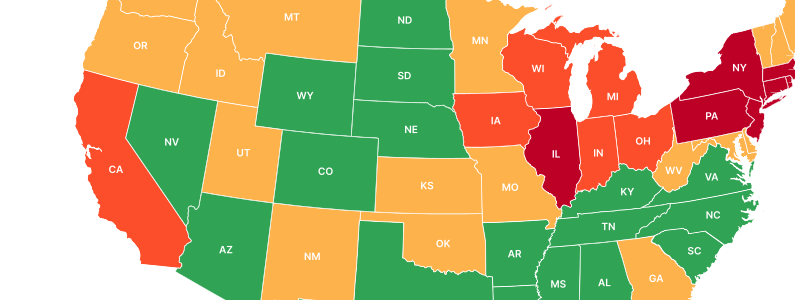
Indoor air quality index by state
Best indoor air Florida
Worst indoor air New York
Average index
States Breathing The Worst Indoor Air
Ventilation is vital to indoor air quality. However, the winter season turns homes into closed environments that can become a significant respiratory health concern because of the decreased air quality. While many Americans don’t open their windows often enough on cold days, their HVAC systems are not enough to keep the air quality at a high level. As a result, the air circulating through these enclosed spaces often becomes increasingly polluted with combustion gases, allergens, and fine particles over time.
The recent study at Stanford University found that an estimated 22 million Americans are exposed to unsafe levels of Nitrogen Dioxide (NO2) solely through gas stove use. The study's results, published in December 2025, concluded that replacing gas with electric cooking appliances can lower NO2 exposure by 50%. Nonetheless, gas stoves are only a small part of this larger issue. It worsens every year during the winter months, when all heating systems operate continuously, and ventilation rates drop.
At Filter King, our mission is to help every household be able to breathe better indoor air using reliable, long-lasting, and high-quality filters. We are a domestic air filter manufacturer focused on everyday indoor air quality in homes. Therefore, we dedicated time to investigate and provide a data-based answer to the question: “Which U.S. states have the worst indoor air quality during winter?”
Key insights
- New York ranks worst with an Indoor Air Quality Index score of 74.28, facing a dangerous combination of 7.93 PM2.5 outdoor pollution infiltration, 62% gas stove usage, and 3,352 heating degree days.
- Florida ranks best with a score of 19.68, nearly 4 times better than New York, benefiting from only 405 heating degree days and the nation's lowest gas stove usage at 8%.
- Alaska accumulated 6,377 heating degree days from July 2025 through January 2026, 28% higher than even North Dakota's 4,999, meaning homes stay sealed longest with minimal ventilation.
- California leads gas stove usage at 70% of households, followed by New Jersey (69%) and Illinois (67%), exposing millions to nitrogen dioxide and combustion byproducts during every meal preparation.
- The District of Columbia has the oldest housing stock with homes built around 1960 (median age 66 years), predating modern ventilation codes and energy-efficient air exchange systems.
- The Northeast dominates the worst rankings with 5 of the top 10 states (New York, New Jersey, Massachusetts, Pennsylvania, Rhode Island), while Southern states claim 7 of the bottom 10 spots due to milder winters and lower gas appliance dependence.
- The national average IAQ score is 45.07, with worst-performing states scoring 1.6x higher than the national average and best-performing states scoring 2.3x lower.
- Wyoming has the cleanest outdoor air with just 1.6 PM2.5, while Alaska has the worst at 12.37, a 7.7x difference in outdoor pollution infiltration alone.
Methodology summary
This study analyzed all 50 states plus the District of Columbia using four equally weighted factors:
- Outdoor air infiltration: PM2.5/AQI state averages from EPA (Dec 2025 to Feb 2026)
- Housing age (as a metric for ventilation quality): Median year built from Census ACS data
- Winter sealing intensity: cumulative heating degree days 2025-2026 winter season from NOAA
- Indoor combustion: Gas stove usage % from EIA
Data accessed February 2026. All metrics are standardized and combined into a 100-point Indoor Air Quality Index, where 1 = best, 100 = worst.
Full rankings table
| State | Index | Gas Stove Usage % | Heating Degree Days | Median Home Age | PM2.5 Mean (Jan 26) |
|---|---|---|---|---|---|
| New York | 74.28 | 62 | 3352 | 65 | 7.93 |
| District Of Columbia | 70.68 | 62 | 2440 | 66 | 7.63 |
| Alaska | 69.65 | 38 | 6377 | 38 | 12.37 |
| Illinois | 67.5 | 67 | 3610 | 53 | 7.01 |
| New Jersey | 65.98 | 69 | 3212 | 54 | 6.4 |
| Massachusetts | 62.03 | 44 | 3628 | 60 | 6.59 |
| Pennsylvania | 61.58 | 37 | 3584 | 58 | 8.22 |
| Rhode Island | 60.68 | 36 | 3564 | 62 | 6.93 |
| Michigan | 59.45 | 45 | 3949 | 51 | 7.25 |
| California | 58.53 | 70 | 1006 | 47 | 8.64 |
| Ohio | 56.9 | 34 | 3562 | 53 | 8.12 |
| Connecticut | 53.85 | 27 | 3511 | 56 | 7.25 |
| Wisconsin | 53.83 | 34 | 4415 | 48 | 6.72 |
| Indiana | 53.78 | 40 | 3448 | 47 | 7.57 |
| Iowa | 53 | 33 | 3957 | 52 | 6.19 |
| Minnesota | 49.88 | 29 | 4791 | 45 | 6.04 |
| Maryland | 48.75 | 40 | 2893 | 44 | 7.15 |
| Oregon | 46.93 | 25 | 2537 | 43 | 9.8 |
| West Virginia | 44.7 | 25 | 3087 | 47 | 6.8 |
| New Mexico | 44.35 | 50 | 2298 | 39 | 5.91 |
| Utah | 43.1 | 35 | 3075 | 32 | 8.56 |
| Oklahoma | 42.88 | 37 | 2024 | 43 | 6.86 |
| Montana | 42.58 | 26 | 4011 | 43 | 5.24 |
| Delaware | 42.25 | 27 | 2792 | 37 | 8.66 |
| Missouri | 41.9 | 27 | 2878 | 45 | 6.15 |
| Vermont | 41.9 | 11 | 4769 | 47 | 5.14 |
| Idaho | 41.75 | 28 | 3323 | 33 | 8.47 |
| Maine | 41.35 | 7 | 4393 | 47 | 6.21 |
| New Hampshire | 41.33 | 14 | 4285 | 45 | 5.74 |
| Kansas | 41.13 | 23 | 2806 | 48 | 5.79 |
| Washington | 41.1 | 24 | 2806 | 39 | 8.08 |
| Georgia | 40.68 | 35 | 1730 | 32 | 9.77 |
| Nevada | 39.98 | 60 | 1717 | 27 | 6.59 |
| South Dakota | 39.28 | 15 | 3910 | 44 | 5.58 |
| Virginia | 39 | 27 | 2680 | 39 | 6.88 |
| Arkansas | 38.98 | 30 | 2032 | 36 | 8.29 |
| Kentucky | 38.83 | 20 | 2716 | 41 | 7.39 |
| Louisiana | 38.6 | 33 | 1175 | 41 | 7.67 |
| North Dakota | 36.68 | 11 | 4999 | 42 | 3.85 |
| Nebraska | 36.65 | 23 | 3315 | 48 | 2.98 |
| Colorado | 35.88 | 31 | 3287 | 36 | 4.65 |
| Texas | 35.25 | 37 | 1010 | 33 | 8.02 |
| South Carolina | 32.53 | 18 | 1756 | 32 | 9.09 |
| Wyoming | 32.3 | 24 | 3731 | 43 | 1.6 |
| Mississippi | 32.03 | 17 | 1499 | 37 | 8.1 |
| Alabama | 31.33 | 18 | 1689 | 38 | 7.03 |
| Tennessee | 31.15 | 14 | 2342 | 37 | 6.8 |
| North Carolina | 31.15 | 14 | 2238 | 33 | 8.09 |
| Arizona | 31.1 | 30 | 980 | 31 | 8.01 |
| Hawaii | 19.85 | 11 | 0 | 44 | 4.42 |
| Florida | 19.68 | 8 | 405 | 35 | 6.66 |
States with the worst indoor air quality
#1 Worst in USA New York
*Indoor Air Quality Index. Lower is better.
New York State is named the worst in the nation for indoor air quality. Their residents are #4 nationwide for using gas appliances (62% of households). Also, the median home age is 65 years, which makes NY houses one of the oldest in the nation. Severe Winter weather causes sealing with 3,352 heating degree days, resulting in many months of home closure while also maintaining PM2.5 levels at 7.93 µg/m³ since the winter season began. Furthermore, New York's old housing infrastructure traps pollutants inside through outdated ventilation systems that contribute to respiratory problems and cardiovascular strain. The most impacted cities are New York City, Buffalo, and Rochester.
#2 Worst in USA District of Columbia
*Indoor Air Quality Index. Lower is better.
Washington D.C., is very close to New York in terms of indoor air quality issues as a result of its density, age of residential base, and high percentage of gas stove use (62%) among all of its household types. Washington, D.C. has the oldest median age of the top five cities' housing stock, with homes that are on average 66 years old, creating further potential for pollutants to be trapped within the confines of older, poorly ventilated buildings. The seasonally sealed nature of the area contributes additional indoor pollutant buildup from both the colder winter months (2,440 HDD) and the relatively low ventilation rates throughout the warmer spring and summer months. The concentration of fine particulate matter in the air now is approximately 7.63 µm/m³.
#3 Worst in USA Alaska
*Indoor Air Quality Index. Lower is better.
Alaska stands out as the most extreme example of a cold climate. Gas stoves are used less frequently than on the East Coast; only 38% of Alaskan households use them. Nevertheless, the cold climate has a significant impact on the indoor air through continuous winter sealing and higher levels of particulate matter. The State of Alaska recorded 6,377 heating degree days, which is the highest in the U.S. Thus, homes are sealed for most of the year, causing smoke and emissions from cooking to stay inside the house. The average concentration of PM2.5 since the season began is 12.37 µg/m³: the highest in the U.S. as well. The median age of homes is 38 years, which is younger than many of the states in the Northeast. Anchorage, Fairbanks, and Juneau have the greatest amount of exposure to poor indoor air quality during the peak winter months.
#4 Worst in USA Illinois
*Indoor Air Quality Index. Lower is better.
Illinois is ranked as the fourth-worst state for indoor air quality due to the higher levels of indoor combustion and longer heating season. It has one of the highest gas stove usage rates in the United States (67%). 3,610 Heating Degree Days force residents to seal their homes during the cold winter months. In addition, Illinois has a very old stock of housing (53 years old). Overall, the PM2.5 level is 7.01 µg/m³, which leads to an accumulation of particles inside the residents’ houses. The City of Chicago is the most prominent hotspot, with millions of Americans spending time in the wintertime living in small, old, or tightly sealed apartments.
#5 Worst in USA New Jersey
*Indoor Air Quality Index. Lower is better.
New Jersey ranks fifth overall in the national ranking of indoor air quality. This state has 69% of households using gas stoves as their primary method of cooking. New Jersey's median home age is 54. Since winters are relatively cold in New Jersey, homes are typically closed for extended periods each winter, with an average of 3,212 Heating Degree Days since this winter season beginning. When the outdoor concentration of PM2.5 (6.4 µg/m³) combines with the higher concentration of pollutants, the indoor environment becomes even more unhealthy. All three cities of Newark, Jersey City, and Paterson experience the highest level of indoor air pollution issues.
| State | Index | Gas Stove Usage % | Heating Degree Days | Median Home Age | PM2.5 Mean (Jan 26) |
|---|---|---|---|---|---|
| New York | 74.28 | 62 | 3352 | 65 | 7.93 |
| District Of Columbia | 70.68 | 62 | 2440 | 66 | 7.63 |
| Alaska | 69.65 | 38 | 6377 | 38 | 12.37 |
| Illinois | 67.5 | 67 | 3610 | 53 | 7.01 |
| New Jersey | 65.98 | 69 | 3212 | 54 | 6.4 |
| Massachusetts | 62.03 | 44 | 3628 | 60 | 6.59 |
| Pennsylvania | 61.58 | 37 | 3584 | 58 | 8.22 |
| Rhode Island | 60.68 | 36 | 3564 | 62 | 6.93 |
| Michigan | 59.45 | 45 | 3949 | 51 | 7.25 |
| California | 58.53 | 70 | 1006 | 47 | 8.64 |
The worst states for indoor air quality are concentrated in the Northeast and upper Midwest due to the collision of old housing stock and harsh winters. Eight of the ten highest-risk states are located in areas where the median age of homes is over 50 years. This leaves many Americans living in houses that were built prior to current ventilation building codes. Sealing the household during the cold season also contributes to these high rankings, as the majority of the top-ranked states experienced well over 2,800 Heating Degree Days this season alone. Gas stoves are prevalent in many of the states at the top of the list, including New York (62%), New Jersey (69%), Illinois (67%), and California (70%). These residents are exposed to continuous indoor combustion from their gas stoves.
States with the best indoor air quality
#1 Best in USA Florida
*Indoor Air Quality Index. Lower is better.
Florida’s air quality is by far the cleanest in the United States, due to its mild weather and low levels of internal combustion. Only 8% of households in Florida (which is one of the lowest rates in the country) usа e gas stoves for cooking. There are only 405 Heating Degree Days per year in Florida. As a result, homes do not need to be as sealed as in colder states. The median age of houses in Florida is 35 years. They are well ventilated and produce lower levels of interior pollutants. The average annual concentration of PM2.5 averaged 6.66 µg/m³. The city of Miami exemplifies the effect of mild climate in combination with modern, well-ventilated housing on interior air quality throughout the year.
#2 Best in USA Hawaii
*Indoor Air Quality Index. Lower is better.
Hawaii's indoor air quality has the most to do with its geographic location. There are 0 heating degree days in Hawaii, so there is no need for heating in homes, which remain naturally ventilated all year round. Additionally, outdoor particulate matter levels (PM2.5) are very low in Hawaii compared to the other top-ranked states at a rate of just 4.42 µg/m³. Only 11% of households in Hawaii use gas stoves. Although Hawaii's median home age is 44 years, older than Florida's, the fact that homes are naturally ventilated year-round is an advantage over Florida's median home age. Honolulu has constant coastal breezes that promote cleaner indoor air quality.
#3 Best in USA Arizona
*Indoor Air Quality Index. Lower is better.
Arizona ranks third among the top five cleanest-air states due to the mild winters and lower indoor emissions from burning fuel for heating. Gas stoves are used in only 30% of households. Arizona has a total of 980 Heating Degree Days, so there are fewer hours that the residents spend with their windows and doors closed when it is cold outside. Lastly, the state averages a level of 8.01 µg/m³ of PM2.5 this winter, which is slightly above the national average.
#4 Best in USA Tennessee
*Indoor Air Quality Index. Lower is better.
Tennessee ranks fourth among the top five states due to its relatively moderate winters and lower reliance on prolonged indoor heating compared to colder northern climates. Only 14% of households in Tennessee use gas stoves, keeping indoor combustion emissions at a lower level than in many other parts of the country. The state experiences 2,342 Heating Degree Days per year, meaning residents spend fewer months in tightly sealed homes where pollutants can accumulate. Tennessee’s median home age is 37 years, and the concentration of PM2.5 is 6.8 µg/m³ this winter, which is below the national average.
#5 Best in USA North Carolina
*Indoor Air Quality Index. Lower is better.
The state of North Carolina ranks fifth in being able to keep homes clean from indoor pollutants due to new construction and light winters when compared to colder climates in the north. The median age of homes in North Carolina is 33 years old. Use of gas stoves is at a lower rate than in other states (14%). Also, there is a need for heating in North Carolina of 2,238 Degree Days per year, which keeps the number of days with high amounts of indoor air that have been trapped during longer periods of cold weather much lower. With an average PM2.5 level of 8.09 µg/m³ this season, the level of air pollution in North Carolina is slightly higher than the national average.
| State | Index | Gas Stove Usage % | Heating Degree Days | Median Home Age | PM2.5 Mean (Jan 26) |
|---|---|---|---|---|---|
| Florida | 19.68 | 8 | 405 | 35 | 6.66 |
| Hawaii | 19.85 | 11 | 0 | 44 | 4.42 |
| Arizona | 31.1 | 30 | 980 | 31 | 8.01 |
| Tennessee | 31.15 | 14 | 2342 | 37 | 6.8 |
| North Carolina | 31.15 | 14 | 2238 | 33 | 8.09 |
| Alabama | 31.33 | 18 | 1689 | 38 | 7.03 |
| Mississippi | 32.03 | 17 | 1499 | 37 | 8.1 |
| Wyoming | 32.3 | 24 | 3731 | 43 | 1.6 |
| South Carolina | 32.53 | 18 | 1756 | 32 | 9.09 |
| Texas | 35.25 | 37 | 1010 | 33 | 8.02 |
The best of the indoor air states are located in the southern and eastern parts of the U.S., as warmer temperatures in the south and southeast generally require less window sealing during the colder months. 7 of the 10 lowest risk states are in the southern and eastern states, which have a median age of the homes at or below 38 years old, indicating newer, more modernly designed and ventilated homes. Additionally, most of these states experience fewer than 2,000 Heating Degree Days (HDD) per year, resulting in homes being left open for longer periods during the year. Lastly, low use of gas stoves helps to keep exposure levels down, as 8 of the top 10 states have less than 20% of homes exposed to combustion.
Health implications
Exposure to pollutants in homes leads to a large number of health issues. The reason for this is the fact that the majority of the day is spent in an enclosed space. According to the EPA, concentrations of pollutants often reach two to five times higher levels inside buildings than outdoors. (Source: EPA)
The EPA identifies that long-term exposure to fine particulate matter causes irritation of the respiratory system, increases symptoms associated with asthma, decreases lung function, and creates cardiovascular issues. (Source: EPA)
Children, the elderly, and people who already have health issues are most vulnerable to this pollution. (Source: EPA)
Winter window sealing contributes to increased indoor pollution levels since houses are typically sealed for several months during winter, allowing pollutants caused by domestic activities to be trapped indoors.
Documented Health Risks Linked to Poor Indoor Air
- Increased indoor pollutant concentration: the concentration can be 2-5 times higher than outdoor concentrations. (Source: EPA)
- Negative respiratory effects: Exposure to PM2.5 causes inflammation in your airways, asthma attacks, decreased lung function, and increased respiratory symptoms. (Source: EPA)
- Negative cardiovascular effects: Exposure to particulate matter increases stress on your cardiovascular system. (Source: EPA)
- Short-term symptoms: Eyes, nose, and throat may become irritated; a person may have a chronic cough, headache, and shortness of breath. (Source: EPA)
- Combustion-based sources of indoor pollutants: Nitrogen dioxide and particulate matter are produced through gas stove combustion. (Source: EPA)
- Increased number of asthma-related incidents: Poor indoor air quality causes asthma episodes that require emergency room visits and medication use for 25 million Americans who live with asthma. (Source: CDC)
- Preventable premature deaths: Increased premature death caused by long-term exposure to high concentrations of PM2.5. (Source: EPA)
What homeowners can do
- Upgrade your indoor air filtration system using high-quality filters that are designed to work with the HVAC system. These will reduce PM2.5 throughout the entire house. Use a pleated filter and be sure to change it every 60-90 days.
- Monitor the indoor air quality using a home air quality monitoring device. This can track PM2.5, humidity levels, and CO2 to determine when the indoor air becomes polluted.
- Run a HEPA air cleaner in the areas where you spend most of your time. Make sure to purchase the one that suits the size of your room. Also, follow all guidelines carefully when replacing the filter.
- Ventilate carefully, especially during the winter season. Run the kitchen hood and bathroom fan while you are cooking or showering. Afterward, leave both the hood and fan running for 15-20 minutes to get rid of the excess particles and gases after you finish.
- Reduce the amount of indoor combustion by converting to induction cooktops and/or electric heating systems. The induction cooktop and electric heating systems do not produce Nitrogen Dioxide (NOx) and Particle Emissions like the Gas Stove does. If you continue to use a gas stove, make sure to operate it with your range hood operating.
- Control the moisture in your indoor space by keeping the relative humidity at a level between 30% and 50%. Anytime you have a leak, fix it immediately.
Conclusion
Air quality inside homes varies across the country. Some of the most "at-risk" states have multiple areas of concern, all happening together: old houses with poor insulation; high rates of sealing during the colder months; increased levels of particulate entering homes through gaps and cracks; and many families prefer using gas stoves over any other environmentally friendly solution. All of those issues add up to create unhealthy conditions in homes, where you can be exposed to pollution continuously over a period of months.
There is a significant difference in scores — Florida's 19.68 score is 3.77x times better than New York's 74.28 score. This demonstrates just how much different the conditions are depending on the state you live in. Immediately reducing your exposure to indoor pollutants involves checking indoor air quality, upgrading your home's filtration system, and improving your home's ventilation.
Methodology
This study analyzed indoor air quality risk across all 50 states plus the District of Columbia using four standardized indicators tied to winter indoor exposure. Outdoor particle pollution was captured through state-level PM2.5 annual averages from the EPA Air Quality System (AQS), accessed February 2026, using the most recent available reporting year. Source: https://www.epa.gov/aqs
Housing age was drawn from the U.S. Census Bureau American Community Survey (ACS) 1-Year Estimates (2024 release), using median year built as a structural proxy for ventilation quality and building leakage. Source: https://data.census.gov
Winter sealing intensity was measured using Heating Degree Days from the NOAA Climate Prediction Center, covering the 2025–2026 heating season (July 2025 through January 2026). Source: https://www.cpc.ncep.noaa.gov
Indoor combustion exposure was represented by gas stove usage rates from the U.S. Energy Information Administration’s Residential Energy Consumption Survey (RECS), using the latest national household cooking fuel dataset (2020 release). Source: https://www.eia.gov/consumption/residential
Calculation method
Each of the 50 U.S. States was provided with an Indoor Air Quality Index score on a 0 to 100 scale. The four metrics were given equal weight by 25% each. All raw data were standardized for comparison across different units (µg/m³, years, degree days, percentages). Values associated with increased risk of adverse health effects (older homes, higher PM2.5 levels, increased heating demand, and higher rates of gas stove usage) were scored negatively, while lower-risk values improved the final index. The final score reflects the combined indoor exposure burden during the winter months.
Each state received a composite Indoor Air Quality Index score on a 0–100 scale. All four metrics were equally weighted at 25% each. Raw values were standardized using percentile normalization so that states could be compared across different units (µg/m³, years, degree days, percentages). Higher-risk values (older housing, higher PM2.5, more heating demand, greater gas stove prevalence) were scored negatively, while lower-risk values improved the final index. The final score reflects the combined indoor exposure burden during winter months.
Metric definitions
PM2.5 (Outdoor Infiltration): Annual fine particle concentrations were used because outdoor particulates penetrate indoors through building envelopes and ventilation systems.
Median Year Built (Housing Stock Age): Older housing stock correlates with weaker ventilation standards, higher indoor dust accumulation, and less efficient air exchange.
Heating Degree Days (Winter Sealing): HDD represents heating demand and the length of time households remain closed, increasing pollutant trapping indoors.
Gas Stove Usage (% of Households): Gas cooking is a major indoor combustion source linked to nitrogen dioxide and particulate emissions during daily use.