


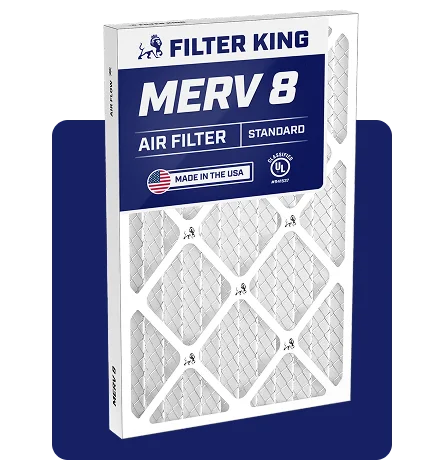
MERV 8 air filters
Standard protection replacement filters for furnaces, AC units, and residential HVAC systems.
Protects against:
Standard protection replacement filters for furnaces, AC units, and residential HVAC systems.
Protects against:

Processed quickly, ships fast, free for all orders

Premium quality pleated filters in a rigid frame

Find your perfect fit with our complete size range

Compatible with all the major HVAC unit brands
MERV 8 furnace and air filters provide essential protection and help maintain a healthier indoor environment. They capture substances and airborne particles that are 3 microns or larger.
Specifically, MERV 8 filters help capture:
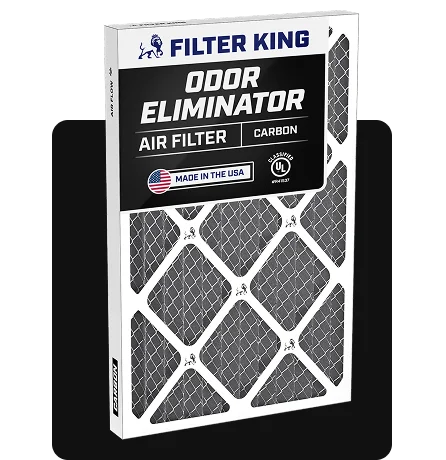
If you're seeking a filter that targets odor elimination, consider MERV 8 Carbon. For higher efficiency units and homes with asthma or allergies, MERV 11 or MERV 13 may be best.
MERV 8 air filters are ideal for homes seeking improved air quality and standard filtration. These filters are best in homes where pet dander is lower and there are no risks of outdoor pollution or construction. MERV 8 air filters provide sustainable air filtration without a high efficiency system in place. MERV 8 air filters capture up to 90% of particles and are generally used in family homes and smaller offices.

The diagonal straps die-cut into the frame bond to each pleat tip, keeping them evenly spaced so the filter won't bow.
Traps up to 90% of everyday particles like dust mites, pollen, pet dander, and mold spores, while still letting air flow through freely.
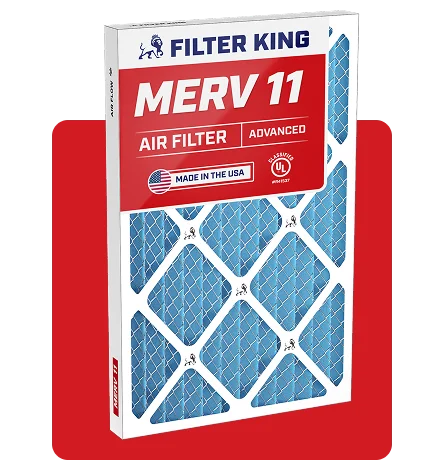
Rated to capture up to 95% of common particles, MERV 11 media catches dust mites, pollen, pet dander, and mold spores, as well as fine dust and smoke.
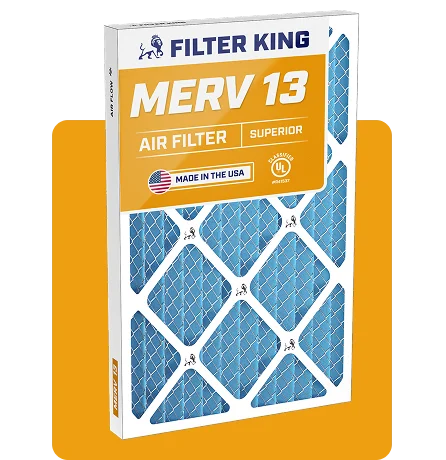
Stops up to 98% of particles passing through, including dust mites, pollen, pet dander, and mold spores, as well as fine dust, smoke, and bacteria.
Traps up to 90% of everyday particles like dust mites, pollen, pet dander, and mold spores, while still letting air flow through freely.
An expanded wire grid bonds to the media, stopping the pleats from shifting or pulling away under airflow.
An expanded wire grid bonds to the media, stopping the pleats from shifting or pulling away under airflow.
An expanded wire grid bonds to the media, stopping the pleats from shifting or pulling away under airflow.
A layer of activated carbon absorbs odor molecules from cooking, pets, and chemical fumes – catching what the filter media alone can't.
The same heavy-duty, moisture-resistant beverage board on the exit side holds its shape and keeps a tight seal in your vent or wall slot.
An expanded wire grid bonds to the media, stopping the pleats from shifting or pulling away under airflow.


4.6 stars, 5243 reviews

4.5 stars, 4314 reviews
"I am a new customer and so happy I found Filter King. Their customer service is truly outstanding."
 Verified Buyer
"Easy to find sizes"
Verified Buyer
"These fit perfectly, it’s so nice to get a custom size."
Verified Buyer
"Great prices, good quality."
Verified Buyer
"When I accidently ordered the wrong size... I called & customer service fixed my error with correct size. Shipping was prompt!!! Very pleased with Filter King!! 😊"
Verified Buyer
"These are high quality filters and the price was fair."
Verified Buyer
"Excellent product"
Verified Buyer
"Looks good, fit well"
Verified Buyer
"Quick shipping I originally ordered the wrong size returning and exchange was very easy."
Verified Buyer
"Easy ordering, fast shipping, customer service that’s reachable. Highly recommend."
Verified Buyer
Filter King offers MERV 8 filters for residential HVAC systems in hundreds of standard sizes, and we can manufacture virtually any custom dimensions required for your equipment.
Our filters meet ASHRAE specifications and carry UL Classification #R41537, providing reliable filtration performance in furnaces, AC units, and ventilation systems.
If your MERV 8 filters don't match your requirements, we offer a 30-day money-back guarantee with hassle-free returns for all stocked sizes so you can order with confidence.
Check the label on your current filter or use a tape measure to get the exact length, width, and depth before selecting your size.
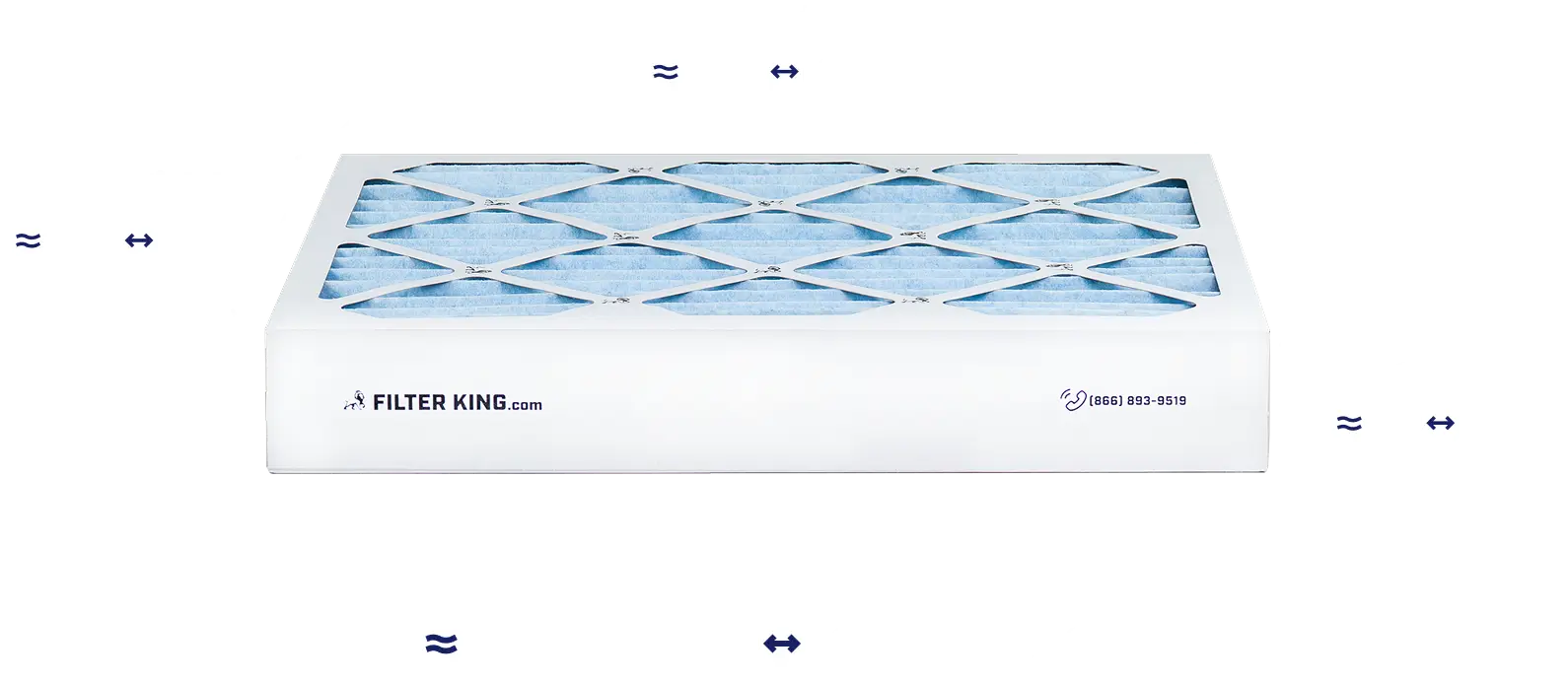
 Nominal size
Nominal size is what you normally see printed on the label. This is usually a rounded size which is often not the true size of your filter.
 Actual size
Actual size is the true size of the air filter, usually written in smaller font below the nominal size.
Measure your current air filter or the length, width, and depth of the opening slot to get the actual size. Round it up to the nearest whole inch to get the nominal size.
Never run out of a clean filter – and cancel anytime if your plans change
 Pay full price on every order
Need to remember to reorder every time you run out
Forget to reorder, and a dirty filter can drive up your energy bills.
Pay full price on every order
Need to remember to reorder every time you run out
Forget to reorder, and a dirty filter can drive up your energy bills.
 Get 5% off every order, automatically
New filters arrive right when you need them
Pause, skip, or cancel anytime – no commitment needed.
Get 5% off every order, automatically
New filters arrive right when you need them
Pause, skip, or cancel anytime – no commitment needed.
In case you're still wondering if MERV 8 air filters are right for your home, let's explore how they actually work, whether your system can handle them, and how to get the most out of the filters in your home. MERV 8 filters offer the filtration necessary for many traditional homes and households, even those with visible pet dander in many cases.
MERV 8 air filters are the sweet spot for most homes: offering effective filtration without forcing your HVAC system to work harder. Understanding the MERV 8 filter performance allows you to make the most of this choice when moving forward. When you know how MERV 8 filters work, it's much easier to implement a filter that is suitable for your home's system and household needs.
When thinking of basic filtration for the home, the comparison often comes down to pleated filters versus traditional fiberglass. MERV 8 filters are almost always pleated, giving an advantage of performance compared to low-grade fiberglass solutions. While fiberglass pads trap the largest particles, pleated MERV 8 filters use engineered folds and synthetic media to improve surface area and particle capture.
The pleated media structure is the core of how pleated filters work. Each fold expands the filter material available, allowing the filter to trap more particles and debris without restricting or limiting airflow. With more surface area, the air can spread out as it moves through the filter. This design increases the filter's dust-holding capacity and slows the rate at which it clogs, providing extended lifespans and steadier performance.
MERV 8 filters capture approximately 90% of common particles, including roughly 70-85% of particles in the 3–10-micron range, according to ASHRAE standards. While MERV 8 filtration solutions aren't the highest level of filters, they still catch many household contaminants that impact comfort and overall cleanliness in the home. Their pleated filter performance effectively captures a range of particles, from dust and lint to pollen, pet dander, and even basic mold spores (that fall within the 3–10-micron range).
While MERV 8 does a great job capturing traditional particles, it's important to note that MERV 8 standard air filters may not capture bacteria, smoke residue, or aerosolized oils, which are typically bypassed at this level of filtration. Homes with high sensitivities to allergies, those exposed to wildfires, or those with compromised indoor air quality may benefit from upgrading to MERV 11 or MERV 13 filters, provided your system is compatible with higher MERV rating air filters.
The lifespan of MERV 8 filters will vary based on household activity and location than with a calendar date alone. Homes with frequent visitors, vacuuming, multiple pets, or even nearby construction will load a filter much faster than quieter households. Indoor habits, such as running fireplaces or lighting candles can also add to the speeding up of filter clogging. The more activity in the home, the shorter the lifespan of a filter, especially with MERV 8 filters.
Even at the MERV 8 filter level, media thickness matters. In comparison to the most commonly used 1-inch filters, the thicker 2-inch or 4-inch air filters contain deeper pleats for additional surface area. This helps extend the lifespan and improve consistency with filter changes. This becomes especially important when understanding how system design affects whether a filter can perform at its rated level.
Your home's air handling system plays a role in how well MERV 8 performs. A filter can be high-quality, but if your HVAC system isn't designed to work with it, you won't get the best results. Let's explore how to ensure your system and your filter are compatible
The good news is, most homeowners will find that MERV 8 compatibility is generally high. Most household HVAC systems work well with MERV 8 filters, as it is considered the safe middle ground for residential forced-air systems. It offers improved filtration over fiberglass without the restricted airflow that sometimes comes with higher MERV ratings. MERV 8 is typically a reliable, low-risk option for households with traditional HVAC systems.
Not all systems have equal "breathing room", which is why airflow matters when selecting a filter for your home. Every furnace or air handler is designed to move a certain volume of air through the ductwork. Filters with higher density can prevent the airflow if the system isn't designed to compensate. Because MERV 8 airflow resistance is relatively low, these filters often operate smoothly even in older or outdated equipment.
To verify that MERV 8 filters are a good match, you can check compatibility in a few simple ways. Review your HVAC system's owner's manual, which often lists the recommended MERV 8 system requirements or maximum filter rating. Next, you'll want to inspect any existing filter that is already installed. It's current MERV rating, thickness, and construction can offer clues about what your equipment has been capable of handling so far. You can also observe your system in real time. If the airflow feels consistent and the HVAC unit runs without whistling or straining, that is a sign that MERV 8 will work properly. If you're asking, "Will MERV 8 fit my furnace?", if the slot size is standard and your system is functioning normally, the answer is likely "yes".
MERV 8 filters might not be ideal in older systems with very tight ductwork or with high-efficiency HVAC solutions in place. If your system is already struggling with dust bypass (causing dust to circulate despite a new filter), this can be problematic.
If your system is incompatible, such as the system being forced to work harder, higher energy costs, and more frequently filter replacement demands, you may need to consider an alternative filter.
Furthermore, proper fit matters as much as MERV rating. If your HVAC unit isn't compatible with the readily available standard size filters, ordering custom size air filters may be your best option. A filter that fits too loosely or too tightly disrupts proper airflow, reduces efficiency, and allows unfiltered air to bypass the pleated media.
Even with a compatible system and quality MERV 8 filter, issues sometimes arise. Regardless of preconceived notions of MERV 8 compatibility, there is a chance that issues can still arise. The problem is rarely the filter itself—it's usually how the filter is installed, sized, or maintained. Gaps around the frame, incorrect dimensions, clogged return vents, and even extended replacement intervals can mimic incompatibility symptoms. Before assuming an issue with your filter, it's worth taking a closer look at factors that impact overall performance. Let's walk through common issues and how to fix them.
If air quality still hasn't improved after switching to MERV 8 filters, consider the following potential causes:
Another common issue that you may experience is reduced airflow or noticing that your HVAC system is running longer than usual. It's important to distinguish between a new filter working as designed versus a filter clogging too fast, if this is the case. Consider changing when replacement schedules need to be changed based on new adjustments, such as adding pets to the home, experiencing a dust storm, or living near environments where wildfires are present.
If you're still seeing dust despite installing a new MERV 8 filter type, you'll want to inspect the filter to determine if it's becoming clogged too fast or if you need to adjust your replacement timing schedule. In many cases, filters may be working effectively, but may become overwhelmed due to dust still circulating filter, pets shedding, or outdoor particles making their way into your system at a much faster rate than expected.
A visual diagnostic helps clarify what you're seeing when inspecting your MERV 8 filter:
If your system shows issues despite correct installation and sizing, it may be time to inspect your HVAC unit and ductwork for leaks, gaps, or airflow blockages. If MERV 8 is not working properly, consider an alternative filter type that's more compatible with your existing system.
Your MERV 8 troubleshooting might also reveal that your household's air quality needs fluctuate seasonally. Spring pollen, winter heating, summer cooling—each season brings different air quality challenges. MERV 8 can handle these shifts, but your replacement schedule might need to adjust. Here's how to adapt your strategy.
MERV 8 filters work year-round, but the intensity of use changes based on living conditions, seasonal changes, and household activity. Understanding MERV 8 seasonal replacement demands is crucial as a homeowner. From comparing seasonal air quality (such as seasonal dust) and lifestyle habits, it's important to note that each season brings its own unique challenges and changes when it comes to filter maintenance.
Spring (pollen season)
Higher pollen counts increase the filter's clogging speed. It's recommended to check your filter more frequently than in other seasons. Checking and inspecting your filter every 2 weeks instead of monthly is highly recommended. Consider a replacement cycle adjustment (such as moving from 3-month replacements to 6-week or 2-month cycles, instead) during the spring. MERV 8 captures pollen, but if the filter begins to clog too fast, it will lose its overall effectiveness.
Summer (cooling season)
Continuous HVAC usage will mean more air is cycling through your filters, especially during the hottest months of the year. Humidity and the potential for mold spore activity can also impede your filter's capture rate, requiring replacements more frequently. MERV 8 filters are adequate for typical seasonal mold, but it's important to monitor for growth signs to prevent mold spores from spreading.
Fall (leaf season, pet shedding)
If you have pets, it's important to remember that fall is typically when shedding increases airborne particle load. Outdoor air intake, such as keeping windows open and having leaf debris outdoors, will raise dust levels and capture rate. Depending on your household's activity during the fall, you may need to adjust replacement timing. Conducting a visible inspection of your filter on a weekly or bi-weekly schedule is recommended to ensure your filter is not becoming too clogged to function and perform properly during the autumn season.
Winter (heating season)
As you use your HVAC system more during the winter, you'll want to conduct inspections to determine replacement cycles. Dry air from heating may increase dust circulation. If your system runs consistently to maintain a comfortable temperature, inspections are advisable to prevent the clogging of your filter type before its replacement time. MERV 8 handles winter particulates well; and focuses on consistency of clean air and airflow.
It's important to keep regional variations in mind when scheduling replacements for your MERV 8 filters. Dry climates vs. humid along with urban vs. rural dust patterns should be considered.
Practical application: Track when your filter becomes visibly clogged in each season. You can then use that data to optimize your replacement schedule. Knowing when to replace air filter solutions is key to maintaining a consistent system.
While MERV 8 handles most household air quality needs on its own, understanding what it can and cannot do helps set realistic expectations. Whether you're in the market for a spring pollen filter or consistency year-round during the colder months, knowing how MERV 8 filters work is essential. MERV 8 filters excel at particle capture, but other factors affect your home's overall air quality. Let's look at the bigger picture of indoor air quality and how filters fit into the strategy.
MERV 8 filters capture dust, pollen, pet dander, mold spores, and some bacteria. However, it's important to note what air filters don't capture, such as odors (you'll need Odor Eliminator filters for these), gases (VOCs), viruses, and very small ultrafine particles. Improving indoor air quality is possible by integrating the right filter type along with combining at-home efforts to boost IAQ, or indoor air quality. Some complementary strategies that help improve air quality beyond filters include:
Source control
Reduce dust at the source by opting to have your pets groomed regularly, regularly vacuuming, and controlling outdoor dust entry into the home (by keeping windows closed during peak seasons). Always consider the source of the dust, bacteria, mold, and allergens that you experience in your home to determine the best course of action to take. This will help plan and prepare to ensure your filter's optimized performance year-round. Once you're aware of when your pets shed or when household activity is likely to increase, it will become much easier to implement a replacement schedule that works for you.
Ventilation
Proper ventilation is essential for any homeowner. MERV 8 filters work best with proper fresh air exchanges. Sealed homes limit its overall effectiveness. In some instances, professional inspections may be recommended if you believe your air circulation is not working properly or if your system is working harder to circulate air altogether.
Humidity management
Dry air increases dust circulation, humidity control helps reduce strain on your system and filters. Monitoring the humidity levels throughout your home can help you to determine the best replacement schedule for your filters. Using a dehumidifier in overly humid locations may help. In other locations, a humidifier may help provide necessary humidity in extremely dry climates.
Room-level purifiers
Incorporating room purifiers into the home is ideal for those with pets and heavy foot traffic or activity. Room-level purifiers are suitable in specific rooms or in situations where extra filtration is needed. A multi-pet home is one example in which room purifiers are highly recommended. Whenever you install a new room purifier with a filter in your home, keep track of the amount of time it takes for the filter to clog. This will help you determine if you require a different filter or if you need additional in-room filters to help with the amount of dust, debris, and pet dander you have in your home.
In some instances, professional duct cleaning may help if dust buildup inside the ductwork continues to circulate despite regular filter changes. While this isn't a substitute for filtration, it can complement maintenance when ducts are visibly dirty or when airflow feels restricted in the home.
When it comes to improving indoor air quality, a solid, reliable, trustworthy filter comes first. However, with the implementation of testing, inspecting, and replacing filters properly, you can boost your filter's lifespan and ensure your system is running optimally without overworking it, especially during the hottest and coldest months of the year.
Other comfort factors, such as lighting, temperature control, and air movement, also influence the quality of air, even if they do not affect particle levels directly. If you're unsure about what's circulating throughout your home, professional air quality testing can provide clarity. However, visual and smell indicators can often provide early warnings that your system may require a professional inspection.
All of this comes down to MERV 8 filters being a strong foundation for protection and optimal airflow. However, there are other factors that determine the total indoor air quality. Because of this, It's important to remain aware of your living conditions, habits, pets, allergies, and respiratory issues that may require an in-depth look into your ductwork if your filter is working properly but you are still experiencing problems.
MERV 8 filters are an excellent choice for most homes, especially when complemented with good maintenance habits. Once you're aware of your home's demands and needs, incorporating the right replacement schedule will be much easier to achieve.
Now that you're aware of how MERV 8 filters work in the home, you can proceed with selecting the filter size that accommodates your system and works well within your household. Knowing why MERV 8 filters are the right choice for your home profile is a way to move forward with your HVAC system maintenance plans throughout each season of the year.
Not always. A higher MERV rating isn't always needed or better. It's only necessary if your home requires extra filtration. MERV 11 has denser media, which captures smaller allergens but works header against airflow.
Replace sooner if you notice a visibly grey or clogged filter or reduced airflow throughout the home. If you notice dust settling around your home or your system is running longer than usual, you may require a replacement.
Yes. Most often, MERV 8 works well in homes with one dog or cat to capture dander. Multiple pets may require an upgrade to MERV 11 with compatible systems.
No. Traditional MERV 8 filters remove particles, not odors. MERV 8 Carbon is ideal for odor-removing qualities.
Yes. Switching from fiberglass to pleated MERV 8 is a common and safe upgrade without issues.
Fiberglass filters are inexpensive but offer minimal particle capture. MERV 8 pleated filters cost more as they use higher-quality filtering media and have more surface area. They also offer much higher capture efficiency.

 MERV 8 filters