
Black mold can trigger asthma attacks, worsen chronic sinus problems, and, in rare cases, contribute to life-threatening infections — yet most people have no idea whether their home is affected. Data suggest that between 20% and 68% of US homes show signs of dampness or mold, and the average remediation bill exceeds $2,000. We've gathered the most current black mold statistics to help you understand the real scope of the problem, the health risks by population, and where in the country the danger is greatest.
Key mold statistics at a glance
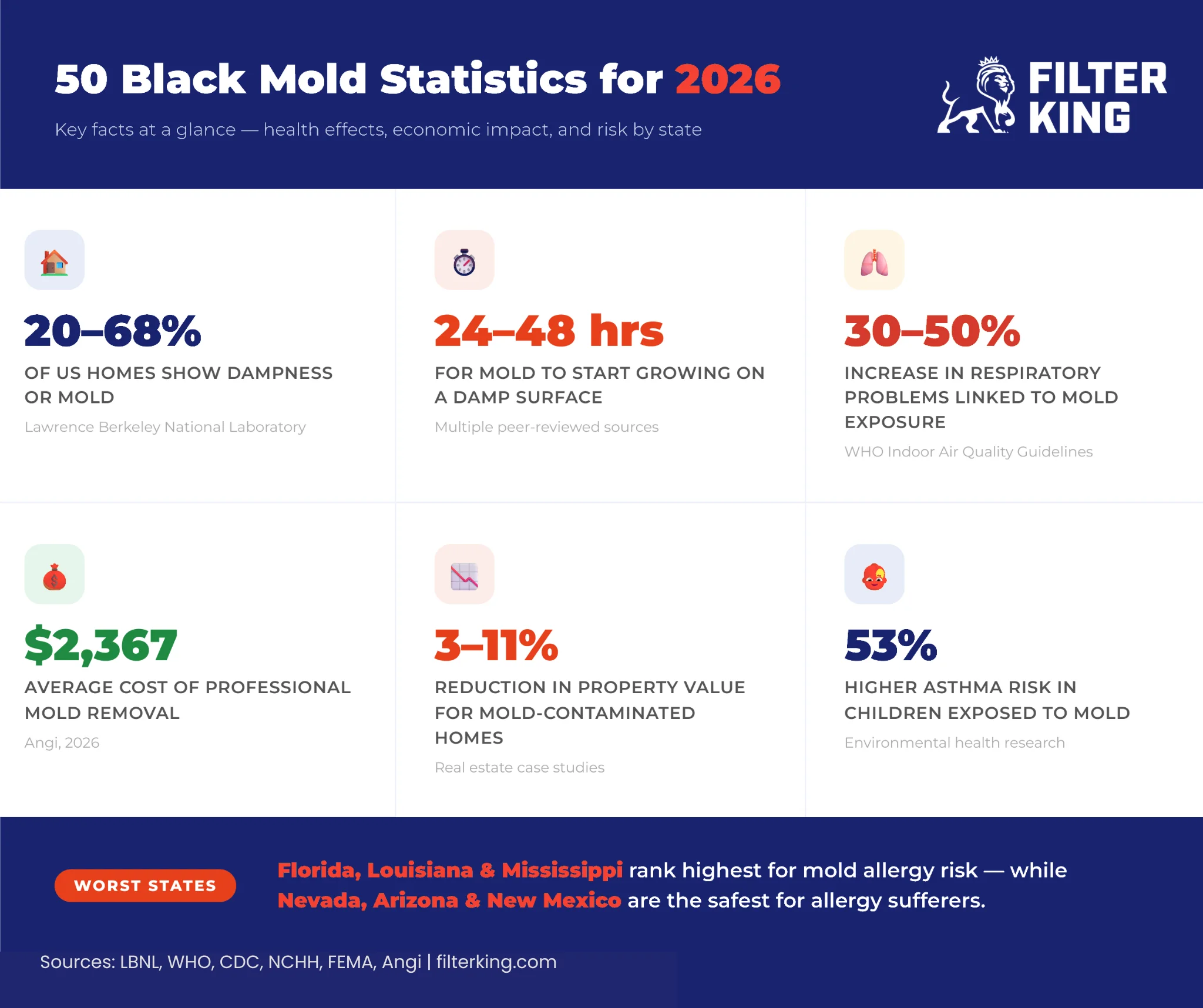
- Between 20% and 68% of homes in the United States show dampness or mold.
- It takes 24-48 hours for mold to start growing on a damp surface.
- A 30-50% increase in respiratory problems is associated with mold exposure.
- Mold removal costs $2,367 on average.
- A 3-11% reduction in value is expected for mold-contaminated real estate.
- Florida, Louisiana, and Mississippi are the three worst states for mold allergies.
- Nevada, Arizona, and New Mexico are the best places to live with mold allergies from a climate standpoint.
How common is black mold in homes?
From 20% to 68% of US homes show signs of dampness or mold, according to an analysis by Lawrence Berkeley National Laboratory (LBNL). However, data on how many homes have mold vary significantly across sources.
What percentage of US homes have mold?
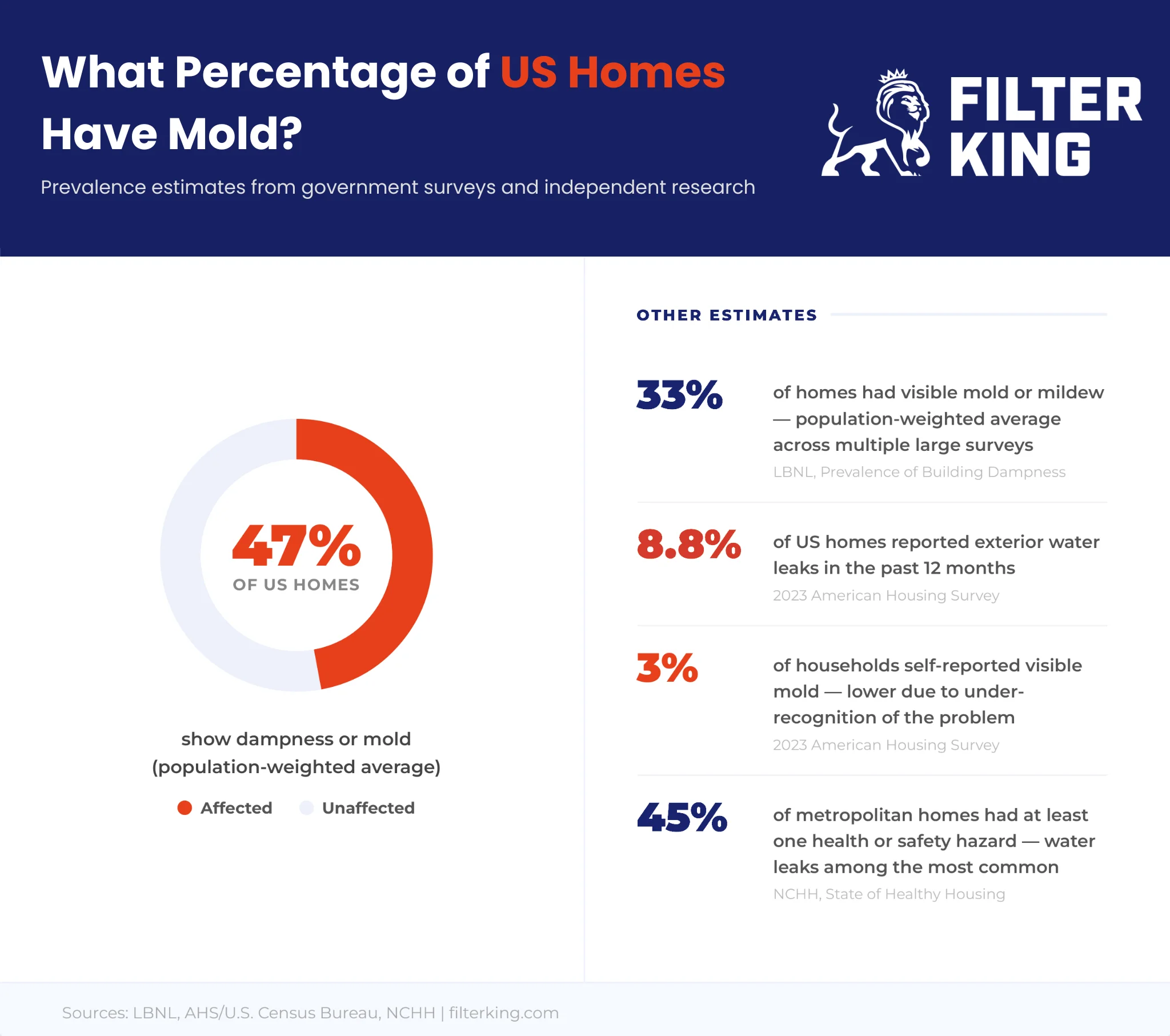
Here's what different reports and studies say:
- About 3% of households reported mold in the 2023 American Housing Survey (AHS).
- An overview of multiple large surveys found a population-weighted average of 33% of homes had visible mold or mildew.
- 47% of US homes show dampness or mold (a population-weighted average).
- 8.8% of US homes reported exterior water leaks in the past 12 months.
- 8.4% of households reported interior leaks in the same period.
- 45% of metropolitan homes across 53 US cities had at least one health or safety hazard, with water leaks among the most commonly identified.
- Fungi can begin colonizing a surface within 24 to 48 hours of water exposure.
Many studies don't focus specifically on mold-affected properties but analyze indoor dampness, leaks, and water damage. This is because mold spores are present almost everywhere, and moisture is the primary prerequisite for active growth.
5 most common places for black mold in homes
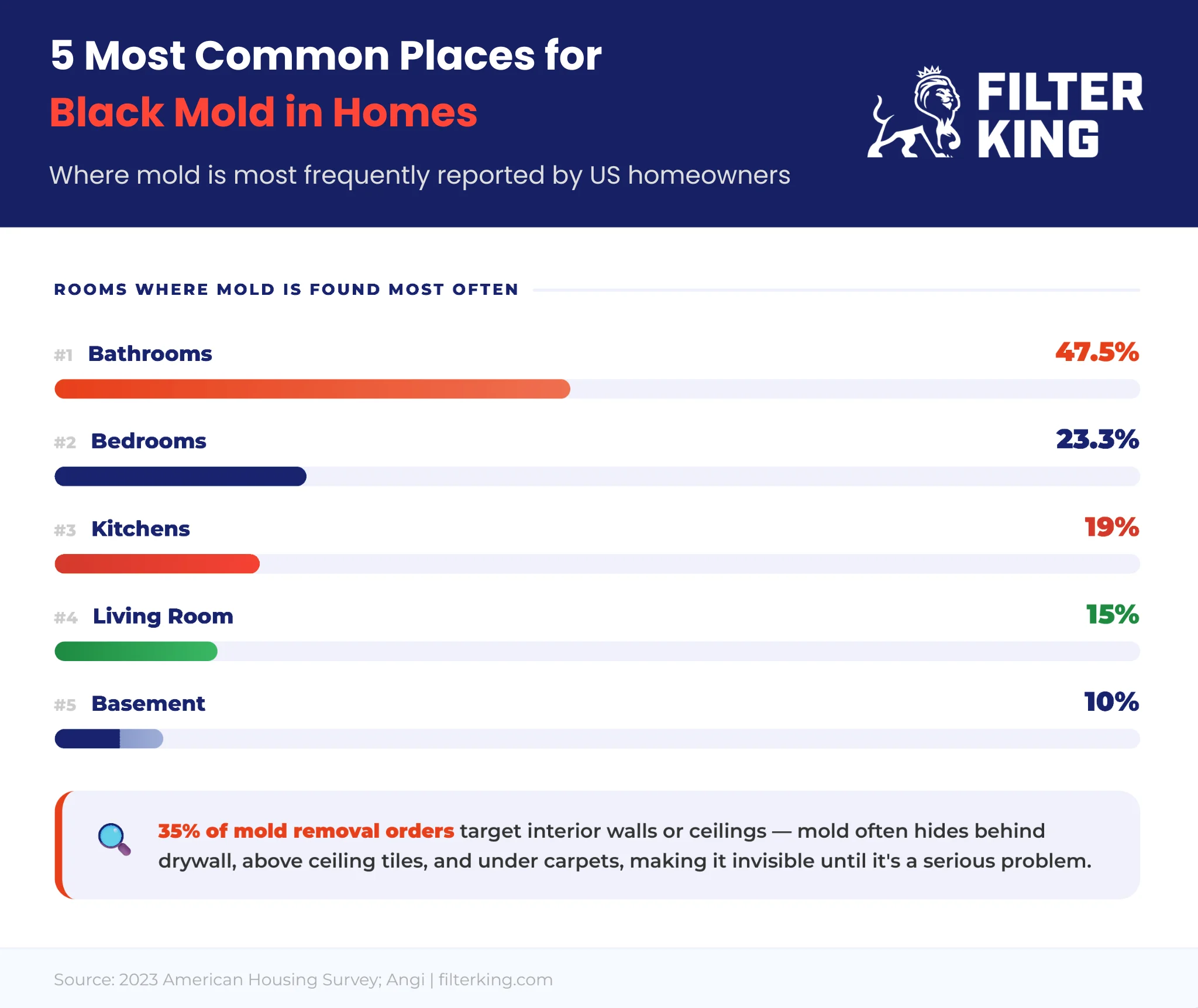
Where is black mold found most often? The 2023 AHS respondents most frequently reported finding the issue in these spaces:
- Bathrooms: 47.5%
- Bedrooms: 23.3%
- Kitchens: 19%
- Living room: 15%
- Basement: 10%
Mold remediation industry data shows that people most often order removal from interior walls or ceilings (35.2%). The issue can hide behind drywall and wallpaper, above ceiling tiles, under carpets, and inside air-handling units.
4 most common mold types in houses
The following are the most widespread mold forms found in US households:
- Aspergillus: Typical indoors and outdoors; some species can affect high-risk people.
- Cladosporium: Often found on wood, textiles, windowsills, and damp surfaces.
- Penicillium: Common after water damage and on damp building materials.
- Alternaria: Often linked with damp areas and allergy symptoms.
What about "black mold"? It's neither the most dangerous nor the most common mold in homes.
The term is often used to describe any dark patch, but Stachybotrys chartarum is a specific greenish-black species that can grow on wet, cellulose-rich materials such as gypsum board, paper, and fiberboard. While it can produce mycotoxins — which cause mold toxicity and make it dangerous to more sensitive individuals — the CDC advises property owners to treat it the same way as other fungal growths.
Black mold health statistics
Black mold health effects include allergic reactions, lung issues, inflammation, and more. Potential health risks vary in severity based on species, concentration, exposure duration, and the individual's health status.
Respiratory effects and mold-triggered asthma
Indoor mold exposure can trigger asthma attacks in people with existing asthma. The World Health Organization (WHO) indoor air quality guidelines cite sufficient evidence linking damp environments to multiple respiratory conditions.
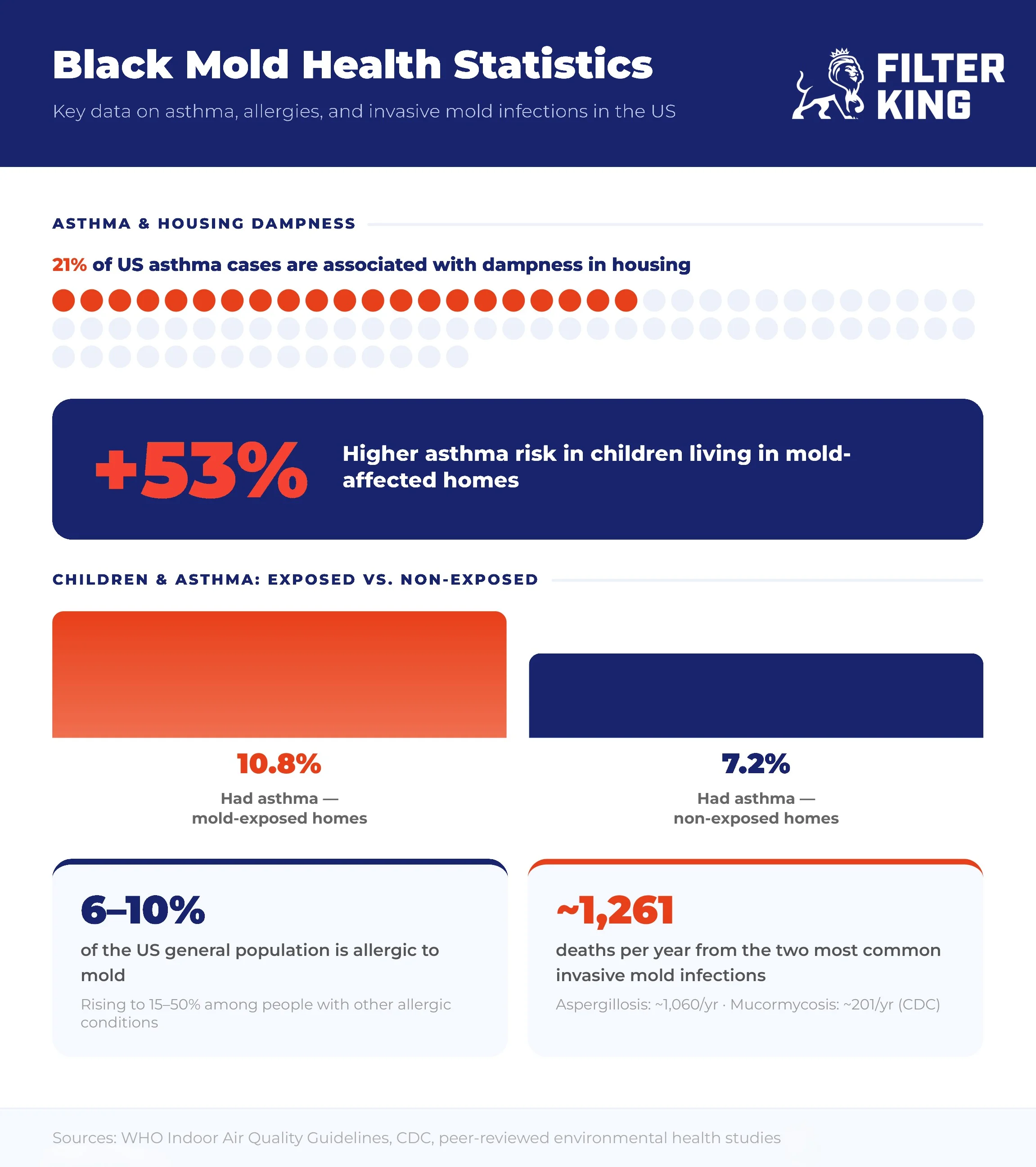
- The presence of mold in the house increases the risk of asthma in children by 53%.
- A 30-50% increase in various respiratory illnesses, including asthma, is associated with damp and moldy buildings.
- 10.8% of children exposed to this contaminant in US households had asthma (compared with 7.2% of non-exposed children).
- A 2022 study found that home water damage worsened asthma control in adults by 29%.
- Around 21% of asthma cases in the United States are associated with dampness in housing.
- Targeted remediation in homes decreased asthma flare-ups in children by 30 percentage points (3% among children whose homes were repaired vs. 33% in the comparison group).
Statistics on allergies, chronic sinus infections, and inflammatory response
Here's what the data say about black mold exposure and allergic reactions, sinus infections, and other conditions:
- 6-10% of the US general population is allergic to mold.
- The mold allergy rate rises to 15-50% among atopic individuals.
- Approximately 30 million Americans have chronic sinusitis — a condition for which toxic mold is a recognized environmental trigger.
- The risk of rhinitis increases by 28% for mold-exposed individuals.
Black mold deaths per year
Deaths attributed solely to Stachybotrys chartarum are extremely rare. The CDC tracks mold-related mortality under invasive mold infections (IMIs). IMIs occur almost exclusively in people with severely weakened immune systems; for healthy adults in typical home environments, the risk is extremely low. Here are the main mold facts related to the most serious health issues:
- The two most common IMI types are invasive aspergillosis (IA) and mucormycosis, which have mortality rates of up to 90% in certain populations.
- On average, 1,060 people die due to IA in the US annually, according to the CDC.
- Mucormycosis causes 201 deaths each year.
- In 2021, there were 19,000 IA-related and 1,920 mucormycosis-related hospitalizations.
- From 2000 to 2013, there were 169,110 hospitalizations related to IA and 9,966 cases of mucormycosis in the United States. In-hospital death rates were 16.1% and 19.8%, respectively.
- Worldwide, more than 2 million people develop IA annually, and mortality is about 85%.
- More than 200,000 people per year develop mucormycosis, which has a mortality rate of about 33-58%.
Black mold by state: where the risk is highest and lowest
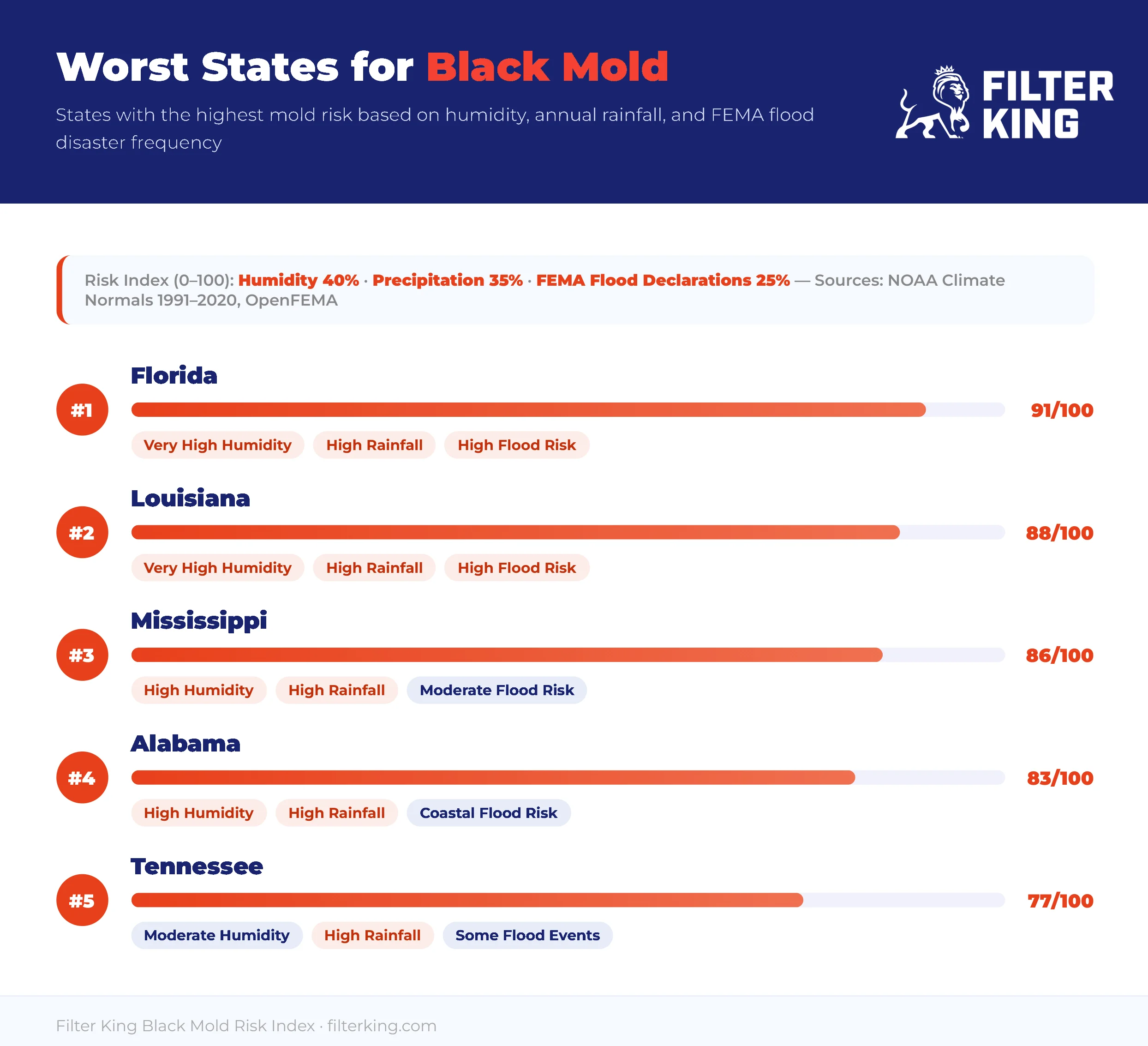
Mold risk varies substantially across the US, driven by humidity, rainfall, and flood event frequency. To compare states, we built a Black Mold Risk Index using three data inputs: average relative humidity, average annual precipitation in inches, and FEMA flood disaster declarations. Scores run from 0 to 100.
The five moldiest states are concentrated in the Southeast and Gulf Coast:
- Florida
- Louisiana
- Mississippi
- Alabama
- Tennessee
States with the least mold problems sit in the arid West and Southwest:
- Nevada
- Arizona
- New Mexico
- Utah
- Colorado
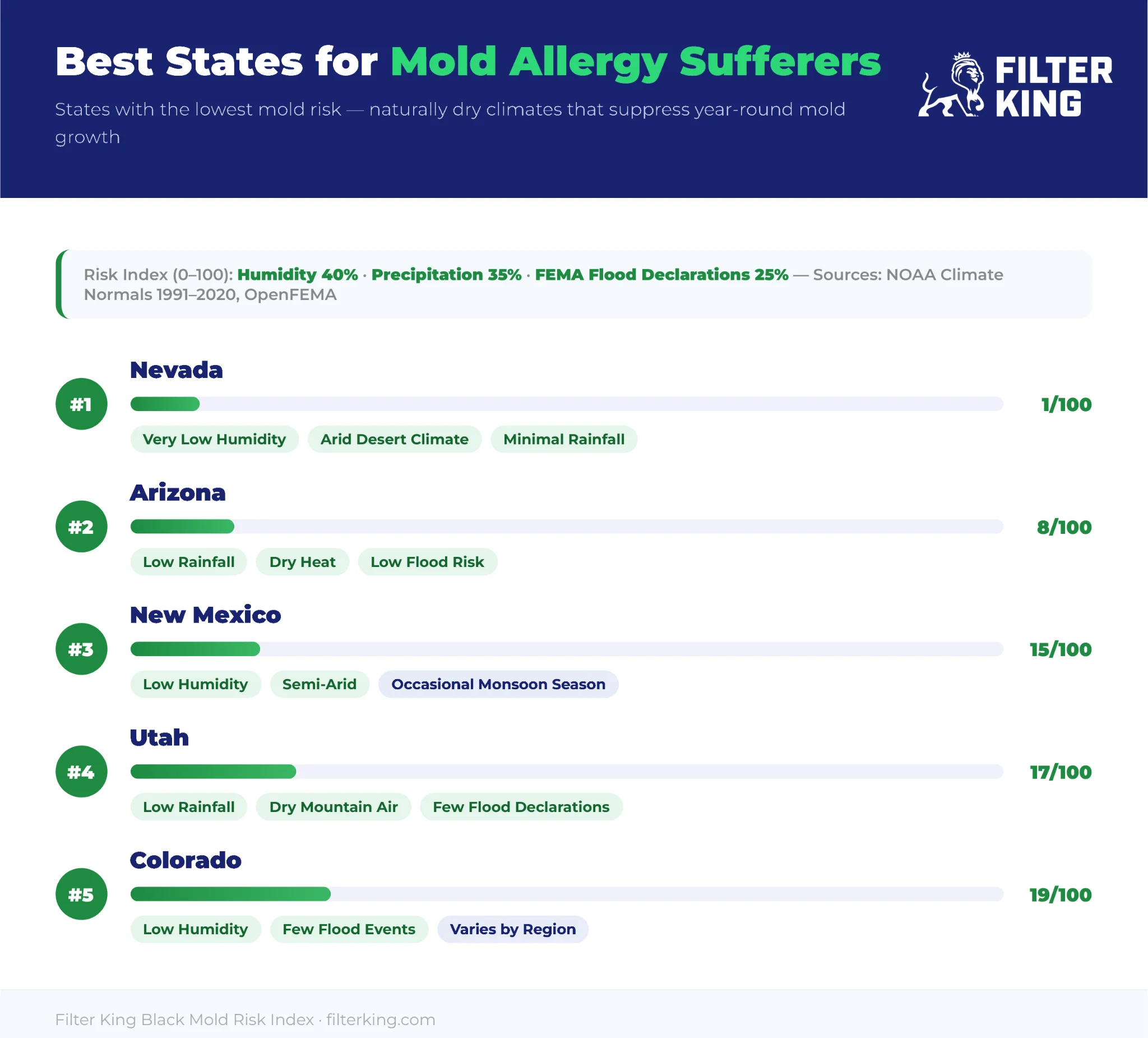
Here's a complete overview of black mold risk levels by state:
| Rank | State | Avg. relative humidity | Annual precipitation (inches) | FEMA declarations (2000-2024) | Black mold risk (0-100) |
|---|---|---|---|---|---|
| 1 | Florida | 74% | 54.5 | 65 | 91 |
| 2 | Louisiana | 74% | 60.1 | 51 | 88 |
| 3 | Mississippi | 72% | 59.2 | 51 | 86 |
| 4 | Alabama | 71% | 58.3 | 48 | 83 |
| 5 | Tennessee | 69% | 54.2 | 45 | 77 |
| 6 | New York | 69% | 41.9 | 58 | 75 |
| 7 | Kentucky | 70% | 49.0 | 44 | 74 |
| 8 | Hawaii | 71% | 63.7 | 18 | 73 |
| 9 | West Virginia | 71% | 45.3 | 43 | 72 |
| 10 | Arkansas | 69% | 50.8 | 37 | 71 |
| 11 | Maine | 71% | 42.3 | 41 | 70 |
| 12 | Georgia | 70% | 50.7 | 29 | 69 |
| 13 | North Carolina | 68% | 50.4 | 35 | 69 |
| 14 | Vermont | 71% | 42.8 | 40 | 69 |
| 15 | Missouri | 69% | 42.2 | 40 | 67 |
| 16 | South Carolina | 70% | 49.8 | 24 | 66 |
| 17 | Massachusetts | 68% | 47.8 | 30 | 65 |
| 18 | Virginia | 69% | 44.4 | 32 | 65 |
| 19 | New Jersey | 68% | 47.1 | 29 | 64 |
| 20 | Connecticut | 66% | 50.4 | 27 | 63 |
| 21 | Iowa | 70% | 34.1 | 40 | 63 |
| 22 | Oklahoma | 64% | 36.5 | 51 | 63 |
| 23 | Alaska | 77% | 22.5 | 37 | 61 |
| 24 | Indiana | 70% | 41.7 | 24 | 61 |
| 25 | Rhode Island | 69% | 48.0 | 17 | 61 |
| 26 | Washington | 72% | 38.8 | 25 | 61 |
| 27 | Illinois | 69% | 39.3 | 28 | 60 |
| 28 | Pennsylvania | 68% | 43.0 | 25 | 60 |
| 29 | Ohio | 69% | 39.1 | 27 | 59 |
| 30 | Delaware | 69% | 45.7 | 14 | 58 |
| 31 | Maryland | 67% | 44.6 | 20 | 58 |
| 32 | New Hampshire | 58% | 43.4 | 42 | 57 |
| 33 | Wisconsin | 71% | 32.6 | 22 | 55 |
| 34 | Kansas | 63% | 28.9 | 45 | 54 |
| 35 | Minnesota | 70% | 27.4 | 31 | 54 |
| 36 | Nebraska | 66% | 23.6 | 42 | 53 |
| 37 | Texas | 65% | 28.9 | 38 | 53 |
| 38 | Michigan | 72% | 32.3 | 14 | 52 |
| 39 | North Dakota | 68% | 17.8 | 39 | 50 |
| 40 | Oregon | 70% | 27.5 | 21 | 50 |
| 41 | South Dakota | 66% | 20.1 | 41 | 50 |
| 42 | California | 61% | 22.2 | 36 | 44 |
| 43 | Montana | 60% | 15.4 | 21 | 32 |
| 44 | Idaho | 58% | 19.0 | 15 | 30 |
| 45 | Wyoming | 56% | 13.0 | 8 | 21 |
| 46 | Colorado | 52% | 16.0 | 10 | 19 |
| 47 | Utah | 52% | 12.3 | 10 | 17 |
| 48 | New Mexico | 45% | 14.6 | 18 | 15 |
| 49 | Arizona | 39% | 13.6 | 19 | 8 |
| 50 | Nevada | 38% | 9.5 | 10 | 1 |
Ranking methodology and data sources
The index scores each state using three weighted inputs normalized to a 0-100 scale:
- Average relative humidity (weight: 40%): Sourced from NOAA's Climate Normals 1991-2020 and Comparative Climatic Data. High sustained outdoor RH can influence indoor air quality.
- Average annual precipitation in inches (35%): Sourced from NOAA's Physical Sciences Laboratory and Climate Normals. Rainfall drives moisture infiltration into buildings and sustains high humidity levels.
- FEMA flood disaster declaration volume, 2000-2024 (25%): Sourced from the OpenFEMA Disaster Declarations Summaries. The count reflects unique declarations related to floods and other events that cause water damage.
Note that this is a comparative risk model based on moisture-related environmental conditions. It reflects state-level averages. However, local conditions can increase or decrease individual risk.
Check out our ranking of the cleanest states to learn more about each state's environment. For a metro-level view of air quality, see our guide to cities with the worst air quality.
The economic cost of black mold
In addition to the many health problems, such an infestation carries significant economic consequences:
- Mold and dampness were estimated to cause $2.1-4.8 billion in asthma-related costs alone.
- Black mold lawsuit settlements can result in payouts ranging from $11,000 to $4 million or more.
Mold remediation cost statistics
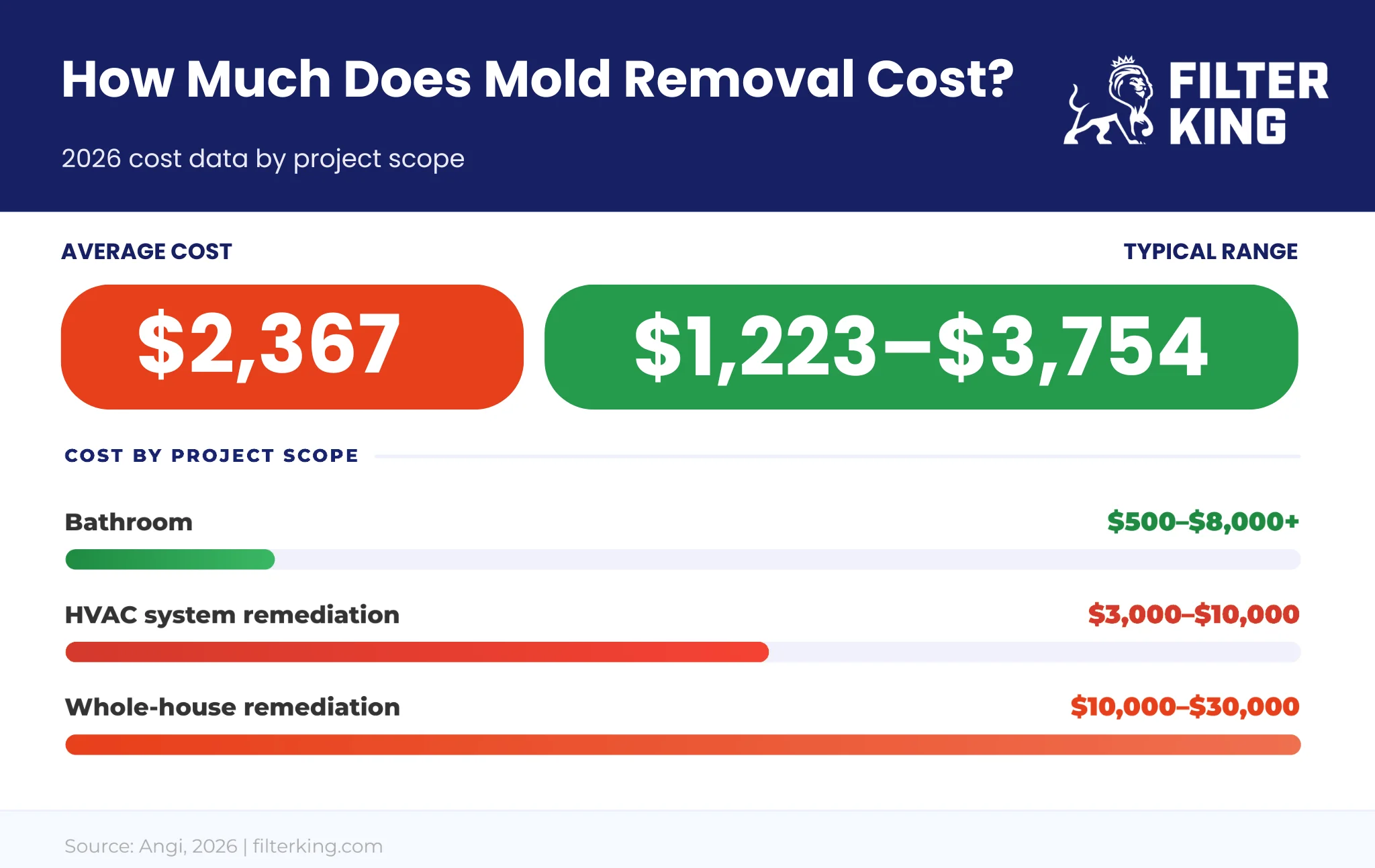
Mold-related damage is generally not covered by standard insurance policies. Here's what you can expect to spend on remediation if you have mold in the house, according to Angi's 2026 data:
- The average cost of professional black mold removal is $2,367.
- Typical range for 2026: $1,223-$3,754.
- Whole-house remediation may cost from $10,000 to $30,000.
- HVAC mold remediation costs range from $3,000 to $10,000.
- Bathroom repairs typically fall within $500-$1,000 but can exceed $8,000 if the issue is behind walls or fixtures.
Property devaluation statistics
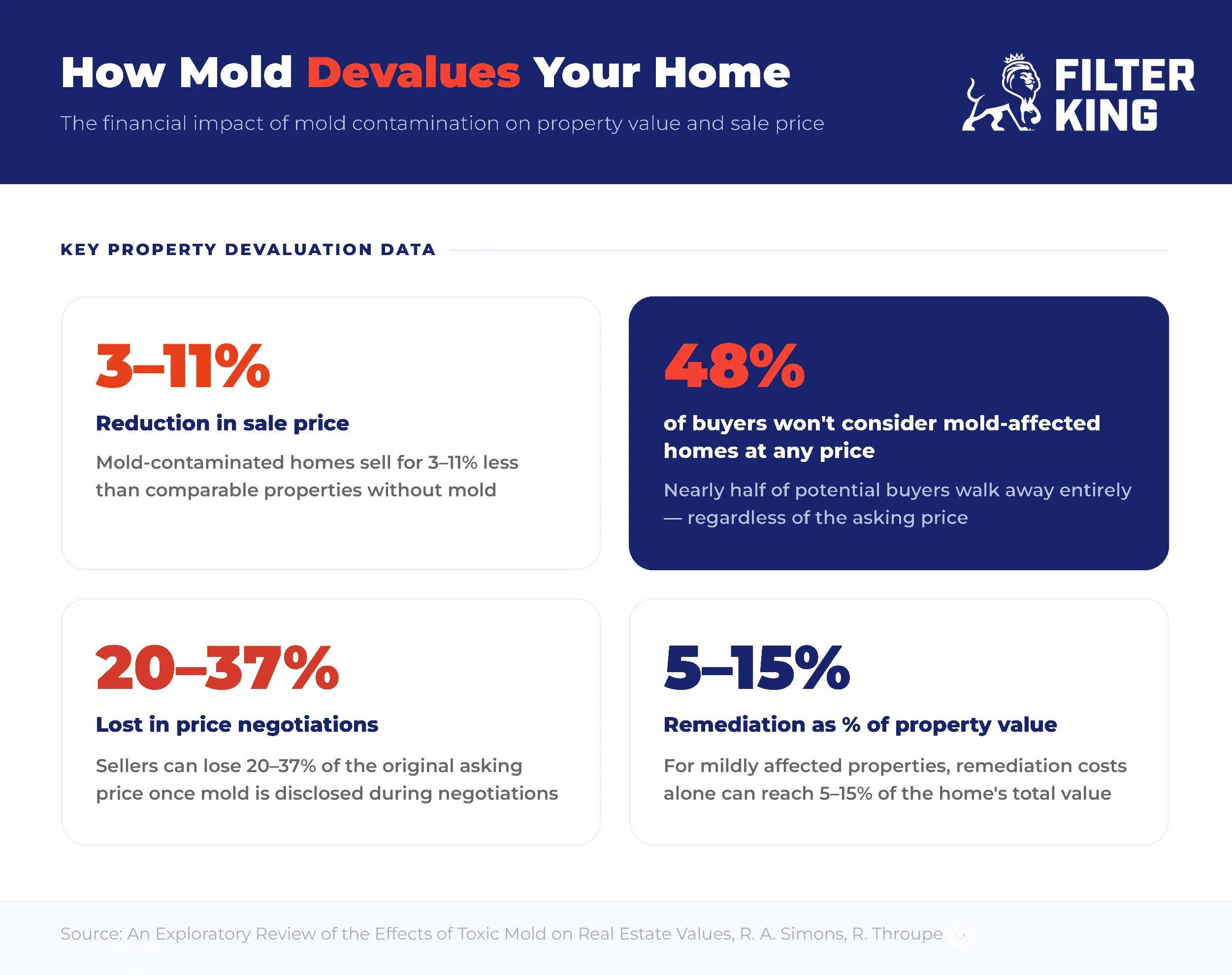
How much does mold devalue a home? Researchers analyzed several case studies and conducted a survey to determine the impact on home resale value. Here's what they found:
- Homes with documented contamination sold for 3-11% less than comparable properties.
- 48% of potential buyers would not consider purchasing a mold-affected property at all.
- The sellers' losses could range from 20% to 37% as a result of price negotiations.
- Remediation costs for mildly affected properties reach 5-15% of the unit's value.
What causes black mold to grow indoors?
The main cause of black mold is moisture, combined with organic material and time. Here are the three main factors to monitor in your home:
- Relative humidity (RH): An RH of 60% or higher accelerates mold growth.
- Leaks and water damage: About 22% of homeowners' insurance losses stem from water and freezing damage. Many leaks remain undetected, especially if they are in hard-to-reach areas.
- Poor ventilation: Steam, condensation, and damp air can get trapped indoors without proper ventilation. Over time, that can turn a small leak into a broader indoor air quality issue.
How to reduce black mold risk at home
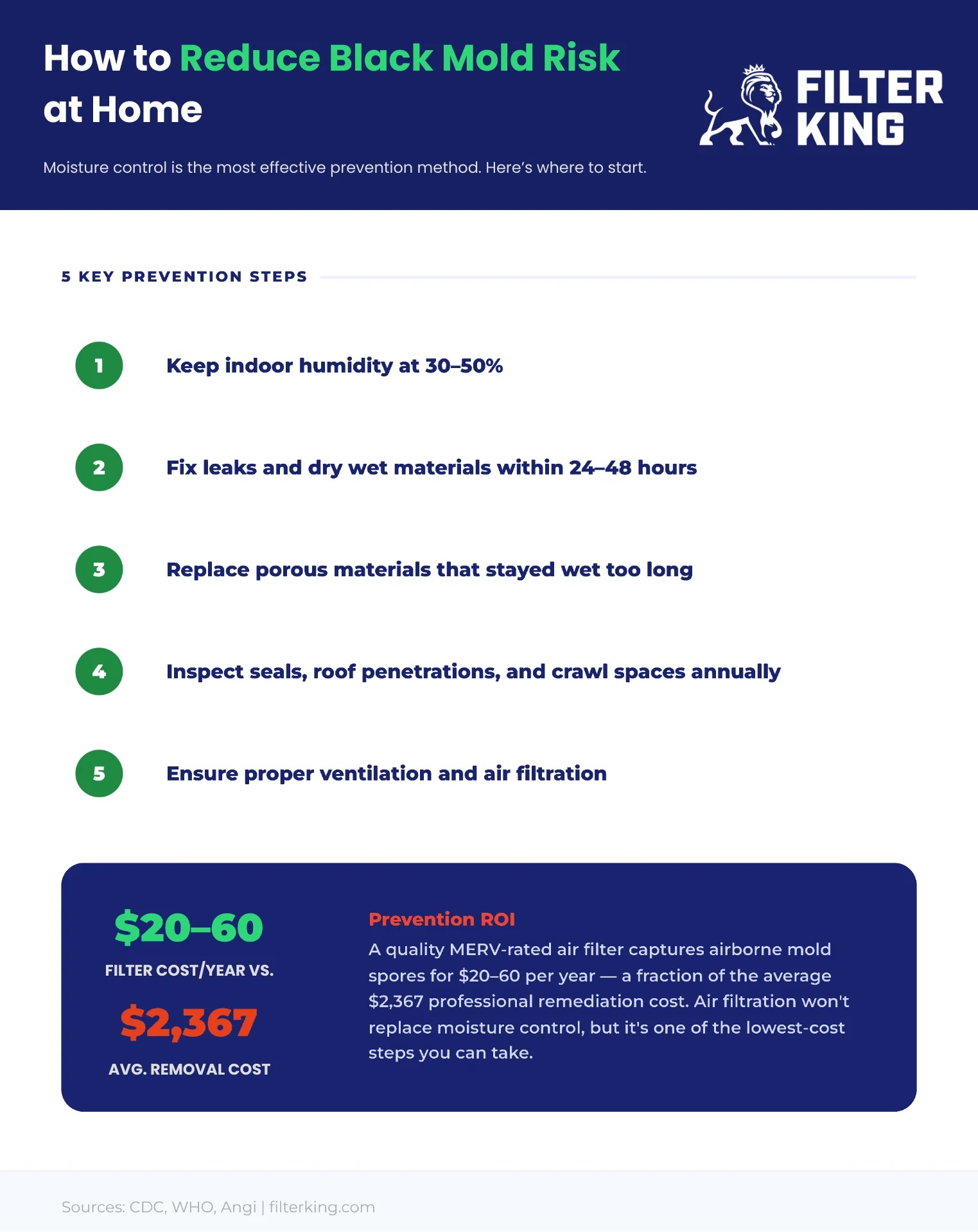
Black mold prevention doesn't require specialized equipment or professional help. Most of what makes a home mold-prone is fixable with consistent attention and a few routine checks. Here's where to start:
- Keep indoor humidity at 30-50%.
- Fix water leaks and dry wet materials within 24 hours.
- Replace porous materials if they have remained wet for too long.
- Inspect window seals, roof penetrations, and crawl space vapor barriers annually.
- Ensure proper whole-home ventilation, local exhaust use, and air filtration.
Control mold spores with air filtration
While humidity control prevents mold growth, air filtration can capture airborne spores before they settle on damp surfaces or circulate through the HVAC system.
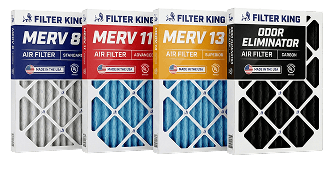
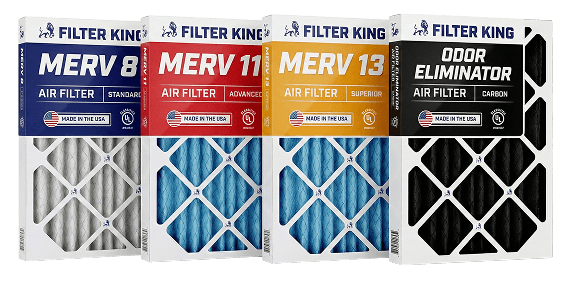
However, not every filter does this equally. The MERV (Minimum Efficiency Reporting Value) scale rates air filters on a scale from 1 to 20.
- MERV 8 filters capture roughly 70% of particles in the 3-10 micron range, covering the largest common indoor spores.
- MERV 11 extends that capture into the 1-3 micron range, trapping finer particles that a MERV 8 misses.
- MERV 13 — the highest rating suitable for most home HVAC systems — removes 90% or more of particles between 1 and 3 microns, covering virtually all mold spore sizes.
Solutions rated 14 or more are best suited for commercial use, hospitals, laboratories, and similar settings. For households with allergy or asthma concerns, MERV 11 is the recommended minimum; MERV 13 offers the most protection a standard system can deliver.
A quality MERV-rated air filter costs $20-60 per year — a fraction of the average $2,367 professional remediation cost. Air filtration won't replace moisture control, but it's one of the lowest-cost steps you can take.
Check out Filter King's air filters for mold to find the solution that supports black mold treatment and prevention in your home.
Protect your home from mold spores