

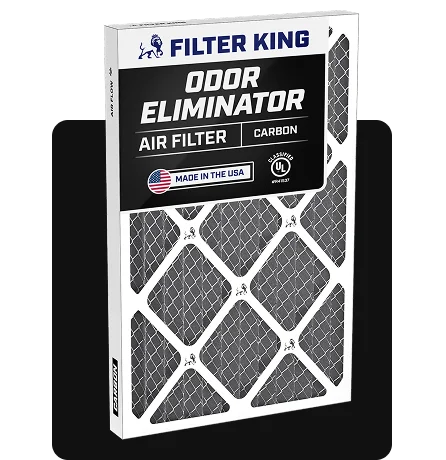

Air filters capture dust, pollen, pet dander, and other airborne particles as air moves through your HVAC system, while air purifiers are standalone units that clean the air in the room where they're placed. Most homes need a good HVAC air filter, and an air purifier works as an add-on for specific rooms.
Air purifier vs air filter: which one do you need?
Start with a good HVAC air filter for whole-home filtration, and add an air purifier only for rooms with extra needs, such as severe allergies, asthma, or odors. Here's an overview:
| Factor | Air filter | Air purifier |
|---|---|---|
| Who benefits | All home residents and people with mild or moderate allergies | Residents with severe allergies or asthma |
| Energy use | Helps the HVAC system run more efficiently, which can reduce energy use | Runs on electricity, adding to a home's power draw |
| Coverage | Whole house | Only the room where it's placed |
| Other info | When changed regularly, can help extend the life of HVAC equipment | Useful for homes with multiple pets, odors, or chemical fumes |
How do air filters and air purifiers work?
HVAC air filters
An HVAC air filter is a removable filter installed in the HVAC system. It traps contaminants and pollutants before air circulates through the ventilation system and into the home. Most modern air filters are pleated in an accordion shape, which creates a larger surface area within the filter frame and captures more dust, pollen, pet dander, and other contaminants than flat filters.
Quality air filters also protect your HVAC system from dust and debris buildup, which helps extend its lifespan and reduce power draw.
HVAC filters are rated by their Minimum Efficiency Reporting Value (MERV), a 1–16 score for how well a filter traps particles. Generally, the higher the MERV rating, the greater the percentage of particles trapped. Still, choose a filter based on system compatibility and household needs.
Air purifiers
Air purifiers are standalone, plug-in units that treat a specific room or space in the home. A built-in fan draws air from the room into the machine, where it passes through internal filters that trap particles and contaminants. The cleaned air is then pushed back out into the room.
Depending on their filters, air purifiers capture allergens and fine particles, and models with activated carbon also remove some odors and gases. Many people place them in bedrooms or nurseries to help with easier breathing and more comfortable sleep.
While air filters are measured by their MERV rating, air purifiers are rated by their Clean Air Delivery Rate (CADR), which measures how fast a purifier cleans the air in a room. Generally, the higher the CADR, the faster the air purifier cleans the air.
How are air filters and air purifiers rated?
The three ratings to know are MERV, CADR, and HEPA (high-efficiency particulate air). MERV rates HVAC air filters, CADR rates air purifiers, and HEPA describes a specific type of filter, usually used in air purifiers.
MERV
The higher the MERV rating, the better an HVAC air filter's filtration performance. The MERV scale runs from 1–16, and we offer MERV 8, MERV 11, MERV 13, and MERV 8 Carbon. Here's an overview:
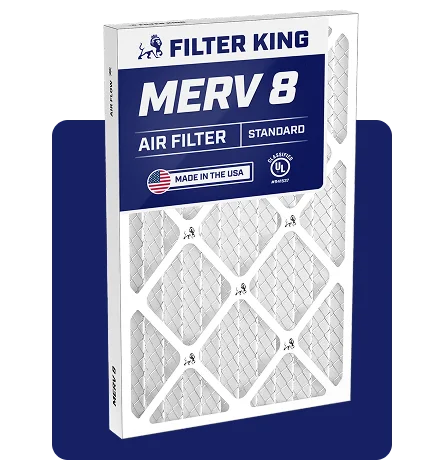
- MERV 8 air filters suit basic air quality needs in standard homes without allergies. They capture up to 90% of common particles, including dust, pollen, pet dander, and mold spores.
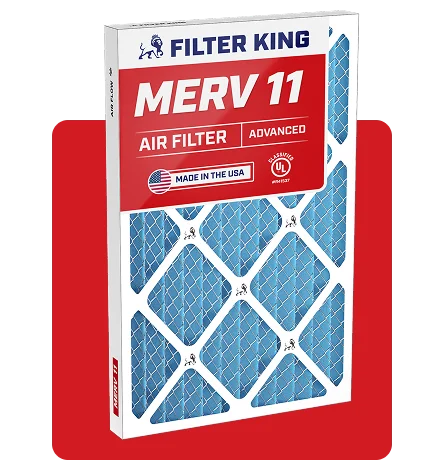
- MERV 11 air filters suit homes with pets, kids, or residents who are more sensitive to common allergens. They capture up to 95% of common particles, including fine dust, smoke, and smog.
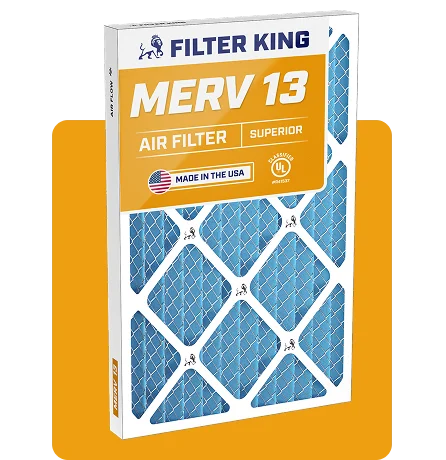
- MERV 13 air filters capture up to 98% of common particles, including bacteria and virus carriers. They suit homes with allergies, asthma, indoor smokers, or high outdoor pollution. Older or low-powered systems may lose airflow with a MERV 13 filter.
- MERV 8 Carbon air filters add odor control, which makes them a good choice for homes with multiple pets or indoor smokers. They capture up to 90% of common particles and absorb odors, VOCs, and cooking smells.
CADR
CADR is the air purifier version of a MERV rating, though the two aren't directly comparable. MERV measures filtration efficiency by particle size, while CADR measures how much clean air a purifier delivers, in cubic feet per minute (CFM). CADR is measured at the purifier's top fan speed.
CADR ratings are given for smoke, dust, and pollen. The EPA's 2018 technical guide to residential air cleaners lists smoke particles as 0.09 to 1 micron (the hardest to trap), dust as 0.5 to 3 microns, and pollen as 5 to 11 microns. CADR ratings do not measure odor removal.
The right CADR depends on the room size and the particles you want to remove. The Association of Home Appliance Manufacturers (AHAM) recommends a smoke CADR of at least two-thirds of the room's square footage, for a room with an 8-foot ceiling. For a 200-square-foot room, the EPA's Guide to Air Cleaners in the Home (updated 2026) lists a minimum CADR of 130.
HEPA
A HEPA filter is a specific type of air filter that traps 99.97% of particles at 0.3 microns, the hardest size to catch. HEPA filters are dense and typically made from glass or polymer fibers. They remove common indoor pollutants, such as dust and dust mites, pollen, mold spores, pet dander, and some bacteria and virus droplets. HEPA filters are common in air purifiers.
HEPA-grade media is generally too dense for standard home HVAC systems, which is why home HVAC filters typically top out at MERV 13.
What types of air purifiers are there?
Homeowners can choose from five main types of air purifiers:
- HEPA filter: HEPA air purifiers capture 99.97% of particles at 0.3 microns. They're very effective for managing allergies, but they don't remove gases or odors.
- Activated carbon: Activated carbon purifiers use carbon or charcoal to absorb gas molecules, chemical vapors, and odors. They suit households with smokers or people who cook often, and they capture volatile organic compounds (VOCs). They don't trap other particles well.
- UV-C: These air purifiers use ultraviolet-C light, which damages the DNA or RNA of microorganisms as they pass through the unit. They can deactivate some bacteria, viruses, and mold, but the EPA's 2018 technical guide notes that most home units give too low a dose to kill most airborne germs. UV-C purifiers only work on living microbes and don't capture dust or dirt, so they're best paired with a HEPA purifier.
- Ionic/electrostatic: These air purifiers electrically charge airborne particles. Ionizers release charged ions that make particles stick to room surfaces, while precipitators pull particles onto internal metal plates. The metal plates are washable and reusable, which can save you from buying replacement filters. However, some models produce ozone, which can harm indoor air quality and pose health risks.
- Ozone generators: Ozone generators produce ozone gas to react with indoor pollutants. They should only be used in unoccupied spaces, as ozone can cause or worsen respiratory symptoms.
Hybrid air purifiers that combine two or more of the types above are also an option. They clean the air more thoroughly, but their multi-stage filters often cost more to replace. For specific models, see our picks for the best air purifiers for apartments.
What are the key differences between an air purifier and an HVAC filter?
The biggest differences are coverage and maintenance: an HVAC filter cleans the whole home and protects your equipment, while an air purifier cleans one room and needs its own power and filters.
| Factor | Air filters | Air purifiers |
|---|---|---|
| Coverage area | Whole home | Only select rooms |
| How they're rated | MERV rating | CADR rating |
| Protects HVAC equipment | Yes | No |
| Installation | Slides into the HVAC filter slot | Plugs into an electrical outlet |
| Maintenance | Filters must be changed regularly | Internal filter must be changed regularly, and other cleaning may be needed |
What do air purifiers and air filters actually remove?
HVAC air filters and air purifiers remove different particles and contaminants. Use this table to pick a filter or purifier based on what you want to remove from your indoor air:
| Contaminant | Air filter | Air purifier |
|---|---|---|
| Dust | MERV 8 and higher | Basic air purifiers |
| Pollen | MERV 8 and higher | Basic air purifiers |
| Pet dander | MERV 8 and higher | Basic air purifiers |
| Fine dust | MERV 11 and higher | Basic air purifiers |
| Smoke | MERV 11 and higher | Basic air purifiers |
| Bacteria | MERV 13 | HEPA air purifiers |
| Virus carriers | MERV 13 | HEPA air purifiers |
| Odors | MERV 8 Carbon | Activated carbon purifiers |
| VOCs | MERV 8 Carbon | Activated carbon purifiers |
Which costs more, an air filter or an air purifier?
An HVAC air filter is the lower-cost way to capture particles and improve your home's indoor air quality. Air filters don't add an extra energy draw and can help an HVAC system run more efficiently, which can reduce utility costs. Air purifiers have an upfront cost, and homeowners also pay for energy use and replacement filters. Here's a closer look at the costs:
- HVAC air filters: Standard air filters typically cost $10 to $50 per filter, while high-efficiency filters can cost more than $100. In most cases, replace standard 1-inch filters every 30–90 days, depending on the filter type and household needs, as our guide on how often to change your air filter explains. Following a replacement schedule can lower your HVAC system's energy use and reduce wear and tear. We offer bulk air filters and subscription options so you always have a clean filter when you need it.
- Air purifiers: Standalone air purifiers can cost anywhere from a few hundred to more than $1,000. After purchase, homeowners pay for replacement filters and electricity. Air purifier filters may need replacing every 3 months to a year, depending on the filter type, and typically cost $10 to more than $100 each. Energy use depends on the purifier's size, how often you use it, and the fan speed, and it can run up to about $10 per month, or about $120 per year.
How do coverage and installation compare?
Air purifiers are sized and rated for a specific room's square footage, while an HVAC air filter treats all the air circulating through a home. Treating an entire home with purifiers would mean buying a unit for each room.
Installation is simple for both. An air purifier needs floor or counter space and an electrical outlet, and our guide to the best place to put your air purifier covers placement. A correctly sized air filter slides in and out of the return slot in your HVAC unit. You just need to measure or know the correct nominal size, and our guide on why air filter size matters explains why fit is important.
Some homes have non-standard or older HVAC returns that need custom-sized filters. We offer standard sizes and custom air filters to fit almost any HVAC unit.
Noise and maintenance
Air purifiers need regular filter changes and often regular cleaning, depending on the filter type and the purifier's requirements. HVAC air filter maintenance is tied more to the HVAC unit than to the filter itself. For instance, basic HVAC maintenance may include cleaning coils, checking electrical parts, and lubricating moving parts.
Noise is another factor. HVAC units operate quietly, while air purifiers typically run between 20 and 55 decibels, depending on the model and fan speed.
Which one do you really need?
All homes with HVAC systems need an air filter. In most cases, a MERV 13 air filter can address most, if not all, of a typical household's air quality needs, as long as your system can handle the airflow. Our guide to the best air filter for your home compares options. An air purifier can also be a good option in these situations:
- Residents with severe allergies or asthma symptoms, for whom a bedroom air purifier can support comfortable sleep.
- Homes in areas at risk of wildfires or significant outdoor pollution.
- Homes with residents who cook often and want to remove cooking odors.
- Homes with dated or inadequate HVAC systems.
- Living spaces where pets sleep or spend a lot of time.
Can you use air filters and air purifiers together?
Yes, you can use air filters and air purifiers together. Air purifiers complement regular HVAC filter changes and don't replace them. A MERV 8 or MERV 11 HVAC filter is usually enough for whole-home filtration, while an air purifier handles extra air cleaning in specific rooms. In some cases, you can install a whole-house purifier in the HVAC system for whole-home coverage.
Air purifier vs HVAC filter: fact vs fiction
An air purifier can replace my furnace filter.
False. Air purifiers aren't designed to replace furnace filters. HVAC air filters treat the air in the entire home, while purifiers only clean the air in the room they're placed in. Purifiers can complement HVAC air filters, but they don't replace them.
A higher MERV rating is always better in an air filter.
False. Higher MERV ratings capture finer particles, but they're not always the best option for your HVAC unit and can restrict airflow in older or low-powered systems.
Air purifiers remove all viruses and bacteria from the air.
False. No air purifier removes all viruses and bacteria, and the EPA's 2026 guide to air cleaners notes that no air cleaner or filter eliminates all air pollutants. Air purifiers with HEPA filters remove many airborne viruses and bacteria, while standard air purifiers typically remove fewer.
