

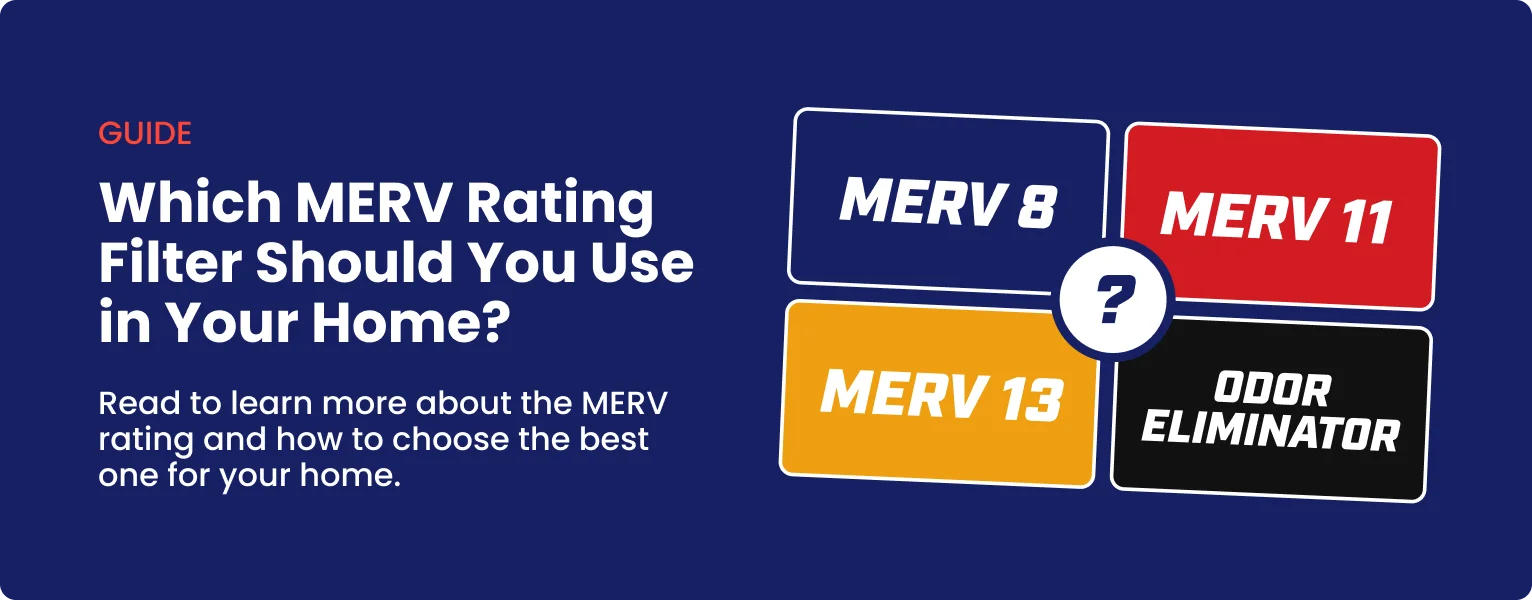
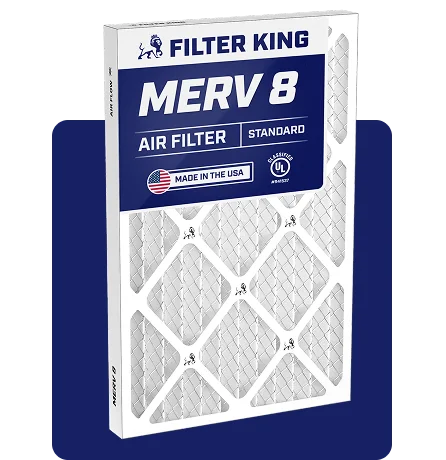
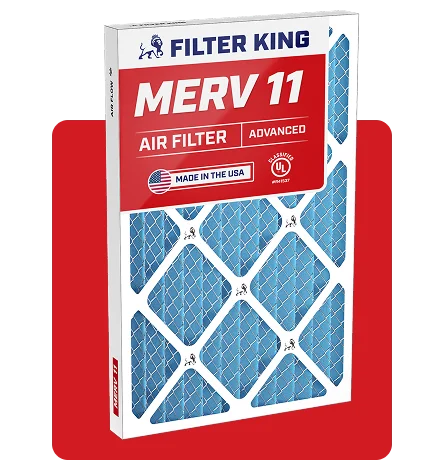
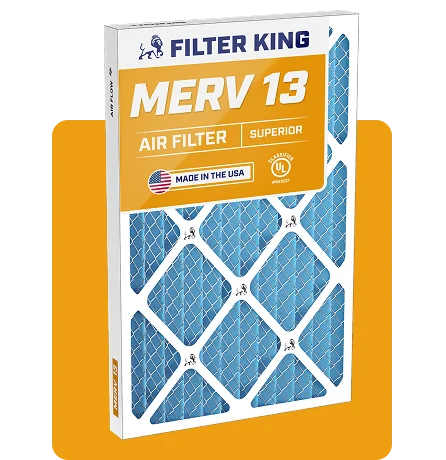

FPR and MERV both rate how well an air filter traps particles, but MERV is the industry standard every brand uses and FPR is a scale The Home Depot uses for the filters it sells. Compare filters by MERV when you can. Roughly, FPR 5 equals MERV 8, FPR 7 equals MERV 11, and FPR 10 equals MERV 13.
FPR vs MERV vs MPR: what's the difference?
MERV is an industry standard from ASHRAE that any brand can be tested to, while MPR and FPR are brand scales from 3M and The Home Depot. MERV (Minimum Efficiency Reporting Value) is a 1–16 score for how well a filter traps particles from 0.3 to 10 microns.
MPR (Microparticle Performance Rating) is 3M's scale for its Filtrete filters. FPR (Filter Performance Rating) is The Home Depot's scale for every filter brand it sells, including its store brands and Honeywell filters.
| Rating | Created by | Scale | What it measures | Where you see it |
|---|---|---|---|---|
| MERV | ASHRAE (Standard 52.2) | 1–16 | Minimum share of particles captured in three size ranges from 0.3 to 10 microns | Most air filter brands |
| FPR | The Home Depot | 1–12 | Large and small particle capture plus how much dust the filter holds over its life | Filters sold at The Home Depot |
| MPR | 3M | Shown as numbers such as 300 to 2800 | How well a filter captures particles from 0.3 to 1 micron | Filtrete filters |
What does FPR mean on an air filter?
FPR stands for Filter Performance Rating, The Home Depot's scale for the air filters it sells. The Home Depot's air filter buying guide, updated in 2023, says FPR ranks filters from 1 to 12, with 12 the highest performance.
The same guide says 60% of the FPR score comes from capturing large particles, 30% from capturing small particles, and 10% from how much weight the filter gains over its life. Because the score blends three things, FPR doesn't line up exactly with MERV.
The Home Depot groups FPR scores into four tiers:
- FPR 4–5 (good): household dust, lint, dust mites, pollen, and pet dander.
- FPR 6–7 (better): adds bacteria and mold spores.
- FPR 8–9 (best): adds smoke, smog, microscopic allergens, and particles that can carry viruses.
- FPR 10 (premium): adds particles that carry odors.
How do you convert FPR to MERV?
FPR 5 is about MERV 8, FPR 7 is about MERV 11, FPR 8–9 is about MERV 12, and FPR 10 is about MERV 13. Neither The Home Depot nor 3M publishes an official FPR conversion, so the table shows the typical match for each MERV rating.
| MERV rating | Typical FPR | Typical MPR | Typical use |
|---|---|---|---|
| MERV 5–6 | FPR 4 | MPR 300 | Basic dust and lint |
| MERV 7 | None | MPR 600 | Basic dust and lint |
| MERV 8 | FPR 5 | MPR 700 | Standard homes without allergies |
| MERV 9–10 | FPR 6 | None | A small step up from MERV 8 |
| MERV 11 | FPR 7 | MPR 1000–1200 | Pets, kids, and moderate allergies |
| MERV 12 | FPR 8–9 | MPR 1500 | Between MERV 11 and MERV 13 |
| MERV 13 | FPR 10 | MPR 1900–2200 | Allergies, asthma, and smoke |
| MERV 14 | None | MPR 2500–2800 | Higher than most homes need |
Some filters sit a step off the table, because FPR also scores how much dust a filter holds. Home Depot product listings checked in 2026 generally label FPR 5 filters as MERV 8, FPR 7 filters as MERV 11, and FPR 10 filters as MERV 13. The same listings also label some FPR 7 filters as MERV 10, some FPR 9 filters as MERV 11 or MERV 13, and some FPR 10 filters as MERV 12.
The MPR column follows 3M's published MPR vs MERV chart, which pairs MPR 300 with MERV 5, MPR 600 with MERV 7, MPR 1000 and 1200 with MERV 11, MPR 1500 with MERV 12, MPR 1900 and 2200 with MERV 13, and MPR 2500 and 2800 with MERV 14. Filtrete's product pages, checked in 2026, list its 700 MPR filters as MERV 8. 3M's chart doesn't list an MPR for MERV 9 or MERV 10.
What does MERV mean?
MERV stands for Minimum Efficiency Reporting Value, and the rating shows the lowest share of particles a filter captures in each size range. A higher MERV means the filter catches more small particles.
The EPA's MERV chart, last updated in 2024, runs from MERV 1 to MERV 16. For example, a MERV 8 filter must capture at least 70% of particles from 3 to 10 microns, and a MERV 13 filter at least 50% of particles from 0.3 to 1 micron. Our MERV rating chart shows every level and which rating fits your home.
A higher MERV isn't always better. Denser filters can restrict airflow in older or low-powered systems, so check your system before moving up to MERV 13.
What does MPR mean?
MPR stands for Microparticle Performance Rating, 3M's scale for how well Filtrete filters capture particles from 0.3 to 1 micron. A higher MPR number means the filter catches more of these small particles.
MPR only appears on Filtrete filters, so it helps you compare one Filtrete filter with another. To compare a Filtrete filter with another brand, look for the MERV rating on the package.
Which rating should you use to choose an air filter?
Use MERV to choose an air filter, because it's the one rating every brand can be compared on. If a filter only shows FPR or MPR, use the conversion table above to find the matching MERV.
Match the rating to your household:
- No allergies: MERV 8 air filters, about FPR 5. They capture up to 90% of common particles, such as dust mites, pollen, pet dander, lint, and mold spores.
- Pets, kids, or moderate allergies: MERV 11 air filters, about FPR 7. They capture up to 95% of common particles and add fine dust, smoke, and smog particles.
- Allergies, asthma, or wildfire smoke: MERV 13 air filters, about FPR 10. They capture up to 98% of common particles, including bacteria and virus carriers.
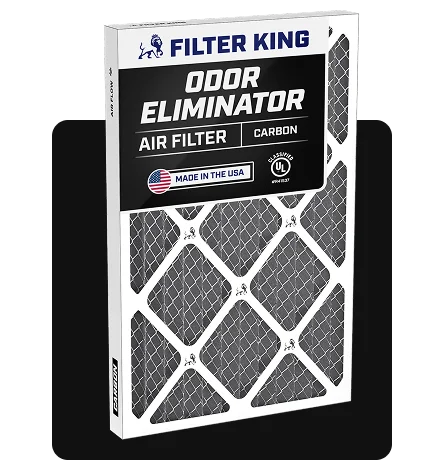
- Odors: a MERV 8 Carbon air filter. It traps particles at the MERV 8 level and absorbs odors, VOCs, and cooking smells, but doesn't replace MERV 13 for allergies.
Still deciding between the two most common ratings? Read our comparison of MERV 8 vs MERV 11.
What particles do air filter ratings measure?
Air filter ratings measure how well a filter traps particulate matter, the tiny solid and liquid particles in the air you breathe. Indoor particles include dust, pollen, pet dander, mold spores, smoke, and bacteria.
How often should you change your air filter?
Change a 1-inch air filter every 30–90 days, a 2-inch filter every 90–120 days, and a 4-inch filter every 6–9 months, sooner with pets, allergies, or smoking. A clogged filter traps fewer particles and makes your system work harder, whatever its MERV or FPR rating.
Our guide on how often to change your air filter covers the details, and you can set a free air filter change reminder.
