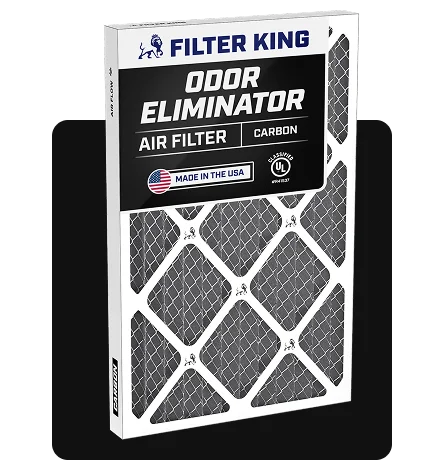

To change a furnace filter, turn the system off, slide out the old filter, and note the size printed on its frame. Slide in a new filter of the same size with the airflow arrow pointing toward the furnace, then turn the system back on. The job takes a few minutes and no special tools.
What do you need to change a furnace filter?
You need a new filter in the same size as the old one, and a few household items.
- A new air filter in the size printed on your old filter's frame
- A flashlight, to read the size and the airflow arrow
- A screwdriver, if your filter door or vent grille is held with screws
- A trash bag for the old filter
- A marker, to write the install date on the new filter
- A step ladder, if the filter is in a ceiling vent
Not sure where your filter is? It's usually in a slot where the return duct meets the furnace, behind a door on the furnace cabinet, or behind a return vent grille in a wall or ceiling. Our guide on where your air filters are located shows the common spots.
How do you change a furnace filter at the furnace?
Change a furnace filter at the furnace by sliding the old filter out of its slot and sliding a new one in with the arrow pointing toward the blower. Follow these steps:
- Set the thermostat to off, and switch off the furnace's power switch if the filter sits inside the furnace cabinet.
- Open the filter door or slot cover on the furnace or return duct.
- Look at the old filter and note which way its arrow points.
- Slide the old filter out slowly, keeping the dirty side up so dust doesn't fall off.
- Put the old filter in a trash bag.
- Check that the size printed on the old frame matches your new filter.
- Remove the plastic wrapping from the new filter, but leave the cardboard frame on.
- Write today's date on the new filter's frame.
- Slide the new filter in with the airflow arrow pointing toward the furnace's blower.
- Check that the filter sits snugly, with no gaps around the edges.
- Close the filter door or cover.
- Turn the power and thermostat back on.
How do you change an air filter in a wall or ceiling return vent?
Change an air filter in a return vent by opening the vent grille, swapping the filter, and closing the grille again. Many homes with central air have the filter in a return vent instead of at the furnace, and the steps are the same for heating and cooling.
- Set the thermostat to off.
- Use a step ladder if the vent is in the ceiling.
- Open the vent grille by releasing its clips or removing its screws.
- Pull out the old filter and put it in a trash bag.
- Vacuum or wipe the dust off the grille slats.
- Remove the plastic wrapping from the new filter.
- Insert the new filter with the airflow arrow pointing into the vent, toward the duct.
- Close the grille and fasten its clips or screws.
- Turn the thermostat back on.
Some homes have more than one return vent with a filter. Check each one, since each filter needs changing on the same schedule.
Which way does an air filter go?
An air filter goes in with the airflow arrow on its frame pointing toward the furnace or air handler, in the same direction the air moves. Filtrete, 3M's filter brand, tells customers to point the arrow toward the blower motor, whether the filter goes in the unit or in a wall or ceiling return.
Where the arrow ends up pointing depends on how your system is set up:
| Where the filter is | How air moves | Which way the arrow points |
|---|---|---|
| Upflow furnace (return at the bottom, common in basements) | Up into the furnace | Up |
| Downflow furnace (return at the top) | Down into the furnace | Down |
| Horizontal furnace (common in attics and crawl spaces) | Sideways into the furnace | Sideways, toward the blower end |
| Wall or ceiling return vent | From the room into the duct | Into the wall or ceiling |
Which replacement furnace filter should you buy?
Buy a replacement filter in the same size as your old one, in the MERV rating that suits your home. The size printed on the frame, such as 16x25x1, is the nominal size, and the filter itself is a little smaller. Our 12x12x1 filter, for example, measures 11.5 by 11.5 by 0.75 inches.
If the frame has no size, measure the filter slot's length, width, and depth, and match it to a size in our air filter sizes. If your slot doesn't match a standard size, we make custom air filters. Furnaces with a deep slot or media cabinet take a 4-inch air filter, which lasts longer between changes.
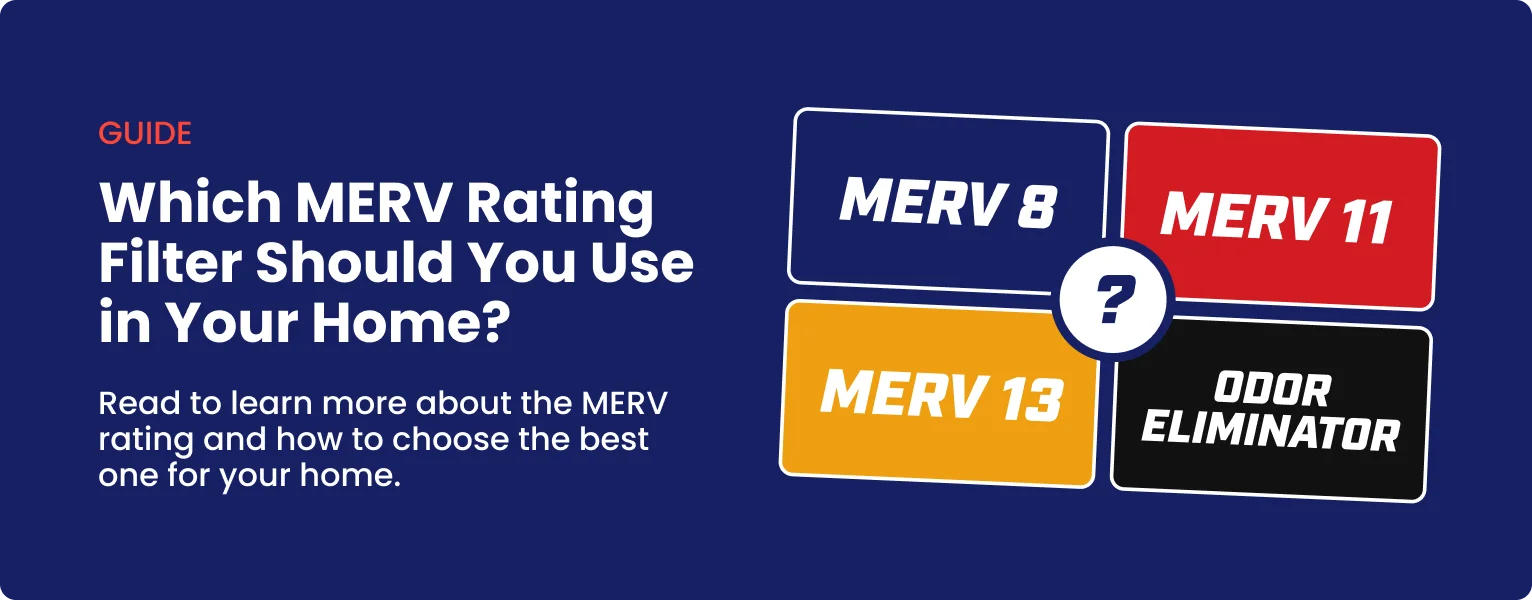
MERV (Minimum Efficiency Reporting Value) is a 1–16 score for how well a filter traps particles. Choose by household:
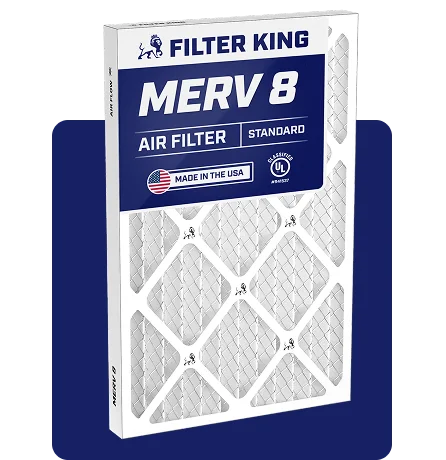
- MERV 8 for homes without allergies or pets. It captures up to 90% of common particles, such as dust mites, pollen, pet dander, lint, and mold spores.
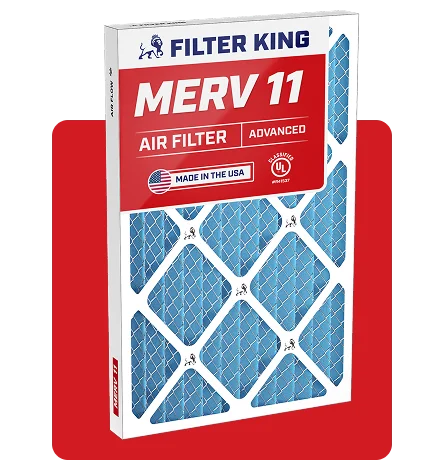
- MERV 11 for homes with pets, kids, or moderate allergies. It adds fine dust, smoke, and smog particles, up to 95% of common particles.
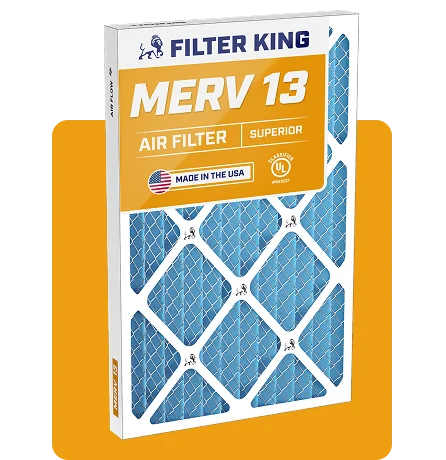
- MERV 13 air filters for allergies, asthma, or wildfire smoke. They capture up to 98% of common particles, though older or low-powered systems may lose airflow with one.
Our guide to which MERV rating to use compares them in more detail. If you have a washable filter instead of a disposable one, it gets rinsed and dried rather than replaced, and our guide to washable air filters explains how.
How often should you change your furnace filter?
Change a 1-inch furnace filter every 30–90 days, a 2-inch filter every 90–120 days, and a 4-inch filter every 6–9 months. Change it sooner with pets, allergies, smoking, or heavy use in winter and summer.
ENERGY STAR's maintenance checklist says to inspect your filter once a month. Writing the date on each new filter makes the next check easy. Our auto-delivery saves 5% and ships filters on your schedule, and our guide on how often to change your air filter covers what shortens a filter's life.
Why do you need to change your furnace filter?
You need to change your furnace filter because a dirty filter blocks airflow, so your system works harder and uses more energy. ENERGY STAR's maintenance checklist notes that a dirty filter can increase energy costs and damage your equipment so it fails early.
A filter that needs changing often shows these signs:
- The filter surface looks gray or caked with dust
- More dust settles on furniture and around vents
- Weaker airflow from the vents
- Higher heating or cooling bills than usual
Bag a used filter before you throw it away. Our guide on whether air filters are recyclable covers your options.
