

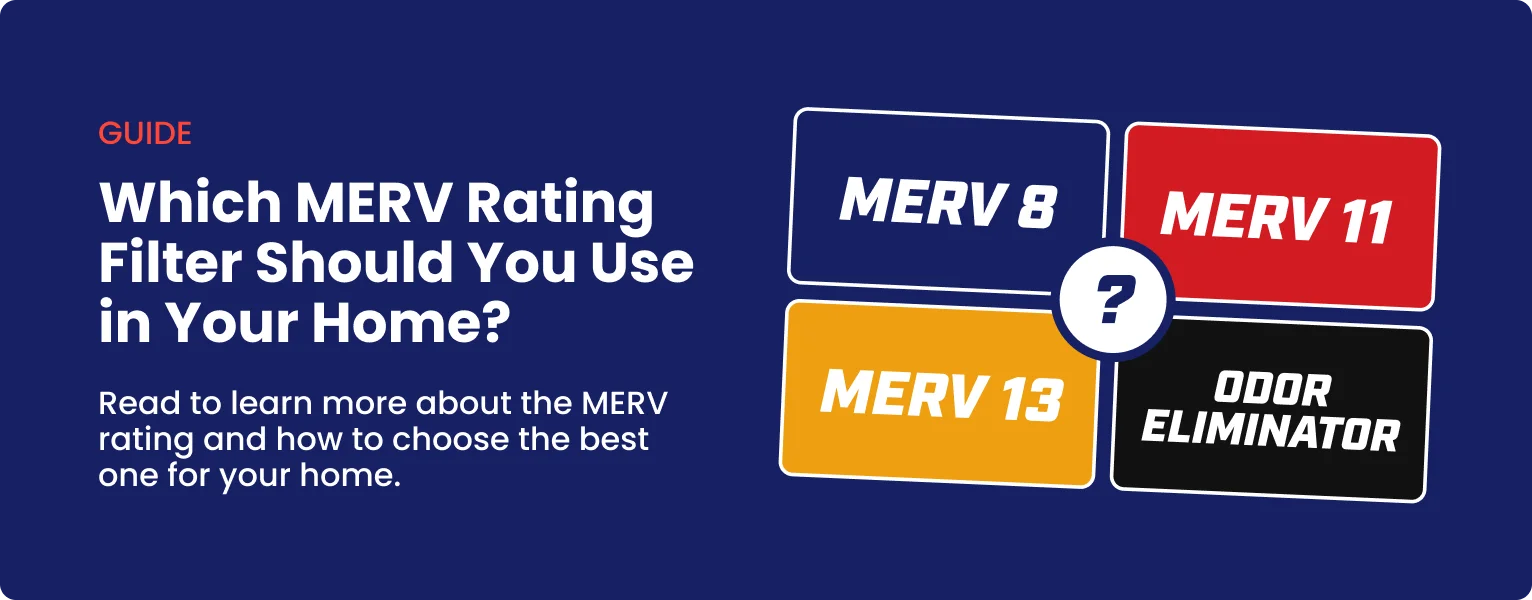
The best air filter for your home is a pleated filter in the exact size your system takes, rated MERV 8 to MERV 13. MERV is a 1–16 score for how well a filter traps small particles. Pick MERV 8 for homes without allergies, MERV 11 for pets or kids, and MERV 13 for asthma or smoke.

Best air filters for your home: our picks
We compared six air filters for everyday dust, pets, allergies, and smoke: our MERV 8 and MERV 13, the Rheem Basic Household FPR 4, the FilterBuy MERV 8, the Filtrete MPR 1000, and the Nordic Pure MERV 13.
Two of the six are our own filters, so we scored every brand on the same five criteria: MERV rating, best use, the maker's change interval for a 1-inch filter, thickness options, and main trade-off. We also checked that each filter is still sold in 2026.
All picks come in standard sizes. If your system needs an unusual size, we make custom air filters from 4–40 inches on the short side and 4–66 inches on the long side.
| Filter | Best for | MERV rating | Maker's change interval (1-inch) | Thickness options | Main trade-off |
|---|---|---|---|---|---|
| Filter King MERV 8 Pleated | Standard homes without allergies | MERV 8 | 30–90 days | 0.5-inch, 1-inch, 2-inch, 4-inch, and some 5-inch sizes, plus custom sizes | Not enough for allergies or smoke |
| Rheem Basic Household FPR 4 | Households on a budget | MERV 8 (FPR 4) | Not stated in the listing | 1-inch | Sold mainly through Home Depot; not for smoke or fine particles |
| FilterBuy MERV 8 Pleated | Pet owners with mild allergies | MERV 8 | About 3 months | 1-inch, 2-inch, and 4-inch | Costs more per filter when bought singly |
| Filtrete MPR 1000 Allergen Defense | Allergy-prone households | MERV 11 (MPR 1000) | Up to 3 months | 1-inch, 2-inch, and 4-inch | Catches fewer of the finest particles than MERV 13; no custom sizes |
| Nordic Pure MERV 13 Pleated | Cigarette smoke and polluted areas | MERV 13 | 30–90 days | 1-inch, 2-inch, and 4-inch | Can reduce airflow in older systems |
| Filter King MERV 13 Pleated | Asthma, allergies, and wildfire smoke | MERV 13 | 30–90 days | 0.5-inch, 1-inch, 2-inch, 4-inch, and some 5-inch sizes, plus custom sizes | Can reduce airflow in older systems |
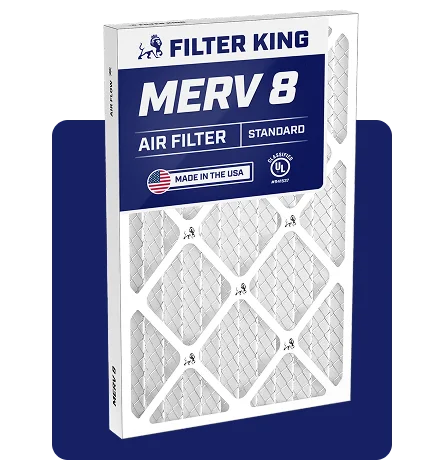
Filter King MERV 8 pleated air filter
Our MERV 8 pleated air filter is a solid everyday filter for homes without allergies. Our MERV 8 filter captures up to 90% of common particles, including dust mites, pollen, pet dander, lint, and mold spores.
Best for: standard homes without allergies
The MERV 8 filter cleans the air without putting much strain on your system. We stock 1,000+ sizes and make custom sizes, so our MERV 8 filter also fits homes where off-the-shelf filters don't.
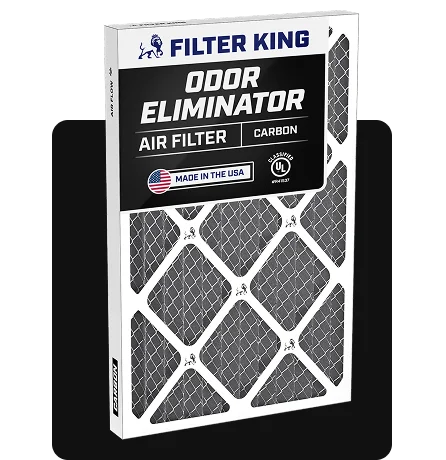
If odors are a concern, the MERV 8 Carbon air filter adds odor, VOC, and cooking-smell control. For allergies, choose MERV 11 or MERV 13 instead.
Pros and cons
Pros:
- Captures up to 90% of dust mites, pollen, pet dander, lint, and mold spores
- Available in 1,000+ stocked sizes and custom sizes
- Sold in any quantity from 1 filter, with a lower cost per filter in larger packs
- Keeps airflow strong in standard home systems
Cons:
- Slightly higher price than budget store brands
- Not enough for allergies, asthma, or smoke
Rheem Basic Household Pleated FPR 4 air filter
The Rheem Basic Household Pleated filter is a low-cost option for everyday dust control. Home Depot rates it FPR 4, and Home Depot's 2026 product listings label it MERV 8.
FPR (Filter Performance Rating) is a scale Home Depot uses to rate the filters it sells. Our guide to MERV, MPR, and FPR ratings explains how the scales compare.
Best for: everyday dust control on a budget
The Rheem FPR 4 filter suits homes with few air quality concerns. It captures lint, dust, pet dander, and pollen, but it won't do much against smoke or fumes.
Home Depot's 2026 Rheem listings say the filter captures six times more harmful particles than a fiberglass filter. Installation is quick: remove the old filter and slide in the new one.
Pros and cons
Pros:
- Affordable and easy to find in stores
- Captures basic household irritants like dust, pollen, and pet dander
Cons:
- Not effective for fine particles like smoke, and doesn't remove gases or VOCs
- May not be enough if someone in your home has severe allergies or asthma
FilterBuy MERV 8 pleated air filter
The FilterBuy MERV 8 pleated filter is a good fit for pet owners with mild allergies. The FilterBuy filter traps pet hair, dander, and common allergens without overtaxing the HVAC system.
For more pet-specific picks, see our guide to the best furnace filters for homes with pets.
Best for: pet owners and everyday allergen control
The FilterBuy filter uses pleated, electrostatically charged media. The pleats add surface area, so the filter holds more dust, pollen, and pet-related particles.
The EPA's MERV chart, last updated in 2024, says a MERV 8 filter must capture at least 70% of particles between 3 and 10 microns. FilterBuy's 2026 product pages say its MERV 8 filters trap 90% of airborne particles.
Pros and cons
Pros:
- Effective at trapping pet hair, dander, and larger allergens
- Rated for about 3 months of use
- Large discounts on bulk packs
Cons:
- Pricey when bought one at a time
- Not designed to capture fine particles like smoke or bacteria
Filtrete MPR 1000 Allergen Defense air filter
The Filtrete MPR 1000 Allergen Defense filter, sold earlier as Micro Allergen Defense, is a strong mid-range pick for allergy-prone homes. 3M, which makes Filtrete, lists the MPR 1000 filter as equal to MERV 11.
MPR (Microparticle Performance Rating) is 3M's own scale for how well its filters catch tiny particles. 3M's 2026 product pages list the MPR 1000 filter in 1-inch, 2-inch, and 4-inch thicknesses.
Best for: asthma and allergy sufferers
The Filtrete MPR 1000 filter traps pollen, mold spores, pet dander, and dust mite debris. 3M says the filter also catches some smoke and smog particles.
The Filtrete filter is not a HEPA filter, but it handles day-to-day allergen control well. 3M rates the 1-inch filter for up to three months. If your system takes a thicker filter, see our 4-inch air filters, or compare more options in our allergen air filter reviews.
Pros and cons
Pros:
- Helps reduce common asthma triggers like pollen, pet dander, and mold spores
- Rated for up to three months of use
- Strong allergen defense at a mid-range price
Cons:
- Captures fewer of the smallest particles (0.3–1 micron) than a MERV 13 filter
- Doesn't remove gases or VOCs, and isn't sold in custom sizes
Nordic Pure MERV 13 pleated air filter
The Nordic Pure MERV 13 pleated filter is a good pick for homes with cigarette smoke or heavy outdoor pollution. The Nordic Pure filter traps fine particles that MERV 8 and MERV 11 filters partly miss.
Best for: cigarette smoke and fumes
The EPA's MERV chart, last updated in 2024, says a MERV 13 filter must capture at least 50% of particles from 0.3 to 1 micron and at least 85% of particles from 1 to 3 microns. That range includes smoke, bacteria, and fine dust.
A standard pleated filter traps particles, not gases, so it won't fully clear smoke odors. Nordic Pure also sells a MERV 13 Plus Carbon version with an activated charcoal layer for odor control. Our guide to air filters for smokers covers more options.
Pros and cons
Pros:
- Captures smoke particles and other fine particulate matter
- Carbon version available to help with lingering odors
Cons:
- Higher cost than MERV 8 or budget options
- May reduce airflow in some older or low-powered HVAC systems
- More than you need in homes without smoke, allergies, or pollution issues
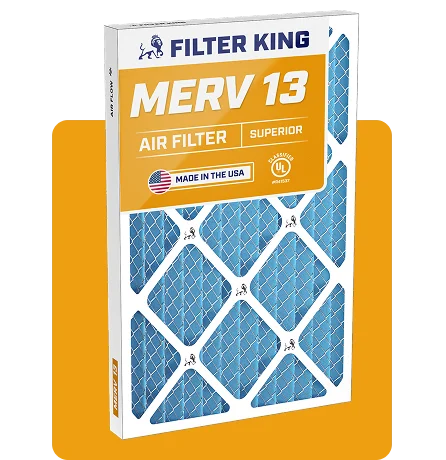
Filter King MERV 13 pleated air filter
Our MERV 13 air filter is our pick for allergies, asthma, and wildfire smoke. Our MERV 13 filter captures up to 98% of common particles. Compared with MERV 8 and MERV 11, it also traps bacteria and virus carriers.
Best for: allergies, asthma, and wildfire smoke
The MERV 13 filter suits homes with allergies, asthma, weakened immune systems, wildfire smoke, or nearby construction. MERV 13 is the highest rating we sell. For smoke season, see our guide to the best air filter for wildfire smoke.
Pros and cons
Pros:
- Captures up to 98% of common particles, including bacteria and virus carriers
- Available in 1,000+ stocked sizes and custom sizes
- 30-day money-back guarantee on stocked sizes
Cons:
- Higher price than MERV 8 or MERV 11 filters
- Older or low-powered systems may lose airflow
- More filtration than you need in homes without allergies, pets, or smoke
How do you choose an air filter for your home?
Choose a home air filter by matching its MERV rating to your household's needs, checking that your system can handle that rating, and buying the exact size. Filter type, change schedule, and budget come next.
Which filter types work in home systems?
Pleated filters work best in most home systems because they trap more particles and last longer than flat fiberglass filters. Read more about the types of air filters before you buy.
Pleated vs. fiberglass filters
Pleated filters beat fiberglass filters for most homes, as our guide to pleated and fiberglass filters explains.
Fiberglass filters are the lowest-cost option. They use a flat panel that catches large particles like dust and lint, and they should be changed every 30 days. The upfront cost is low, but frequent replacements add up.
Pleated filters have folded media with more surface area, so they trap smaller particles like pollen, mold spores, and pet dander. A 1-inch pleated filter typically lasts 30–90 days.
Disposable vs. washable air filters
Disposable pleated filters clean the air better than most washable filters. Washable filters cut waste and can be reused for years, as our guide to disposable and washable air filters explains.
The trade-off is filtration. Most washable filters have lower MERV ratings and can't trap fine particles, so smoke, fine pollen, and pet dander may still get through.
Disposable filters rated MERV 11 or MERV 13 capture dust, bacteria, mold spores, and other small pollutants. You replace them on a schedule, but the payoff is cleaner air and a system that runs efficiently.
Is MERV or HEPA better for a home?
MERV-rated filters are the better choice for home HVAC systems. True HEPA filters are made for hospitals, clean rooms, and industrial use, and their dense media restricts airflow in most home systems.
For extra protection in one room, a HEPA air purifier can help. The EPA's 2024 MERV page says a true HEPA filter captures at least 99.97% of particles at 0.3 microns. Filters sold as “HEPA-type” don't meet the HEPA standard and may trap fewer particles.
Which MERV rating should you choose?
Most homes should choose MERV 8, MERV 11, or MERV 13. The Minimum Efficiency Reporting Value (MERV) is a 1–16 score from the ASHRAE 52.2 test for how well a filter captures particles between 0.3 and 10 microns.
The higher the rating, the more small particles the filter traps, such as mold spores, pet dander, and fine dust. Ratings of MERV 14 and up are mostly used in hospitals and other buildings with strict air quality needs.
MERV 1–6: basic dust protection
MERV 1–6 filters offer minimal filtration. The EPA's MERV chart, last updated in 2024, says MERV 1–4 filters capture less than 20% of particles from 3 to 10 microns.
These filters mainly catch large particles like household dust, carpet fibers, lint, and pollen. They're often used in older home systems or as pre-filters in commercial units.
MERV 1–6 filters don't give meaningful protection against pet dander, mold spores, or smoke. They're best for basic dust control in systems that can't handle higher ratings.
MERV 8–13: home filtration
MERV 8–13 filters are the right range for most homes. A MERV 8 filter targets particles from 3 to 10 microns, such as dust mites, mold spores, and pet dander.
MERV 11 and MERV 13 filters also capture a share of particles smaller than 1 micron, like smoke and bacteria. None of these filters remove gases or fumes.
Not sure which to pick? Our MERV 8 vs MERV 11 comparison lays out the differences.
MERV 14–16 and HEPA: hospital-level filtration
MERV 14–16 filters offer very high filtration for hospitals, operating rooms, and labs. The EPA's MERV chart, last updated in 2024, says a MERV 16 filter captures at least 95% of particles in every size range tested, down to 0.3 microns.
HEPA filters sit above the MERV scale and are rated under a separate standard. They're not made for regular home HVAC systems because they restrict airflow and need special equipment.
For most homes, MERV 13 is the highest rating worth using. It gives strong protection from dust, allergens, and some smoke in systems that can handle it.
What air quality needs should you plan for?
Plan around who lives in your home: pets, allergies, asthma, smoking, and nearby construction all call for a higher rating or more frequent changes. Dust and pollen come in every time you open a window or door, and a good filter traps them before they circulate.
Allergies, asthma, and other breathing problems
A MERV 11 or MERV 13 filter, changed on time, is one of the simplest ways to reduce allergy and asthma triggers at home.
The right filter captures pet dander, mold spores, dust mites, and smoke particles. For someone with breathing problems, fewer of these triggers in the air can make a noticeable difference.
How often should you change a home air filter?
Change a 1-inch air filter every 30–90 days, a 2-inch filter every 90–120 days, and a 4-inch filter every 6–9 months. Change it sooner if you have pets, allergies, smoking, or construction.
Filters clog with dust, pet hair, and allergens over time. That buildup slows airflow and makes the filter worse at trapping new particles.
30, 60, or 90 days for a 1-inch filter?
For a 1-inch filter, 90 days is usually enough in a home without pets or allergies. With one pet or a person with mild allergies, aim for every 60 days.
With several pets, severe allergies, or someone with asthma, change the filter every 30 days. Our auto-delivery saves 5% and ships filters on your schedule. For more detail, read how often to change your air filter.
How much should you spend on an air filter?
How much you should spend on an air filter depends on your filter size and the MERV rating your household needs. Air filter prices range from under $5 to nearly $100, depending on size, materials, MERV rating, and build quality.
Larger and thicker filters usually cost more than small 1-inch filters, and higher MERV ratings usually cost more than lower ones. Bargain filters often give up performance, so pick the rating your household needs first, then compare prices for your size.
Do expensive air filters make a difference?
Expensive air filters make a difference only when the extra cost buys a higher rating you need. Higher-rated filters trap finer particles like smoke, bacteria, and allergens.
Some high-end filters restrict airflow, which makes your system work harder and can raise energy bills. Our article on whether expensive air filters are worth it goes deeper.
What are the benefits of a good home air filter?
A good home air filter reduces airborne irritants and keeps your HVAC system clean. Many people with asthma or allergies feel better when there is less dust, pollen, and pet dander in the air.
Higher-rated filters also trap some bacteria, and carbon filters can help reduce odors.
Cleaner indoor air can mean better sleep and fewer breathing flare-ups for sensitive family members. A clean filter also keeps dust off HVAC parts, which helps the system run efficiently.
Which MERV rating is best for your household?
The best MERV rating depends on who lives in your home and what you need the filter to catch. Match the rating to your household, then buy it in the exact size your system takes:
- Choose MERV 8 air filters if no one in your home has allergies and you want everyday dust control.
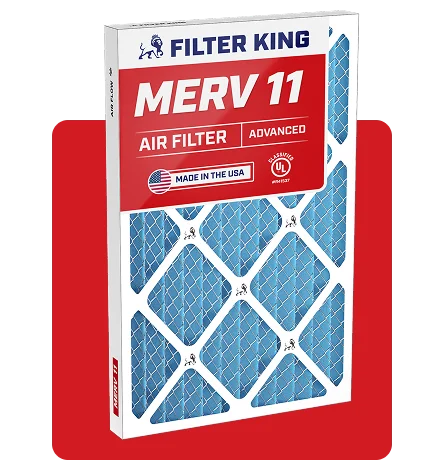
- Choose MERV 11 air filters if you have pets, kids, moderate allergies, or live in a city.
- Choose MERV 13 air filters for allergies, asthma, wildfire smoke, or construction, if your system can handle the airflow.
- Add a MERV 8 Carbon filter only for odors. MERV 8 Carbon doesn't replace MERV 11 or MERV 13 for allergies.
Still deciding on MERV 13? Our guide on whether MERV 13 filters are worth the money can help.
Which air filter removes the most dust?
MERV 13 filters remove the most dust of the ratings most home systems can use, followed by MERV 11. Both capture fine dust that slips through lower-rated filters.
A MERV 11 filter handles everyday dust well in homes with pets or kids. For homes with allergies, asthma, or heavy dust, a MERV 13 filter captures more of the smallest particles.
Fit matters as much as rating. A filter that fits tightly stops air from slipping around the edges, so all of it passes through the filter.
Does air filter brand matter?
Air filter brand matters less than MERV rating and fit. Some big-name filters cost more for the label alone.
Compare filters on rating, the sizes offered, and the return policy. We stock 1,000+ sizes, such as the 20x25x1 air filter, make custom sizes, and offer a 30-day money-back guarantee on stocked sizes.
What is the difference between an air filter and an air purifier?
An air filter cleans the air for the whole house through your HVAC system, while an air purifier cleans the air in one room.
Air filters sit inside your HVAC system and trap dust, pollen, pet dander, and mold spores as air circulates. They also protect your HVAC equipment.
Air purifiers are standalone devices. Most use a HEPA filter, and many add activated carbon to reduce odors. Some also use UV light or ionization.
A good HVAC filter is the base for whole-home air quality, and a purifier can help in problem rooms. See our picks for the best air purifiers for apartments.
How do you find your air filter size?
Your air filter size is printed on the frame of your current filter as length x width x depth, such as 20x25x1. The printed size is usually rounded up, so the actual filter measures slightly smaller.
If no size is printed, measure the filter or the filter slot. Our guide on why air filter size matters explains what happens when a filter doesn't fit.
Where can you order home air filters?
You can order home air filters in your exact size from us, with free US shipping and delivery in about 48 hours to most of the country. We sell any quantity from 1 filter, with a lower cost per filter in larger packs.
Find your air filter size or choose from our most popular filters below. Property managers and contractors can order through bulk air filters.
